Zibb
Subscribe to Control Engineering
FirstLight
Email
Print
Reprint
Learn RSS

Swarm robotics: Debugged naturally for 120 million years

-- Control Engineering, 6/20/2008

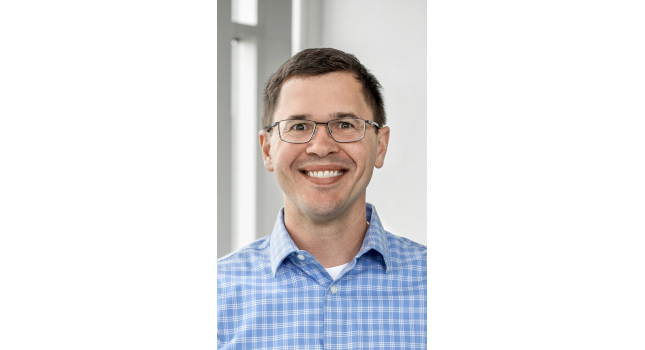
Rosemont, IL – It seems odd to say that software for swarm robotics has been debugged naturally for 120 million years, but that information and 24 robots smaller than a toaster helped James McLurkin, MIT roboticist, explain three globally important things engineers should do (beyond creative motion control and improve system integration).

James McLurkin, MIT roboticist and inventor, gave a keynote at Sensors Expo called, "Engineering Creativity: Exercises for the Right Brain." Algorithms attempt to develop group intelligence based on interactions between individual robots smaller than toasters.

Enthusiastically claiming an engineer’s right to “nerd pride,” McLurkin, an inventor, researcher, and teacher, told the Sensors Expo keynote audience on June 10 they should share engineering joy to:

1) Support the engineering community. Engineering is fun, and young people need to know that, he advised. Don’t say, “I’m an engineer.” Instead, “Tell young people what you do. That’s cool,” McLurkin said. 

Volunteer to help in engineering related activities for youth, “or if you’re brave, teach,” he said. 

McLurkin grew up acquiring engineering skills, by making things out of boxes, building things with Legos, working with model trains, and figuring angles and balance on BMX stunt bikes, which he still demonstrates.

2) Help our country. We’re not building enough engineers in the U.S. To help, donate time, hardware, or software to educational institutions. Eclipse open-source programming toolkit, for instance, has been very useful at universities.

3) Save the world. We can engineer our way out of global warming. Only engineers can do this—ourselves, and by inspiring the next generation of engineers to solve the problem.

Basic robot anatomy was among topics McLurkin covered, though design details are not public. He did say they run on a 40 mHz Amtel chip with a custom OS.

As for robotics and swarm-type software, researchers have broken down bees’ nectar-collecting decisions into software (Cornell, 1995), McLurkin said, explaining the comment about 120 million years of debugging. How might that apply to robotics? As a graduate student at the MIT Computer Science and Artificial Intelligence Laboratory, McLurkin works with professor Leslie Kaelbling researching distributed algorithms for swarms of mobile robots.

Goal is to understand how to use local interactions among nearby robots to produce large-scale group behaviors from the entire swarm. All the intelligence doesn't have to be embedded in one set of controls; interactions create new knowledge.

Imagine how a swarm of 10,000 small robots could work together to do something useful. Suppose a few hundred heat-seeking robots swarm to locate survivors at an earthquake site, and 20,000 cockroach-sized bots scurry through the rubble confirming locations, and report to rat-sized structural robots that analyze data, and direct a few brontosaurus-sized rubble-removing robots.

What could 2,000 robots do on Mars? Two are there now. McLurkin’s stage demonstration simulated how a group getting off a space ship might handle challenges.

On stage (see photos) the robots demonstrated a dispersion algorithm, transfer of leadership, formation of groups according to a determined need, perimeter security, and return to “home.”

The demonstration included applause and levity. “I don’t know what this one thinks he’s doing,” as one wandered off; McLurkin put him back in the pack. He kept a watchful eye over the brood throughout the demonstration. Without sensors installed that would detect an edge, “they will happily plummet off the stage, so I’m trying to keep them toward the center,” he noted.

Later, he had them line up by identification number, a clump of little robots formed, still trying to move and bump out of the way, without much success. “They don’t have knot-rectifier software,” he smiled, amid laughter. “Must be too many engineers in the room” for this part of the demonstration to work right. He grinned, then moved a few of the robots well outside the clump so they could line up, and they did.

Related robotic resources:

-McLurkin provides videos on robot behaviors and more swarm robotic photos.

-The robots (internals are not public) were designed at iRobot, which “collaborates with external developers to create new payloads, behaviors and capabilities for iRobot's tactical mobile robots.”

-Control Engineering has an automated vehicle blog.

-Design News says: Sensing Technology Marches on at Annual Sensors Expo

– Mark T. Hoske, editor in chief

Control Engineering News Desk

Register here and scroll down to select your choice of eNewsletters free.

Email
Print
Reprint
Learn RSS

Related Content

Related Content


By This Author

There are no other articles written by this author.

Sponsored Links


Advertisement
SPONSORED LINKS

More Content

  • Blogs
  • Discussions
  • Webcasts
  • Podcasts
  • Videos

Blogs

  • Charlie Masi
    Ask Charlie

    October 13, 2008
    Can a car drive faster than it falls from 4,000 feet?
    This question relates to an episode of Mythbusters intended to air in January 2009. Control Engineering got advance notice of the event f......
    More
  • Paul Grayson
    AIMing for Automated Vehicles

    October 8, 2008
    Windturbines
    PickensPlan.com I was intrigued by the advertisements I have been seeing on TV here in Traverse City, MI and which you may be seeing in other......
    More
  • View All BlogsRSS

Webcasts

Engineering-driven Ethernet
This Control Engineering Roundtable Webcast will address the engineering issues you should be aware of when exploring the adoption of Ethernet or when looking to expand its use in your facility.

Bridging gaps with wireless
Discover how you can create stronger, flexible and cost-effective wireless connections for your entire plant. Register today!

View All Webcasts

Podcasts

Control Engineering editorial director David Greenfield conducted a series of interviews on the topic of Ethernet security in the wake of panel discussions on the topic at this year’s Hannover Fair.
Ethernet Security
Control Engineering editorial director David Greenfield conducted a series of interviews on the topic of Ethernet security in the wake of panel discussions on the topic at this year’s Hannover Fair. Hear It Now

View All Podcasts Subscribe Now to Podcasts and never miss an episode
Advertisements


NEWSLETTERS

Get engineering industry news, trends, and business-critical information delivered directly to your inbox!

Click on a title below to learn more.

Weekly News (Weekly)
Process Instrumentation & Sensors (Monthly)
System Integration Monthly (Monthly)
Process & Advanced Control (Monthly)
Machine Control Monthly (Monthly)
Information Control (Monthly)
Automation Control (Monthly)
Product Review (Monthly)
Simplified Safety (Monthly)
Fieldbus Facts (Monthly)
PROFInews North American Edition (Monthly)
About Us   |   Advertising Info   |   Site Map   |   Contact Us   |   Useful Sites   |   FREE Subscription   |   RSS
© 2008 Reed Business Information, a division of Reed Elsevier Inc. All rights reserved.
Use of this Web site is subject to its Terms of Use | Privacy Policy
Please visit these other Reed Business sites