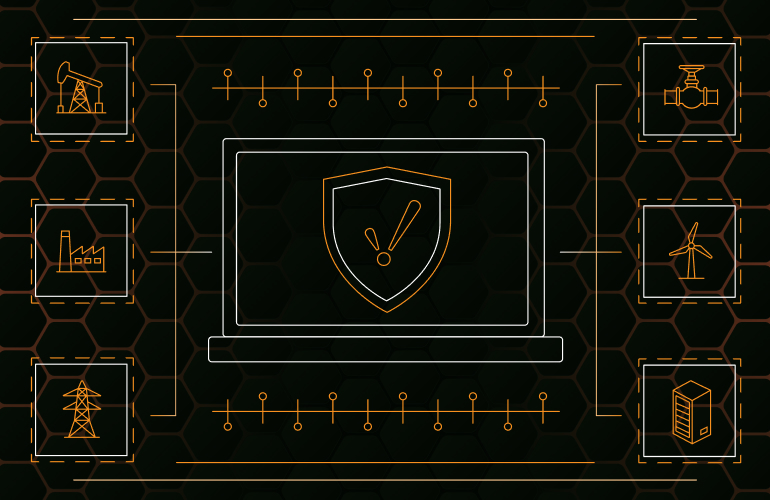
After years of workforce shortages and a worldwide pandemic, remote access has become a cornerstone of modern industrial operations. Remote access to operations, whether you are monitoring a water treatment facility from across town or adjusting equipment settings for a plant-floor machine from a mobile device, is a major win for efficiency and visibility. This is why it’s crucial to get your security architecture right today, as OT environments grow more connected to IT networks and cloud infrastructure.
This blog covers all of the most important aspects of remote security for modern control systems and how to maximize your cybersecurity.

Why Remote Access and Control Has Become the Standard
Organizations accelerated the shift toward remote operations during the COVID-19 pandemic when agencies like CISA (the Cybersecurity and Infrastructure Security Agency) urged industrial organizations to secure remote access through multi-factor authentication and encryption.
Remote process control allows users to monitor systems and take actions like adjusting temperatures, restarting equipment, or responding to alarms without being physically present.
Remote process control offers many operational benefits, including:
- Reduced travel costs and faster response times to critical issues
- Less on-site exposure to hazardous environments
- Better environmental compliance through continuous monitoring
- Improved efficiency by replacing manual checks with automated oversight
- Many organizations initially resisted remote control due to cybersecurity concerns, but today, most have begun to accept the new normal. Remote operation is here to stay; the question is whether your security architecture is ready for it.

Common Architectures for Secure Remote Access
Before diving into best practices, let’s look at the two most common architectures for remote access in industrial environments:
VPN-Based Remote Access
A VPN adds a layer of authentication before allowing access to your system by encrypting all traffic between remote users and the facility network. This approach works well for organizations with strict security policies that require private network access and want to keep all infrastructure on-premise.
Cloud-Hosted Gateway
A cloud-hosted Ignition Gateway reduces the need for VPN connections. Users access the system through a secure web interface, and cloud connections ensure that data flows securely without exposing on-premise systems to direct external access. This approach suits companies that need global visibility across multiple sites without managing a complex VPN infrastructure.
Both options could be valid depending on your organization’s security setup, network maturity, and operational requirements, and many organizations use a hybrid of both.

Cybersecurity Best Practices for Industrial Remote Access
1. Encrypted Communications
It’s best to always enable HTTPS with TLS 1.2 or higher to secure data in transit. This applies to both user-facing interfaces and machine-to-machine communications. Unencrypted industrial traffic is one of the most common attack vectors in OT environments and one of the easiest to address.
2. Secure OPC UA and MQTT Communications
OPC UA and MQTT are the open standards driving modern IT/OT convergence, and both support robust encryption. Ensure that all OPC UA connections use certificate-based authentication and that MQTT transport encryption is enabled on every broker connection.
3. Role-Based Access Control
Not everyone who needs to view data also needs to control equipment. Implement role-based access control to define what each user can see and do, separating read-only access from control privileges. Also, define security zones so that remote users operate within appropriate boundaries and so that a compromised credential can’t give an attacker access to everything.
4. Multi-Factor Authentication
For any web-based interface, it’s best to enable multi-factor authentication as an additional layer of identity verification. Tools like Duo Security, Google Authenticator, or identity providers supporting SAML 2.0 and OIDC integrate cleanly with modern industrial platforms and significantly reduce the risk of unauthorized access from stolen credentials.
5. Single Sign-On and Federated Identity
To centralize user management, simplify onboarding and offboarding, and ensure that access policies stay consistent across OT and IT systems, integrate your industrial applications with enterprise identity providers like Active Directory, Okta, or Ping Identity using single sign-on (SSO).
6. OT Network Segmentation A flat network where everything is connected is one of the most common and costly mistakes in industrial cybersecurity. It’s best to segment your OT network to limit the blast radius of any security incident. Use firewalls and demilitarized zones (DMZs) to control traffic between remote access points, plant-floor systems, and enterprise networks.
Sponsored content by Inductive Automation