Smarter data acquisition benefits include a seven-time return on investment (ROI) in under a year by improving reliability and reducing downtime and increased product output by 14% and reduced packaging waste and machine idle time costs in another application.

Manufacturing data acquisition insights
- Modern manufacturers shouldn’t miss five main benefits of modern data acquisition.
- Data acquisition applications, data optimization strategies, tools and technologies help with implementations.
- Explore lessons learned, trends and developments in data acquisition.
In their most traditional form, manufacturing production processes transform raw materials into finished goods through a multitude of methods, creating data along the way. Smarter data acquisition increases benefits across industries. Core techniques like casting, forming, machining, and joining – alongside other foundational processes – are essential to producing the products we rely on every day. From basic components to complex machinery and chemical compounds, these methods support the systems that keep our world safe, secure, healthy and efficient.
Data acquisition supports these manufacturing production processes by improving asset utilization and enabling manufacturers to harness the full potential of big data. Simply defined, data acquisition is the process of collecting, monitoring and storing data from various sources within the production environment.
Using real-time data provides valuable insights into operational performance, market trends and customer preferences — driving innovation and product development. As these processes evolve, the integration of real-time data acquisition is becoming essential to maintaining competitiveness and driving innovation.
Five data acquisition benefits for modern manufacturing
Data is pivotal in modern manufacturing processes, driving operational efficiency, quality control and innovation. By analyzing production workflows and identifying bottlenecks, manufacturers can optimize processes and reduce waste.
Real-time data can include measurements from sensors, machine performance metrics and other relevant information that supports analysis and optimization. Consider the following five benefits of acquiring data in real time (see Figure):
1. Decision making: Real-time data acquisition provides the necessary insights for informed decision-making, helping manufacturers optimize processes and improve productivity.
2. Efficiency improvement: By identifying system inefficiencies and bottlenecks, data acquisition enables manufacturers to streamline operations and enhance overall efficiency.
3. Quality control: Continuous monitoring and data analysis make sure that products meet high standards and enable early anomaly detection, minimizing waste and reducing the need for rework.
4. Predictive maintenance: Sensor data can predict equipment failures before they occur, minimizing unplanned downtime and maintenance costs.
5. Compliance and reporting: Accurate data collection helps manufacturers comply with industry regulations and standards, supporting traceability and accountability.
These benefits are realized across a wide range of industries and use cases, demonstrating the flexibility of data acquisition systems.
Data acquisition applications
Data acquisition has a wide range of applications across various fields. Here are some primary examples:
- Industrial automation and control: Data acquisition systems monitor and control manufacturing processes, maintaining optimal conditions and enhancing efficiency.
- Test and measurement in research and development: Widely used in research and development to evaluate performance, conduct tests, and analyze data — especially in industries like automotive and aerospace.
- Environmental monitoring: Collects data on parameters such as temperature, humidity and pollution levels to support regulatory compliance and protect ecosystems.
- Biomedical research and healthcare: Monitors physiological signals and medical equipment performance, aiding in diagnostics and improving patient care.
- Aerospace and defense: Helps test and monitor aircraft systems to support compliance with safety and performance standards.
- Energy monitoring and management: Tracks energy consumption and efficiency in industrial and commercial settings, helping reduce costs and improve sustainability.
- Structural health monitoring: Monitors the integrity of structures like bridges and buildings to detect potential issues and uphold safety protocols.
- Automated test systems: Used in manufacturing to test and validate products, verifying that they meet quality standards before reaching the market.
These applications highlight both the adaptability and importance of data acquisition across sectors — from industrial operations to environmental and healthcare systems. While acquiring data is essential, its true value is unlocked through effective optimization strategies.
Enhanced manufacturing with data optimization
With data acquisition supporting a wide range of applications, the next step is optimizing that data to drive even greater efficiency and innovation in manufacturing. Data optimization in manufacturing focuses on enhancing the efficiency, quality and performance of data used throughout production processes. The process includes applying various techniques to keep data accurate, consistent and readily accessible for analysis and decision making.
Strategies for data optimization
Effective data optimization strategies help manufacturers enhance performance across operations. Key approaches include:
- Enhanced decision making: Clean, reliable data enables manufacturers to make informed decisions that improve operational efficiency and product quality.
- Operational efficiency: Optimized data streamlines workflows, reduces downtime and improves overall productivity.
- Cost reduction: Minimizing errors and inefficiencies through data optimization can lead to significant cost savings.
- Improved customer satisfaction: Accurate and timely data allows manufacturers to meet customer expectations, strengthening satisfaction and loyalty.
Tools and technologies for modern data acquisition
Data optimization in manufacturing relies on various tools and technologies designed to enhance efficiency, quality and performance. Here are several key tools, along with brief descriptions of their applications:
- Artificial intelligence (AI) and machine learning (ML): AI and ML analyze large datasets to identify patterns, predict outcomes and optimize processes. Common uses include predictive maintenance, quality control and process optimization.
- Internet of things (IoT): IoT devices collect real-time data from machinery and production lines, providing insights into performance and enabling predictive maintenance.
- Advanced analytics: Techniques like data mining, statistical analysis and predictive modeling help manufacturers make data-driven decisions to improve operations and reduce costs.
- Robotics and automation: Automated systems and robots perform repetitive tasks with high precision, increasing productivity and reducing human error.
- Digital twins: Virtual replicas of physical systems allow manufacturers to simulate, analyze and optimize processes in a digital environment before applying changes in the real world.
- Cloud computing: Cloud platforms provide scalable storage and processing power for large datasets, enabling real-time data analysis and collaboration across locations.
- Enterprise resource planning (ERP) systems: ERP systems integrate various business processes, providing a unified view of operations and supporting data-driven decision-making.
These technologies are essential for optimizing data in manufacturing, driving efficiency and innovation. Data acquisition applications have been successfully applied across the industries.
Successful data acquisition implementations
Here are some compelling success stories demonstrating the impact of data acquisition and optimization in manufacturing.
- Minetek and JH Tester – Minetek adds real time data visibility and monitoring to critical equipment
- Nói Sirius – Icelandic Chocolatier Nói Síríus moves to predictive maintenance with smarter computerized maintenance management (CMMS) software
- Hopak Machinery – Hopak Machinery implements smart solutions to develop intelligent packaging machine
- Lindt: Implemented advanced data analytics to optimize production lines, reduce maintenance costs and enable engineers with data-driven decision making — resulting in greater efficiency and output.
- Roseburg: Achieved a 7x return on investment (ROI) in under a year by improving reliability and reducing downtime through data acquisition and predictive maintenance, laying the groundwork for digital transformation across 15 facilities.
- A1 Bacon: Increased product output by 14% and reduced packaging waste and machine idle time costs through effective inventory management and data optimization.
- Deutsche Bahn: Used predictive maintenance and asset management to reduce maintenance costs by 25% and minimize delay-causing failures, improving operational reliability.
- Global manufacturer of doors: Replaced challenges with manual data entry with a global product information management (PIM) platform, streamlining compliance and significantly reducing audit preparation time.
Lessons learned from data acquisition implementations
When asked about the key drivers behind their success, organizations consistently pointed to the following common factors:
- Data-driven decision making
- Predictive maintenance
- Process optimization
- Scalability and flexibility
- Cross-functional collaboration
These factors led to the transformative potential of data acquisition and optimization in manufacturing — driving efficiency, reducing costs and fostering innovation.
Future trends and developments in data acquisition
Emerging technologies are rapidly reshaping how manufacturers acquire and optimize data. These innovations are quickly becoming the new standard. Looking ahead, several emerging technologies are poised to redefine how manufacturers acquire, process and act on data:
- Artificial intelligence and machine learning: AI and ML enable advanced data analysis, predictive maintenance and process optimization. By identifying patterns and predicting outcomes, they help manufacturers operate more efficiently.
- Quantum computing: Quantum computing promises to revolutionize data processing by handling massive datasets faster than traditional systems. This capability can significantly improve optimization and real-time data analysis.
- Edge computing and IoT integration: By processing data locally on IoT devices, edge computing reduces latency and bandwidth use — crucial for real-time decision-making in smart manufacturing environments.
- Automated machine learning (AutoML): AutoML allows users with limited data science expertise to build and deploy ML models. It also speeds up workflows for seasoned data scientists by automating routine tasks.
- Privacy-enhancing technologies (PETs): As data privacy becomes increasingly important, PETs help achieve secure data analysis while maintaining compliance with evolving regulations.
- Digital twins: Digital twins are virtual replicas of physical systems that allow manufacturers to simulate, analyze and optimize processes in a virtual environment before implementing changes in the real world.
Solutions for data acquisition and optimization
To support these advancements, manufacturers are turning to purpose-built systems and tools:
- Supervisory control and data acquisition (SCADA) systems offer flexible solutions for monitoring and controlling industrial processes. These systems are crucial for real-time data acquisition and operational efficiency.
- Industrial communication software provides advanced diagnostics and data optimization, supporting integration with tools like Microsoft Office and Visual Basic.
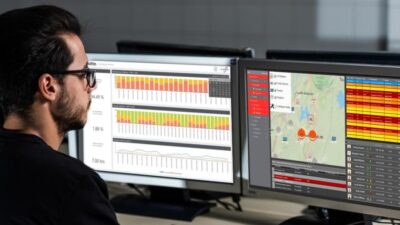
- Advanced analytics solutions tailored for manufacturing can help extract meaningful insights from operational data, enabling real-time decision-making and process optimization.
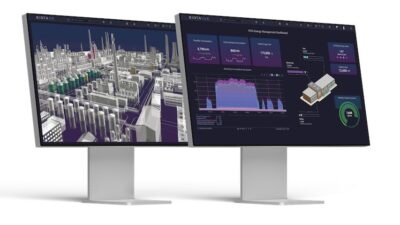
These solutions are designed to enhance data-driven decision making, improve operational efficiency and support predictive maintenance in manufacturing environments. (See Figure and caption.)
Driving strategic growth through data
Data acquisition and optimization are foundational to modern manufacturing, enabling greater efficiency, quality and innovation. Accurate, real-time data enables manufacturers to make informed decisions that streamline operations, reduce costs and enhance product quality.
Predictive maintenance, powered by data, minimizes downtime and extends equipment lifespan — further contributing to operational efficiency. At the same time, data optimization identifies inefficiencies and enables timely adjustments that support continuous improvement and adaptability.
To stay competitive, manufacturers must strategically leverage data to respond quickly to market changes and meet evolving customer expectations. Those that do will be best positioned to excel in efficiency, innovation and sustainable growth in an increasingly data-driven world.
Brian Bolton is a senior process engineer at Rockwell Automation. Edited by Mark T. Hoske, editor-in-chief, Control Engineering, WTWH Media, [email protected].
Keywords
Industrial data acquisition, DAQ benefits, data acquisition advice
Consider this
Have you applied modern technologies and methods to your data acquisition applications?
You also might like
Rockwell Automation provides more data acquisition case study information.