
ARC Leadership Forum, 2026 included discussions about securing OT for cyber-resiliency. Impacts of industrial cybersecurity breaches are increasing, affecting productivity, outages, brand degradation, lost business and intellectual property.
Industrial cybersecurity advice insights
- Reasons operational technology (OT) personnel need to change cybersecurity approaches were among topics in a Fortinet presentation at the 2026 ARC Leadership Forum by ARC Advisory Group.
- Prepare for probable and potentially costly cybersecurity breaches with a risk-based framework; are lives at risk?
- Article covers four cybersecurity operations; four cybersecurity standard sections; and three benefits of an OT risk-control cybersecurity architecture along with cybersecurity zones and conduits and mapping.
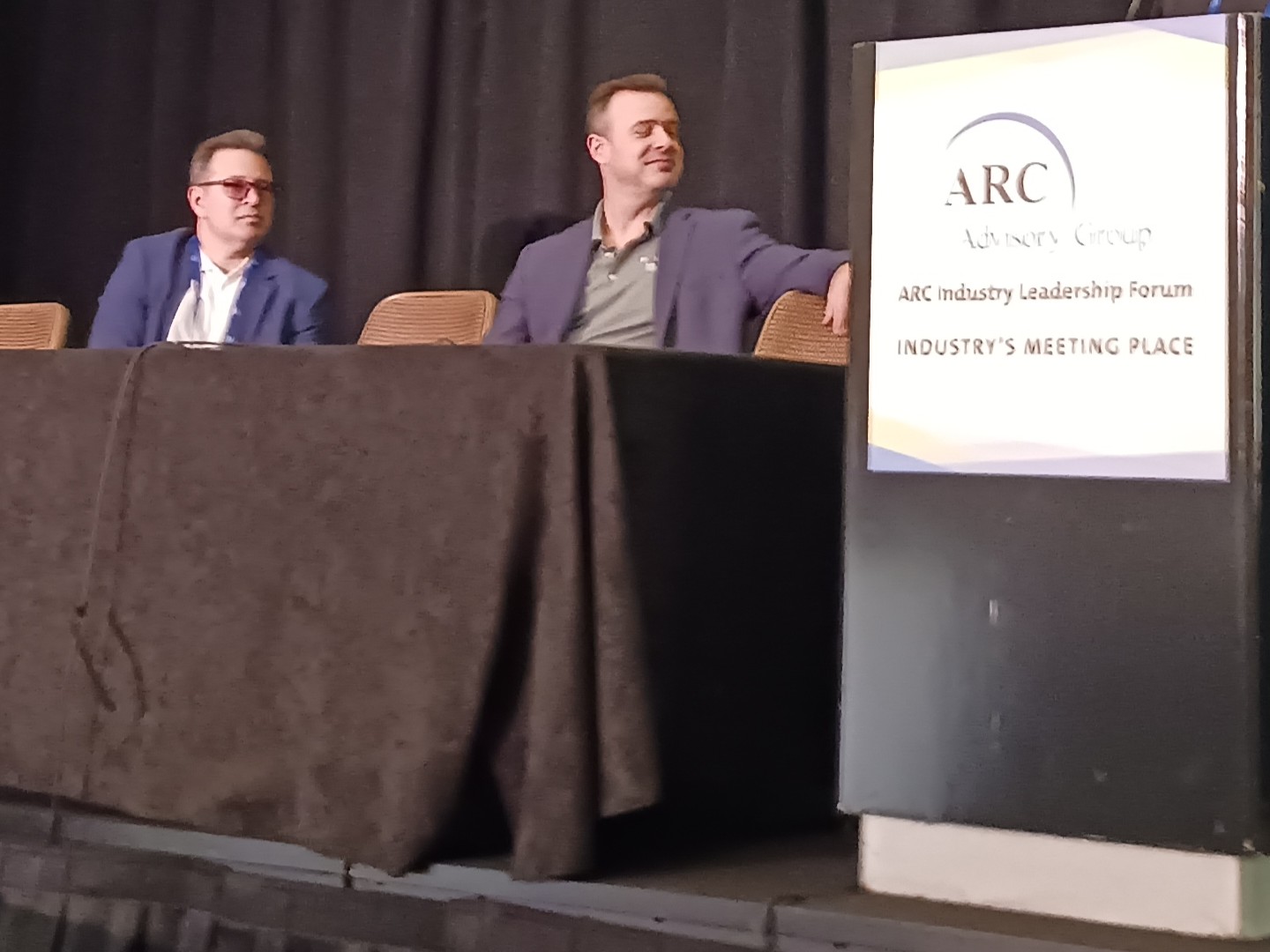
Operational technology (OT) cybersecurity issues include the added layers needed for modern production systems and increased complexity to controls, according to Erik Anderson, OT specialist, systems engineering, Fortinet (Figure 1), at the 2026 ARC Leadership Forum by ARC Advisory Group, Feb. 9-12, Orlando, Florida. Theme of the 30th Annual ARC Industry Leadership Forum event was “How AI Is Driving the Future of Industrial Operations and Supply Chain.”
Reasons OT needs to change its cybersecurity approaches
Anderson said OT needs to reduce risk and increase resiliency. Most controls lack security by design. Air gapping (the physical separation of systems from outside connections) as a means of protection is going away, and the attack surface of increasingly connected automation and control systems are expanding. Remote access requirements need a zero-trust approach. Digital transformation turning analog into digital. Asset owners increasingly rely on original equipment manufacturers (OEMs) and system integrators to help, Anderson said.
Probable cybersecurity breaches: Get ready with risk-based framework
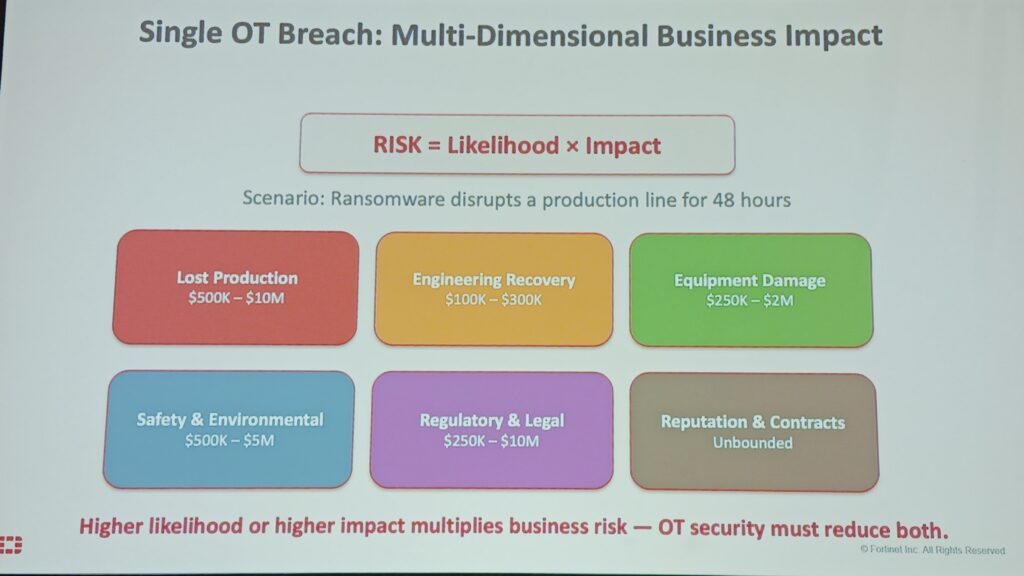
In a recent survey of OT chief information security officers (CISOs), Anderson said 6 of 10 reported at least three breaches in the past year. Impacts of industrial cybersecurity breaches are increasing, affecting productivity, outages, brand degradation, lost business and intellectual property (IP). Assigning a dollar value to threats and consequences (Figure 2) helps to get appropriate resources to improve cybersecurity, Anderson said. Applying a risk-based framework can be done by looking at
risk = probability x impact
or
risk = threat x vulnerability x impact.
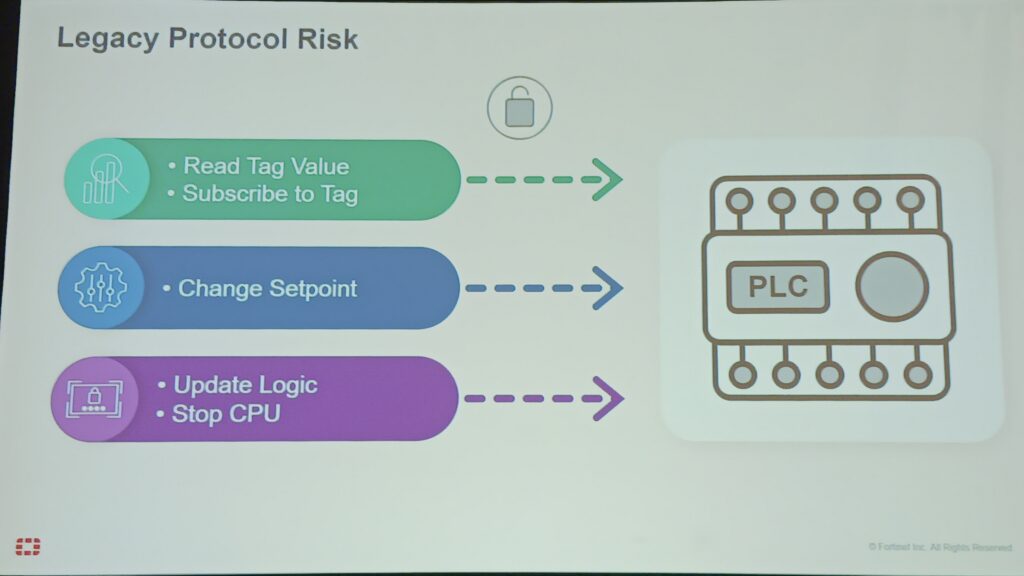
A recent pipeline cybersecurity breach resulted from using a legacy protocol that created outside access to a programmable logic controller (PLC). The breach allowed a hacker to read a tag value, subscribe to the tag, change a setpoint, update logic and stop the PLC’s central processing unit (CPU), he explained (Figure 3).
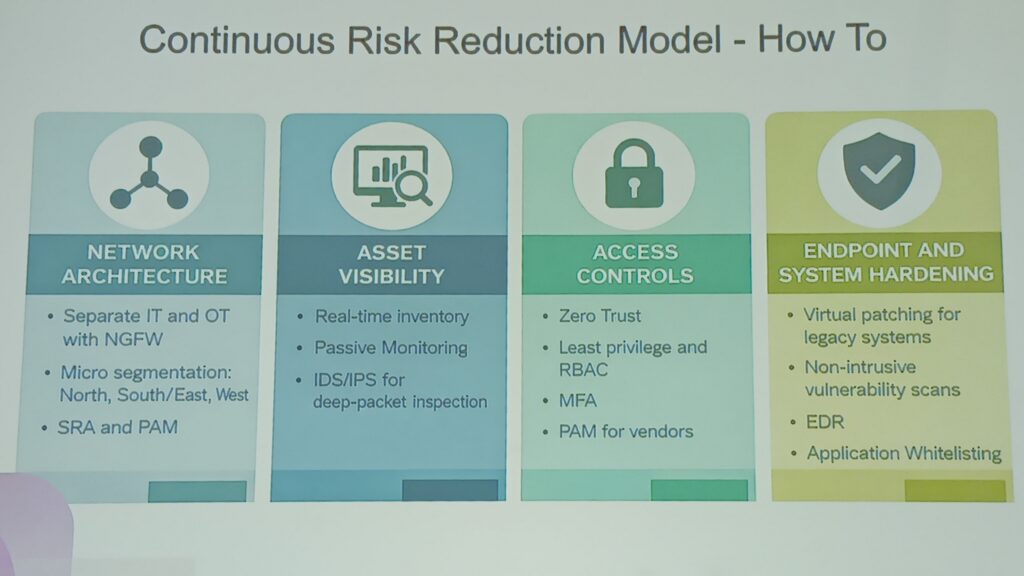
A continuous risk reduction model can include industrial network architecture, assets visibility, access controls, endpoint and system hardening (Figure 4).
Is a cybersecurity breach going to cost lives?
Carlos-Raul Sanchez, senior director operational technology solution engineer specialists at Fortinet (Figure 1), said it’s helpful to know who owns risk in the organization, because it varies. In some facilities a cybersecurity breach could result in loss of life. Interconnectedness and processing power increases speed, and, often, it’s helpful for things to go more slowly. “Faster” creates more challenges because we must remediate the problem in real time, Sanchez said. When a breach happens, not knowing assets and how they touch operations creates delay, greater risks and other challenges.
Separating IT from OT is a common strategy, but segmentation must be conducive to operations without slowing down the process.
“Where are we on the journey?” Sanchez asked. “As we move forward to segmentation, everything has to be done at speed.”
Four cybersecurity operations; four cybersecurity standard sections
Four basic operations for cybersecurity in a continuous risk reduction model are to allow, deny, monitor and quarantine. Standards help inform industrial cybersecurity efforts. ISA/IEC-62443 industrial cybersecurity of components and systems has sections with (1) general information such as concepts and models, (2) policies and procedures, (3) system and (4) component/product.
Today’s threats require a more active approach to mitigating threats. Preparation makes recovery easier when a breach happens. Micro-segmentation helps in two ways: passive monitoring and active query of advice. Older PLCs can be turned into a paperweight with the wrong treatment. Multi-factor authentication helps with the use of a defined model. Virtual patching addresses vulnerability of legacy devices without taking them out of operation by shrouding devices with proper protection.
Three benefits of OT risk-control cybersecurity architecture
Benefits of creating a layered OT risk-control cybersecurity architecture include:
1. Reduce surface reduction
2. Consequence reduction
3. Recovery time reduction.
The cybersecurity system needs to confirm that a device is who it says it is. When it’s a headless device, another approach is needed to recognize the device and let it operate. Micro-segmentation is needed from layer 1 to layer 7 in the OT infrastructure (Figure 5).
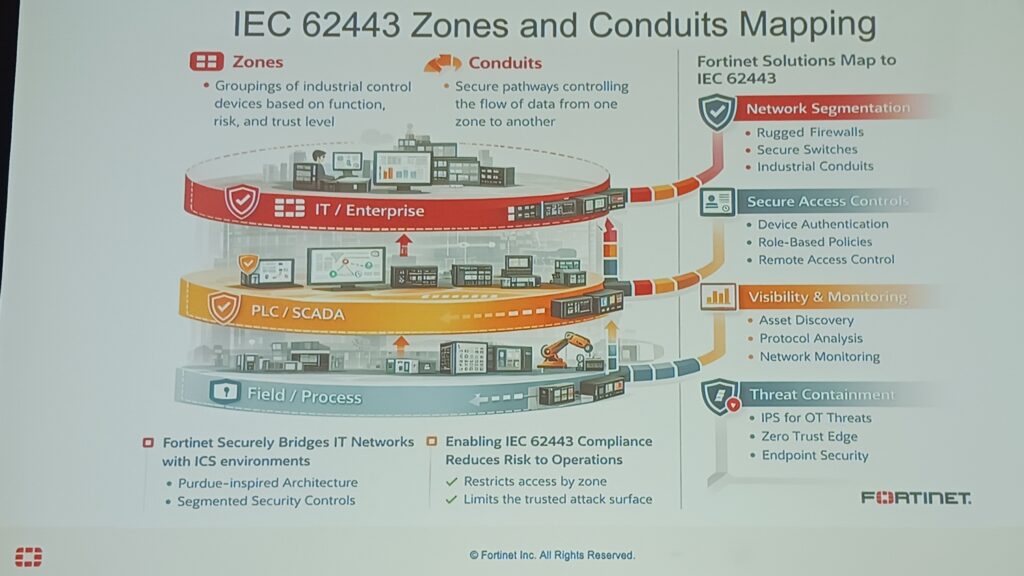
Cybersecurity zones and conduits, mapping
Zones are groupings of industrial control devices based on function, risk and trust level. Conduits are secure pathways controlling the flow of data from one zone to another. Maturing cybersecurity efforts in IT and OT require a pragmatic approach to cybersecurity from basic to advance at five levels: secure, defend, contain, monitor and manage. The plant manager ultimately is responsible, not just the CISO.
Those with cybersecurity insurance may be disappointed when filing a claim; some type of audit needed for any insurance claim, with records.
Layered cybersecurity controls
Layered protection includes data in motion and data at rest, network segmentation, an OT application-layer policy and OT vulnerability protection, Anderson and Sanchez said. No one is getting slower, only faster.
Mark T. Hoske is editor-in-chief, Control Engineering, WTWH Media, [email protected].
Keywords
OT cyber-resilience, industrial cybersecurity framework, cybersecurity tips
Consider this
Cybersecurity breaches may result from already embedded threats. Are you ready?
You also might like
See other cybersecurity help from Control Engineering.
https://www.controleng.com/industrial-cyber-security
https://www.arcweb.com/events/arc-industry-leadership-forum-orlando