System integrators at the Ignition Community Conference explained why better requirements, earlier stakeholder involvement and disciplined decisions matter as much as technical execution.
Automation mistakes insights
- Automation projects must define business intent and measurable operational outcomes before selecting technologies to avoid building systems that technically function but fail to deliver value.
- Engaging hands-on plant-floor experts early uncovers hidden operational realities that prevent costly late-stage redesigns.
- Teams must force-rank priorities and document trade-offs continuously, because major budget overruns typically accumulate from small, unexamined decisions rather than a single catastrophic failure.
The demolition crew had already removed equipment from a mothballed manufacturing facility when the automation planning caught up. Along with the old machinery, workers had damaged or destroyed wiring and network infrastructure that could have supported the plant’s restart.
The problem was not a failed controller or software bug. It was a missing plan.
“You don’t get to uncut the wiring that you cut,” said Cassy Gardner, director of corporate development at E Tech Group.
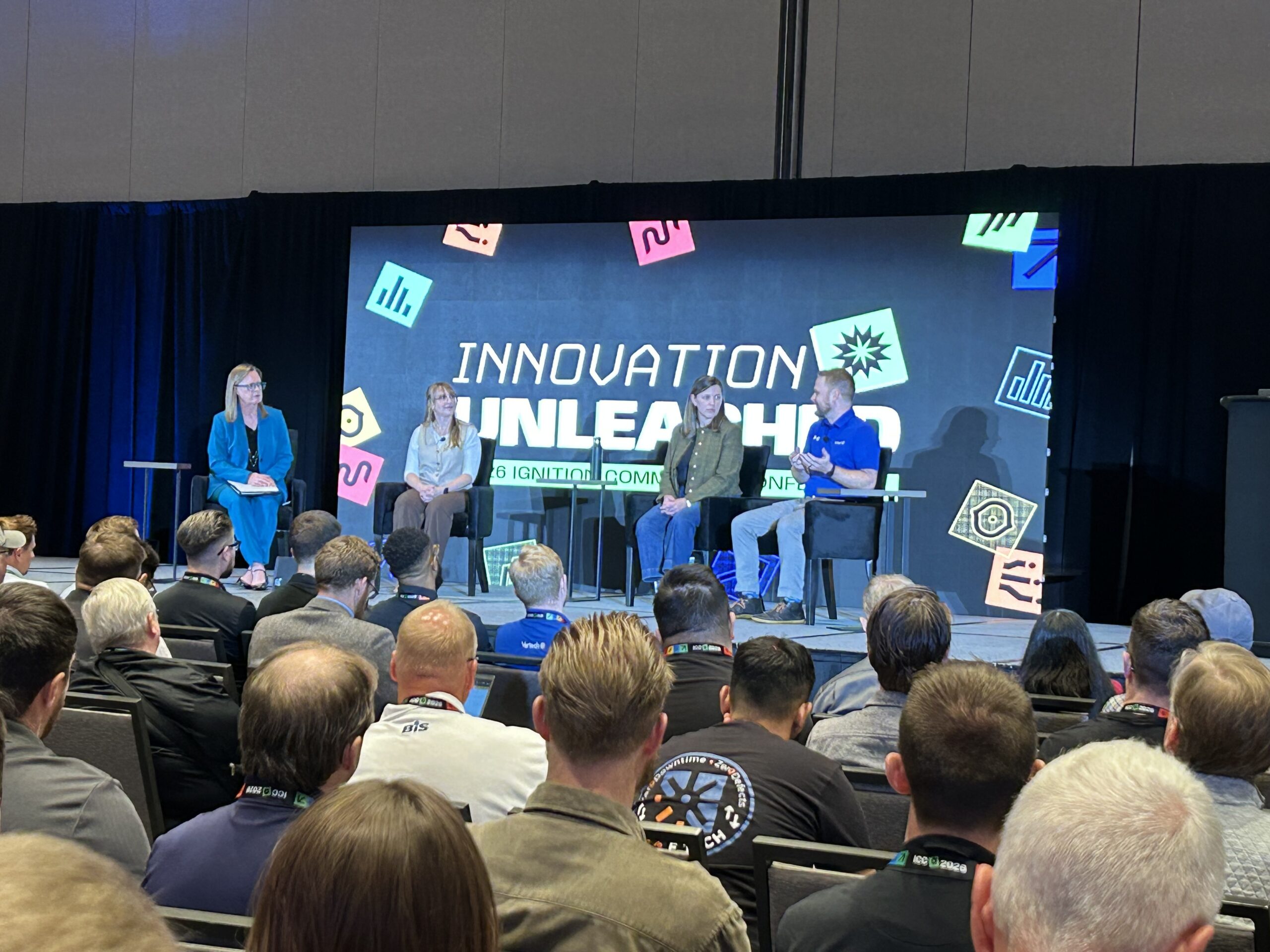
That example framed a recurring message during “Avoiding Million-Dollar Mistakes in Automation Projects” at Inductive Automation’s Ignition Community Conference in September 2026. Expensive failures often begin with decisions made before programming starts.
Moderated by Adrienne Meyer, CEO of the Control System Integrators Association (CSIA), the panel featured system integrators Gardner; Elizabeth Reed, director of SCADA and MES at DMC; and Ryan Crownover, vice president of digital plant at Vertech. Their advice centered on aligning engineering work with operational needs and maintaining that alignment throughout a project.
Define success before specifying technology
A working system is not necessarily a successful system. Crownover described projects that met agreed requirements but disappointed customers because they addressed the wrong problem.
That risk increases when customers arrive with technologies and architectures already selected. Engineers then must fit an operational problem into a predetermined solution rather than evaluate which approach would deliver the intended result.
Reed described a greenfield manufacturing execution system (MES) project that captured more detailed production data than the customer’s other facilities. Operations stakeholders participated, and the team satisfied the requirements. Yet a follow-up visit revealed that users relied on only part of the information collected.
The lesson: A signed specification does not establish that every requested capability deserves its implementation cost.
For control engineers, requirements discussions should go beyond what information a system will collect. Ask who will use it, which decisions it will support and how those decisions will improve operations. Those answers provide a stronger basis for evaluating scope than enthusiasm for additional functionality.
Plan before committing resources
At the facility where infrastructure was destroyed, E Tech Group proposed a front-end engineering and design (FEED) study to establish requirements, identify stakeholders and evaluate automation options.
Gardner described FEED as an opportunity to connect business outcomes with a documented technical approach before implementation narrows the choices.
“If you wait too long in your project to involve a partner who understands the ecosystem and the environment, you lose the opportunity for that type of thinking and to really decide what the best choice is for you and the team and your company,” Gardner said.
However, that same customer did have clear agreement that schedule was the primary business priority. That direction helped the integration team make smaller technical and deployment decisions consistently.
The practical takeaway is to establish both the plan and the decision criteria. When schedule, cost and functionality compete, the team needs an agreed basis for choosing among them.
Find the people missing from meetings
Stakeholder lists can appear complete while excluding the person who understands how a facility actually operates.
Crownover recalled a project that reached approximately a 90% factory acceptance test review before the team learned about a longtime employee named Jo. Operators repeatedly suggested consulting her. She had not participated in the earlier design discussions or reviews.
“Jo’s been at this facility for 30 years,” Crownover said. “She knows where every skeleton is hidden. She knows how every single thing needs to work.”
Her knowledge would have changed the development direction much earlier.
Engineers should therefore test stakeholder coverage rather than assume the customer’s meeting invitations capture it. Ask operators whom they consult when a process behaves unexpectedly or when documentation does not explain actual practice.
Gardner also described a project where resistance to involving information technology personnel resulted in expensive changes after IT eventually joined. Early engagement should include groups whose requirements can reshape the system, and not just those sponsoring the work.
Write requirements around intent
Crownover used a microwave to illustrate the difference between specifying hardware and describing a user need. Requiring a particular keypad defines an interface. Requiring users to enter a duration and run the microwave for that period defines an outcome. A keypad, dial or another interface might satisfy it.
Automation requirements benefit from the same distinction. Describing the task preserves engineering flexibility, while prescribing an implementation too early can eliminate better options.
The reason behind a requirement also matters.
“Requirements are especially dangerous if they come from a department and not a person,” Crownover said. “You need to understand why some requirement is there.”
Without an identifiable owner and business rationale, teams can spend considerable effort accommodating a restriction that later proves negotiable. Record who needs each significant requirement and why. That context becomes particularly valuable when scope changes or new stakeholders arrive.
Choose a delivery method the customer can support
The panelists rejected a universal answer to the agile versus waterfall project management question.
Predictable work with well-understood dependencies can suit a sequential approach. Iterative development becomes valuable when learning from one feature should influence the next. But agile requires customer participation.
“Your input and feedback into the process is what makes it work,” Crownover said.
A shorter review cadence enables faster changes in direction but requires more frequent stakeholder attention. Customers should commit the necessary time before agreeing to that approach.
Reed cautioned that iterative development still needs architectural direction.
“It’s also important to at least have a rough idea of the long-term roadmap, because you don’t want to program yourself into a corner,” Reed said. “You programmed feature A, and you didn’t know about feature C, and now it’s a lot more expensive to implement.”
A long-term roadmap helps developers avoid choices that make later capabilities unnecessarily expensive, even when detailed requirements remain flexible.
Rank priorities and document trade-offs
Crownover recommended forcing the project backlog into rank order rather than assigning broad priority labels. Asking what would be cut first exposes disagreements that a list of high-priority features can conceal.
Engineers should revisit that order as the project develops and pair it with a decision log explaining choices and budget implications.
Reed noted that overruns can emerge from many small decisions rather than one dramatic mistake.
“It wasn’t a single decision that you made the wrong decision for,” Reed said. “All of those tiny things on the road, that adds up to that.”
Tracking those decisions gives engineers and customers a chance to respond before the cumulative effect becomes a surprise.
Better automation delivery requires more than technical competence or choosing the right software package. Teams must find the right people, ask what success means and preserve the reasoning behind decisions long after the kickoff meeting ends.
LEARNING OBJECTIVES
- Define automation requirements based on intended operational outcomes and business ROI rather than preselected technical features or hardware architectures.
- Identify and engage critical plant-floor personnel and cross-functional teams early in the front-end engineering phase to uncover hidden process constraints before testing.
- Evaluate project complexity to select the appropriate project management methodology and implement rank-ordered prioritization to control total cost of ownership.
CONSIDER THIS
Before writing a single line of code, have you validated why each requirement exists with the actual plant-floor users, or are you building a technically compliant system that fails to solve the real business problem?