Improving collaboration, cloud and hybrid analytics platform helps adopters gain a competitive advantage by reducing information technology (IT) overhead, ensuring regulatory compliance and standardizing operations across entire enterprises.

Learning objectives
- Understand the importance of data in an environment in which information technology and operational technology converge.
- Learn about the best ways to tackle optimization challenges.
- Discover whether industrial data should be processed and analyzed on-premises or in the cloud.
Cloud analytics insights
- Cloud-based environments offer scalability and modern features.
- On-premises setups are often associated with tighter control, data sovereignty and perceived performance advantages.
- Cloud-based analytics platforms can be accessed from anywhere with an internet connection.
In today’s data-driven industrial landscape, organizations must make the most of cloud analytics to keep up with rapidly evolving operational technology (OT). The convergence of information technology (IT) and OT is no longer a futuristic or ideological concept but a reality.
The growing digitization of factories and the process industries has turned data into one of the most valuable assets in industrial operations. With the proliferation of sensors, industrial internet of things (IIoT) devices and automated systems, the volume and velocity of data being generated on shop floors have reached unprecedented levels.
This data explosion has led to a growing demand for real-time, high-volume analytics to extract actionable insights for operations, maintenance, quality and compliance. Industrial enterprises are increasingly relying on analytics to optimize performance, reduce downtime, ensure product quality and comply with stringent regulatory frameworks. Yet, a fundamental debate remains: what is the best approach for tackling optimization challenges, and should industrial data be processed and analyzed on-premises or in the cloud?
There is a growing number of software solutions on the market aimed at addressing various industry needs. Leading solutions provide a wholistic platform on which to build and execute multiple data analyses. While cloud-based environments offer scalability and modern features, and have become mostly standard across industries, on-premises setups are still often associated with tighter control, data sovereignty and perceived performance advantages. For organizations navigating digital transformation, understanding the strengths and trade-offs of each approach is critical to crafting an effective data strategy.
Advanced analytics is business critical
Data analysis is embedded in the core of modern industrial excellence. With the right tools and infrastructure, analytics can transform raw data into actionable intelligence to drive measurable value. Key applications include:
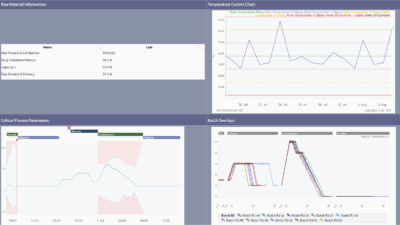
- Real-time process monitoring: Immediate visibility into key metrics such as temperature, pressure and throughput allows for swift intervention when parameters deviate.
- Process and operations optimization: Advanced algorithms help identify bottlenecks, inefficiencies and inconsistencies, enabling continuous improvement.
- Automated reporting: Particularly valuable in highly regulated industries, data-driven reporting systems reduce human error and streamline compliance documentation.
- Quality management support: Analytics helps maintain stringent quality standards by monitoring process variables and detecting deviations.
- Predictive maintenance: Instead of reacting to equipment failures, organizations can anticipate them, minimizing unplanned downtime.
- Energy efficiency: Real-time data helps optimize energy consumption across processes, contributing to sustainability goals.
- Root cause analysis and deviation investigation: Historical and real-time data help quickly isolate causes of production issues and product non-conformance.
Industrial data analytics is mission-critical, enabling faster and smarter decisions that impact manufacturing bottom line and end-user satisfaction. Conducting analyses properly, however, requires the right software tools, and attempting to perform analytics using spreadsheets, business intelligence suites or other inadequate platforms leaves value on the table.
The compelling case for SaaS
As industries digitize, software-as-a-service (SaaS) platforms have become increasingly attractive for performing industrial analytics. According to a 2019 Flexera study, 94% of organizations conducted at least some of their workflows in the cloud, and Fortinet reported a consistent increase in cloud usage over the three years that followed. Hosted in the cloud and managed by vendors, SaaS solutions offer manufacturers numerous strategic advantages (Figure 1).
Cost-effectiveness
SaaS removes the need for heavy capital investments in on-premises servers, storage and IT personnel. Operational expenses become predictable, with organizations paying only for what they use. Over time, this model typically reduces total cost of ownership (TCO), especially when factoring in hardware refresh cycles, upgrades and downtime.
Scalability and flexibility
SaaS platforms are built to grow with businesses. Whether expanding to new production lines, onboarding more users or integrating new data sources, scaling a SaaS environment is often as simple as changing a subscription tier. There is no need to purchase new hardware or reconfigure legacy systems.
Automatic updates and maintenance
One of the most significant benefits of SaaS is the hands-off nature of maintenance. Vendors handle everything from bug fixes to feature rollouts. This ensures users always have access to the latest capabilities and security protections — without disrupting operations.
Accessibility and collaboration
Cloud-based analytics platforms can be accessed from anywhere with an internet connection. This is particularly valuable in today’s hybrid and global work environments. Teams from different departments or locations can collaborate on the same data in real time, accelerating decision-making and innovation.
Security and compliance
Top-tier SaaS vendors invest heavily in security infrastructure, including encryption, intrusion detection, access control, and audit logs. Many also maintain certifications such as System and Organization Controls 2 (SOC 2), or implement quality processes and services supporting GxP compliance, applicable in heavily regulated industries like the life sciences. These approvals help end users meet industry-specific regulations more easily than in-house-developed setups might facilitate.
Centralization and consistency for complex organizations
In large enterprises where operations span multiple sites and regulatory scrutiny is intense, the ability to centralize analytics dramatically improves productivity. Consider a pharmaceutical company rolling out a new production process across three plants in different countries. With a central SaaS platform that connects to each site’s local data sources, managers can monitor the same key performance indicators (KPIs) across locations, spot discrepancies, share learnings and enforce best practices uniformly.
This level of synchronization and control is difficult to achieve with disparate, on-premises solutions. SaaS provides a layer of consistency that is critical when product quality and compliance are non-negotiable.
Common objections to SaaS
Despite the compelling advantages, certain concerns sometimes prevent organizations from adopting SaaS for industrial analytics. These objections are understandable and must be thoughtfully addressed.
IT hurdles
Organizations can anticipate significant IT effort to transition from legacy systems to cloud-based platforms. Concerns may include giving these platforms access to internal network layers and integrating with data historians, manufacturing execution systems (MES), laboratory information management systems (LIMS), and other databases. However, the best SaaS vendors increasingly provide connectors and integration technology that are aligned with the highest cybersecurity standards to avoid disrupting existing data infrastructure.
Data ownership concerns
Companies often worry about losing control over their data in the cloud, creating many questions: Who owns the data? Where is it stored? Can we retrieve it easily? These concerns can be mitigated by selecting vendors who offer transparency regarding data infrastructure and ownership.
The right cloud architecture that preserves data integrity is key. Leading SaaS advanced analytics platforms, such as Seeq, query data on demand directly in existing repositories without the need to pre-process, move, or duplicate it, leaving data unaltered and in its original location.
Compliance and security requirements
Highly regulated industries require providers to adhere to strict compliance standards. If a SaaS provider lacks key certifications or is not experienced in regulated markets, manufacturers may rightfully hesitate. The solution lies in vendor due diligence — selecting partners who understand regulatory environments and offer compliance assurance as appropriate, with dedicated product versions for specialized environments, such as GxP.
Cost perception
Organizations with existing on-premises infrastructure often assume that adding SaaS platforms duplicate costs. However, many overlook the hidden costs of maintaining aging systems, including manual updates, system downtime, and fragmented data silos that can quickly amount to greater expenses than anticipated. In fact, higher overall cost of ownership for on-premises solutions is well documented.
Performance concerns
Some users fear that cloud-based solutions may not meet the latency requirements of real-time control applications. While this concern is well-founded, most SaaS platforms are used for monitoring and analytics — not for control. Moreover, edge computing bridges the performance gap by handling real-time tasks locally while leveraging the cloud for higher-order analytics. In other words, it is important to understand the precise scope of an implementation and the nature of the process under control.
Control over upgrades
With SaaS, the provider typically dictates when updates are deployed. However, many organizations prefer — or must for regulatory compliance reasons, such as in the case of validated GxP systems in life sciences — to validate updates before applying them.
Some software vendors provide end users with full upgrade control, allowing access to the latest and greatest software versions whenever they are ready. For example, Seeq’s Pharma Analytics & AI Suite provides separate environments for production and for testing, with new software releases pushed to the test environment quarterly. Each user can then check regulatory release notes and run all necessary tests and verification before approving the upgrade for use in the production environment.
Optimize on SaaS platforms
As digital transformation proliferates, the need for scalable, responsive, and secure analytics is becoming ever more pressing. While on-premises systems offer a perception of control and familiarity, SaaS analytics platforms provide a modern, flexible and powerful alternative that meets the demands of today’s industrial challenges.
SaaS is well-suited for organizations aiming to standardize operations across multiple sites, improve collaboration and reduce IT overhead. The ability to monitor and optimize processes centrally while maintaining compliance and data integrity is a major competitive advantage.
Concerns about closed loop control coordinated by advanced data analytics are justified. However, organizations can benefit immensely from leveraging edge computing systems that bridge centralized analytics in the cloud with plant floor level real-time control.
The best analytics strategy for each company must align with production goals, the regulatory landscape and available infrastructure. And data analytics’ most critical role is not replacing, but further empowering process experts so they can make better decisions faster that facilitate optimal operational efficiency.