The most successful AI deployments in process industries don’t happen in isolation but are instead embedded across the full automation lifecycle, from planning to upgrades.

Lifecycle-ready AI insights
- AI delivers the most value when it’s embedded across the full automation lifecycle (planning through upgrades), not deployed as isolated pilots or standalone tools.
- AI meaningfully reduces time, cost and complexity by accelerating engineering, simulation-driven deployment and operational improvements like predictive maintenance and decision support.
- Successful industrial AI must be deterministic, explainable and traceable, which is easiest to achieve when it’s built directly into trusted automation platforms rather than bolted on later.
There are few developments being discussed as extensively in process manufacturing today as artificial intelligence (AI). Manufacturers around the globe are exploring AI opportunities, with many organizations implementing pilot programs using the latest emerging technologies. This trend in AI adoption is fueled by the fact that expert personnel are becoming increasingly scarce, just as competition is emphasizing a need for optimization. Organizations recognize that AI can help bridge knowledge gaps by preserving expertise while simultaneously enhancing productivity, enabling them to compete in today’s challenging global marketplace.
Starting a successful AI implementation
Technology vendors have not missed this sudden interest in AI coming from process manufacturing. As AI-focused startups continue to emerge, vendors are releasing a wave of targeted, custom solutions to increase operational efficiency for manufacturers. Although having multiple alternatives can be advantageous, the variety of options can also create a great deal of confusion.
Many organizations struggle to think holistically across the automation lifecycle, failing to identify the right solutions and developing ineffective implementation strategies. Without a clear strategy, companies risk deploying solutions that perform poorly in complex manufacturing environments, prove unsustainable in the long term and/or create new silos of data that compound operational complexity.
A more effective approach does exist. Organizations having the most success with deploying AI solutions are those that adopt an approach across the entire automation lifecycle. The most effective way to ensure that AI technologies bring value across the lifecycle — planning, engineering, deployment, operations and upgrades — is to rely on fit-for-purpose solutions already built into key automation technologies. As automation solutions continue to evolve, they are increasingly including critical technologies to support every stage of the lifecycle, making it easy for companies to deploy AI as part of a trusted, intuitive system (Figure 1).

AI improves planning
In the planning stage, organizations explore system and engineering requirements to meet their needs, while carefully managing cost and risk tradeoffs. By providing risk assessment using historical data to identify potential issues, AI-based planning tools can make a significant difference for teams driving to improve planning accuracy.
Existing tools can help project teams make more profitable lifecycle cost decisions by determining probable outcomes across design, capacity, operations, maintenance, logistics and market dynamics. These tools use Monte Carlo simulation and scenario analysis to determine probable outcomes, optimizing performance and reducing capital expenditures.
As AI tools evolve, particularly in generative AI capabilities, they will offer increasingly powerful requirements in generation, milestone planning and risk assessment. Advanced large language models (LLMs), customized to an organization’s specific operations, will empower teams to work with these tools using natural language queries for enhanced understanding and improved content from the earliest planning stages.
AI accelerates engineering
Historically, a deep bench of expert engineers would operate behind the scenes of any project to ensure everything was developed to the exacting standards of the organization and was compliant with complex regulatory requirements. Today’s shortage of expert personnel, however, is making it difficult to deliver high-quality solutions within reasonable timelines. Teams struggle to find time to engineer and validate the many options necessary to deliver operational excellence.
Modern AI-enabled tools can significantly reduce required engineering time at this stage by leveraging existing data and knowledge bases. One such example is the leveraging of AI capabilities to convert engineering drawings into operator display graphics. This automation not only reduces effort and errors by eliminating manual creation of visual elements, but it can also generate solutions that enhance operator situational awareness and responsiveness in real-time environments.
Engineering of control strategies also benefits from AI assistance because it accelerates development by starting with proven standard solutions and established first principles models. These approaches are then intelligently customized using a manufacturer’s specific operational data and unique requirements, empowering critical engineering personnel to spend more time evaluating and refining those solutions to deliver optimal control strategies.
AI streamlines deployment
Teams have used simulation for decades to speed deployment, leveraging digital twin technologies for testing and validation. Today, AI technologies are being built into simulation tools, providing engineers and operators what they need to run simulations more efficiently to resolve potential issues before installing equipment.
Using AI-enabled simulation tools, teams gain the ability to rapidly test thousands of possible configurations and processes, far more than they ever could manually. This enables the rapid identification and diagnosing of configuration or integration problems early in the deployment stage.
Modern AI tools also significantly reduce the effort needed to deploy advanced process control (APC). Today’s embedded industrial AI enables engineers to feed existing historical process data into APC solutions, select relevant variables and generate initial models. Model generation steps that previously required weeks of engineering effort can now be completed in much less time.
AI transforms operations
Today, embedded AI tools are already providing significant value for ongoing operations. AI’s pattern recognition and data processing capabilities have unlocked predictive maintenance solutions that were unimaginable only a few short years ago. Leveraging embedded machine learning to predict and diagnose issues, enterprises can deliver actionable insights that empower operators and technicians of all experience levels to navigate challenges and schedule repairs before they escalate into failures. These solutions are further enhanced by edge devices that can deploy embedded AI on-site to quickly diagnose the most common issues with machinery and avoid unplanned downtime.
AI also enhances plant operations by assisting with complex state changes that require sophisticated decision-making capabilities. Emerging AI-driven virtual advisors with natural language capabilities will support operators in making informed decisions, helping to drive more predictable and efficient operation. As these technologies evolve, virtual advisors will increasingly function as operator copilots, enhancing real-time upskilling, flagging unsafe conditions and driving users toward the best decisions for any operational scenario.
AI simplifies upgrades
Existing tools can be particularly useful for brownfield projects that require modernization strategies. The most advanced AI-planning tools can assist in the modernization of legacy process control systems, helping create automated workflows to upgrade them.
AI analyzes configuration files from legacy systems and extracts information about the controller and I/O configuration, together with the control strategies, and presents them in an understandable format for humans. This provides a significant improvement as opposed to proprietary implementations, which typically require deep understanding of legacy system intricacies.
This information is then used to prepare more accurate modernization scopes and generate detailed documentation, including I/O lists, function block databases, logic drawings, structured text, ladder logic diagrams and configuration reports. These steps, combined with automated testing, help improve accuracy and engineering efficiency, while reducing risks and scheduled time for modernization projects. The value progressively increases with each upgrade as the model continuously learns from every project (Figure 2).
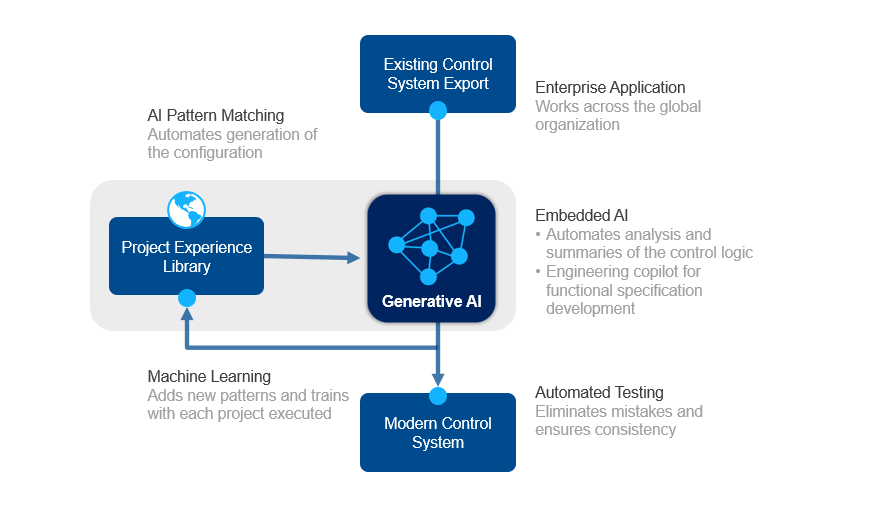
Figure 2: AI modernization tools help improve accuracy and engineering efficiency, while reducing risk and compressing schedules for modernization projects. Courtesy: Emerson
Navigating AI challenges
AI is transforming the automation lifecycle through capabilities that leverage existing knowledge and best practices, analyze complex scenarios using machine learning and enable natural language interactions with users. While there is tremendous potential, successful implementation requires a thorough consideration of key challenges.
AI systems must behave deterministically, producing consistent results from identical datasets. This behavior is best achieved through AI that is rigorously tested and validated alongside the control systems. Additionally, AI decisions must be explainable and fully traceable to the underlying data source. When these requirements are met, AI becomes an invaluable tool within the automation lifecycle.
AI for automation
There are many AI companies offering specialized, standalone solutions to support process manufacturers. Many of these solutions are quite powerful and can be valuable additions to an organization’s automation strategy. However, the most successful AI investments will be made in solutions designed with industrial operations in mind and embedded directly into existing automation technology. These solutions will be more intuitive for operators and technicians to adopt, integrate seamlessly with the current tools and evolve in parallel with existing automation technologies. Drawing from decades of automation expertise, these types of solutions are purpose built to ensure they overcome the challenges of AI and optimally meet user needs.
AUTHOR

Dave Denison serves as vice president of technology for Emerson’s process systems and solutions business, where he is responsible for the overall leadership of the technology process and strategic direction. Denison leads a global team developing the DeltaV Distributed Control System and Safety Instrumented System platforms. Denison holds a bachelor of science in computer engineering from Iowa State University and an MBA from St. Edward’s University.
LEARNING OBJECTIVES
- Understand why the most effective AI strategies in process manufacturing are integrated across the full automation lifecycle.
- Learn how AI can improve key lifecycle stages by reducing effort, accelerating execution and improving performance.
- Recognize the critical requirements for successful industrial AI adoption, including deterministic behavior, validation, explainability and traceability.
CONSIDER THIS
Are we investing in AI tools that are truly embedded into our automation lifecycle (from planning to upgrades), or are we creating new standalone solutions that will add complexity and silos over time?