Digital Twin Consortium’s FRS framework helps digital twins turn live predictions into safer, goal-oriented operational actions.
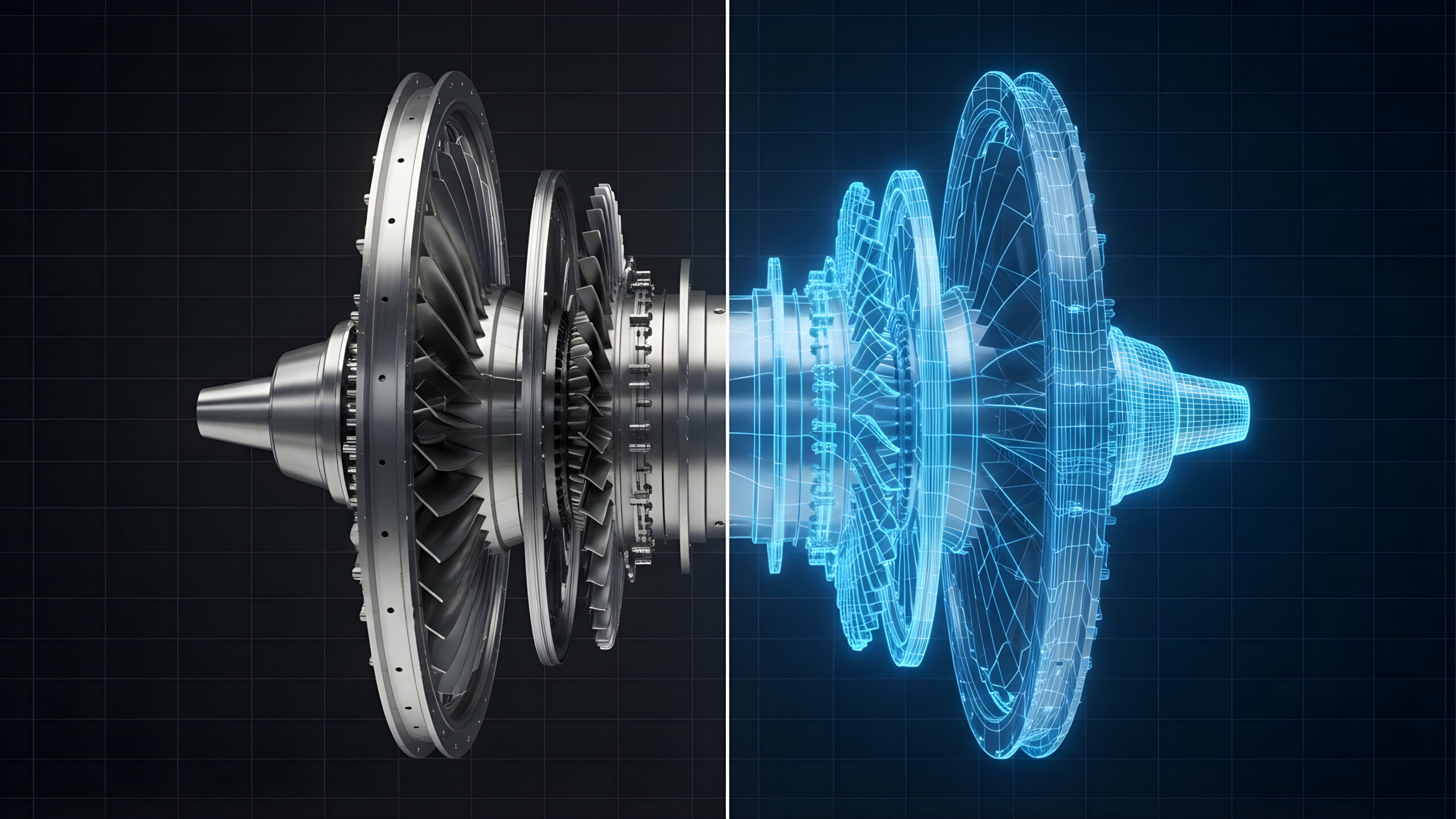
The Digital Twin Consortium (DTC) announced member adoption of multi-agent driven Front-Running Simulation (FRS), moving the framework from concept to implementation. An FRS implementation is operating on a hydrocarbon processing plant digital twin, using predictions to support executable actions under human-in-the-loop or human-on-the-loop oversight. FRS focuses on goal-oriented digital twin updates at the system level.
Digital twins are important for Control Engineering subscribers because they provide an as-is simulation of automation and controls in applications, improving likelihood that upgrades and start-ups operate as intended. Checking optimization and incremental upgrades against a digital twin lowers risk and improves the quality of control-system changes, migration and upgrades.
FRS was introduced in the paper Front Running Simulation: A Digital Twin Framework for Real-Time Replication, Prediction, and Goal Navigation by Dr. Michael Grieves, Executive Director of the Digital Twin Institute. DTC members are now applying the framework and supporting its transition from publication to operational use.
Predictions are most useful when they can support operational decisions. FRS is designed to address this gap by synchronizing with a live system, modeling potential operating scenarios using simulation and AI and identifying actionable information steps. These steps support progress toward defined operating goals while reducing unnecessary time, energy and material use.
Simulation Integration Engine is model-based
WIthin the FRS framework, the Simulation Integration Engine combines causal reasoning from physics-based models with correlations derived from current and historical data. In the webinar example, a candidate action for a process plant digital twin runs is evaluated using physics-based prediction, a defined causal model, a deterministic safety check and a confidence classification. This determines whether the action is executed automatically, recommended to an operator, or deferred for further review.
“FRS answers the question every digital twin program eventually hits: what do you do with a prediction? For our members, it is a concrete, demonstrated path from foresight to guarded, auditable action. For the broader ecosystem, it is a reusable pattern — fusing causation and correlation, gated by safety and confidence — that applies across process, energy, water, and discrete manufacturing and several other applications,” said Dan Isaacs, GM & CTO, Digital Twin Consortium.
Download the FRS paper at https://doi.org/10.3390/machines14070763.
Edited by Puja Mitra, Arrowfly, for Control Engineering, from Digital Twin Consortium news release.
For more from the Digital Twin Consortium, see:
https://www.controleng.com/member-led-testbeds-explore-emerging-digital-twin-technologies/
For other digital twin updates, see:
https://www.controleng.com/digital-twins-deliver-new-capabilities-value-for-industrial-applications/