Digital twins can create a shared reality for operations, as part of an open digital ecosystem, as experts discussed at ARC Leadership Forum, 2026. See recommendations on how to received concrete benefits.
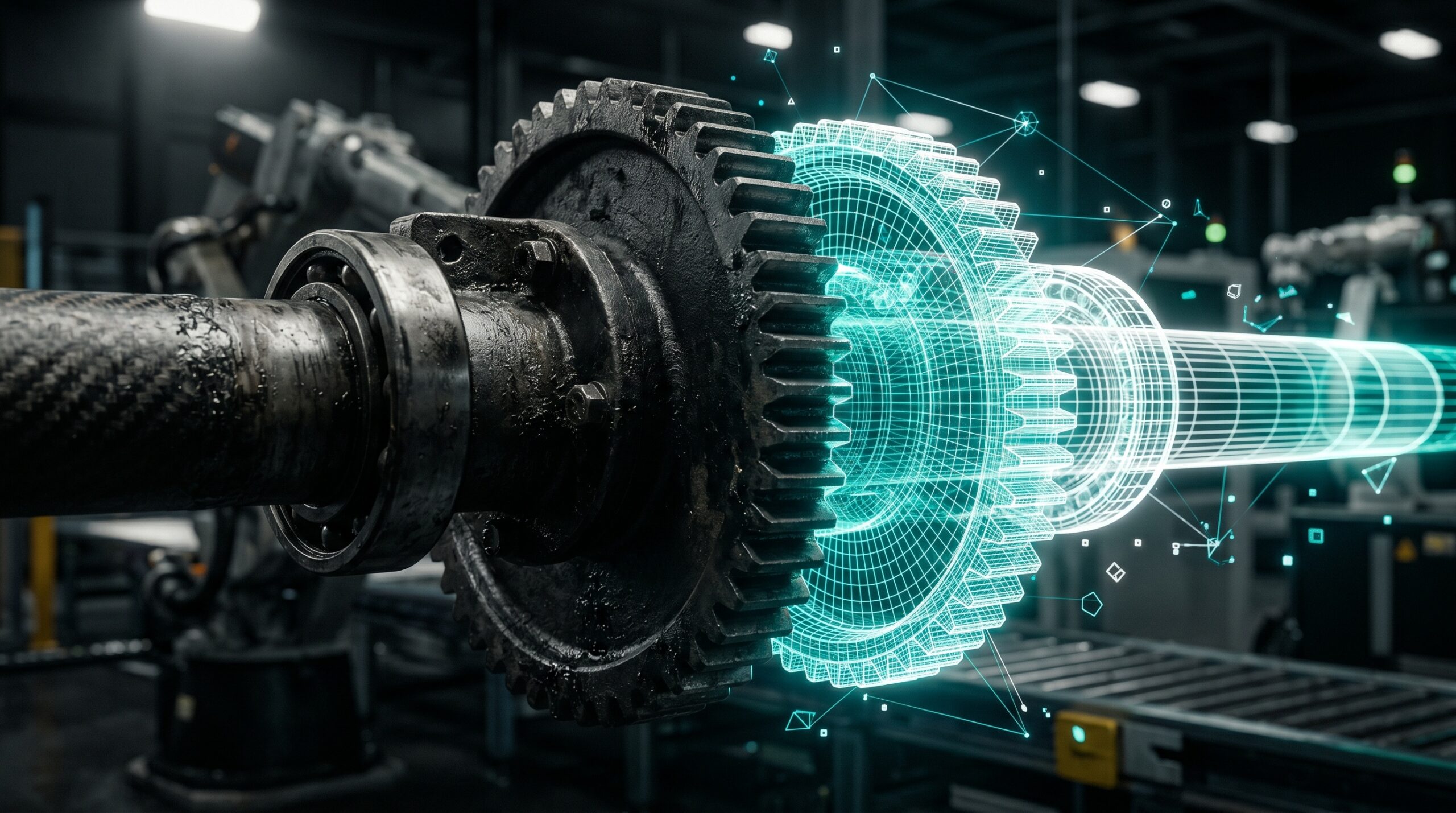
New digital twin advancements and insights
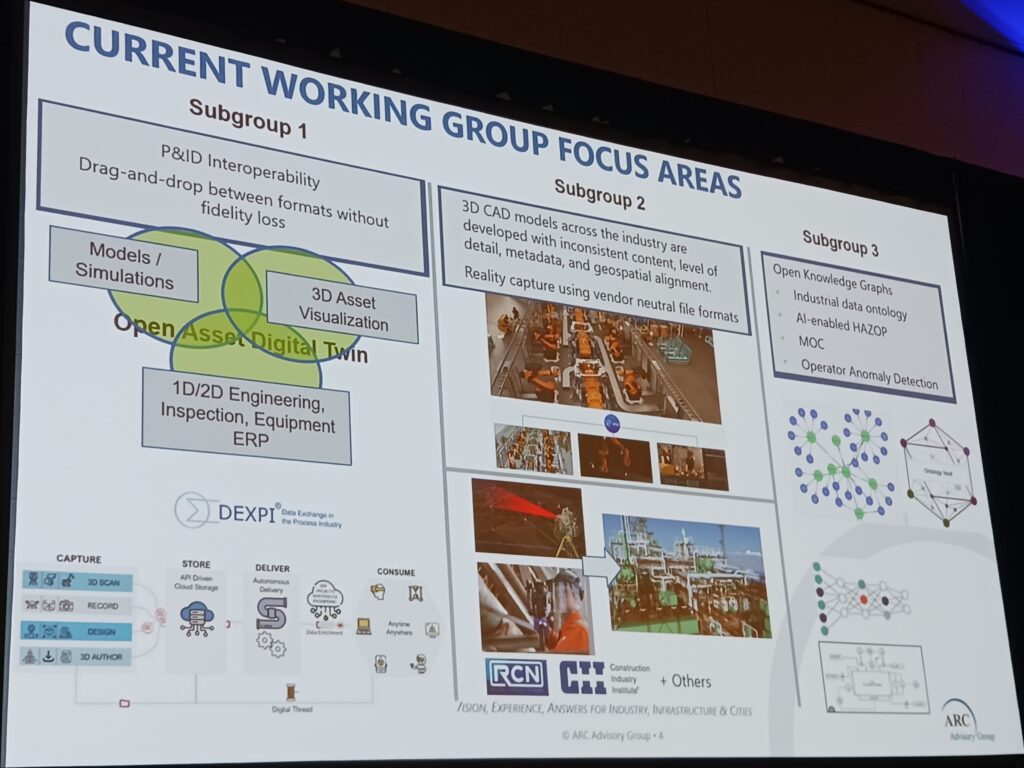
- Shared reality between real and digital worlds is among the work of the Open Digital Ecosystem (ODE) Working Group in three subgroups P&ID, 3D CAD and Open-knowledge graphics, experts explained at the 2026 ARC Industrial Leadership Forum.
- Most organizations need to improve data management to realize benefits of real-time digital twins.
- A question-and-answer session provided more on digital twin challenges, implementations, lifecycles and benefits.
Industrial digital twins offer more value for automation and controls, fueled by better models, computing power, artificial intelligence and best practices from other industries, according to experts and users at the 2026 ARC Leadership Forum by ARC Advisory Group, Feb. 9-12, 2026, Orlando, Florida. Theme of the 30th Annual ARC Industry Leadership Forum event was “How AI Is Driving the Future of Industrial Operations and Supply Chain.”
Shared reality between real, digital worlds
In the session, “Digital twins: creating shared reality for operations,” Peter Reynolds, oil and gas, chemicals industry advisor, ARC Advisory Group (Figure 1), suggested that digital twins are more effective because of the work of the Open Digital Ecosystem (ODE) Working Group, which has three subgroups (Figure 2): P&ID, 3D CAD and Open-knowledge graphics.
- P&ID (piping and instrumentation diagrams) interoperability with drag-and-drop capability among formats without fidelity loss.
- 3D CAD (computer-aided design): Models across industry are developed with inconsistent content, level of data, metadata and geospatial alignment. Reality capture needs to use vendor-neutral file formats.
- Open knowledge graphs with industrial data ontology, AI-enabled hazard and operability assessment (HAZOP), management of change (MOC) and operator anomaly detection.
Those interested in helping digital twins progress can work to accelerate the open digital ecosystem to create a shared reality, Reynolds said, including sharing consistent messaging with vendors, service providers and standards organization to:
- Provide a framework for asset owners
- Remove inefficiencies from manufacturing operations
- Define guiding opportunities
- Align on key industry challenges, needs and unified standards-based data interoperability
- Outline a vision for a scalable, replicable and sustainable digital twin.

Issues of concern being addressed, Reynolds said, in “Principles of Open Asset Digital Twins V1.2025” (Figure 3) include open, accessible data through non-proprietary interfaces; digital twins to allow plug-and-play and agnostic integration; Data owner must be able to control digital twin data at the data layer; Interoperability by separating data from applications; and transferability, that is, a digital twin built to enable component reuse.
These things build greater trust in data without artificial intelligence (AI)-induced hallucinations. He suggested asking digital technology vendors for easier scaling and growth, faster data interactions, data interoperability, improved accuracy and data access of digital assets, greater competition and sustainable work processes to support digital transformation within an agnostic ecosystem. (See more from ARC Advisory Group on digital twin software.)
Better data management for real-time digital twins
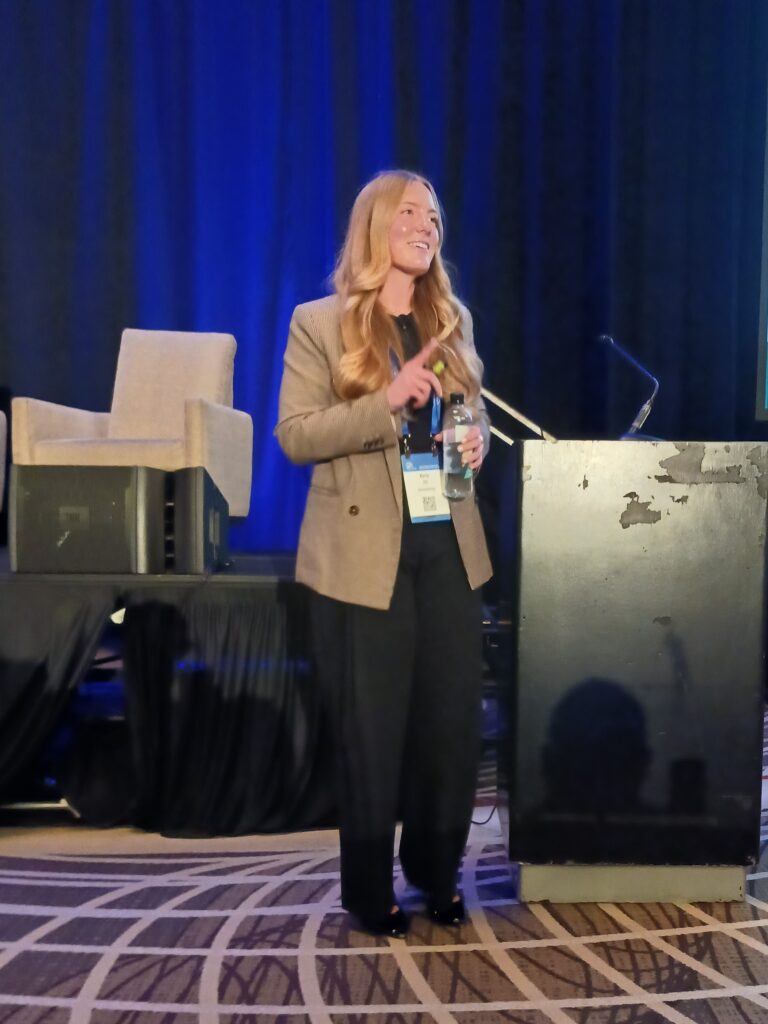
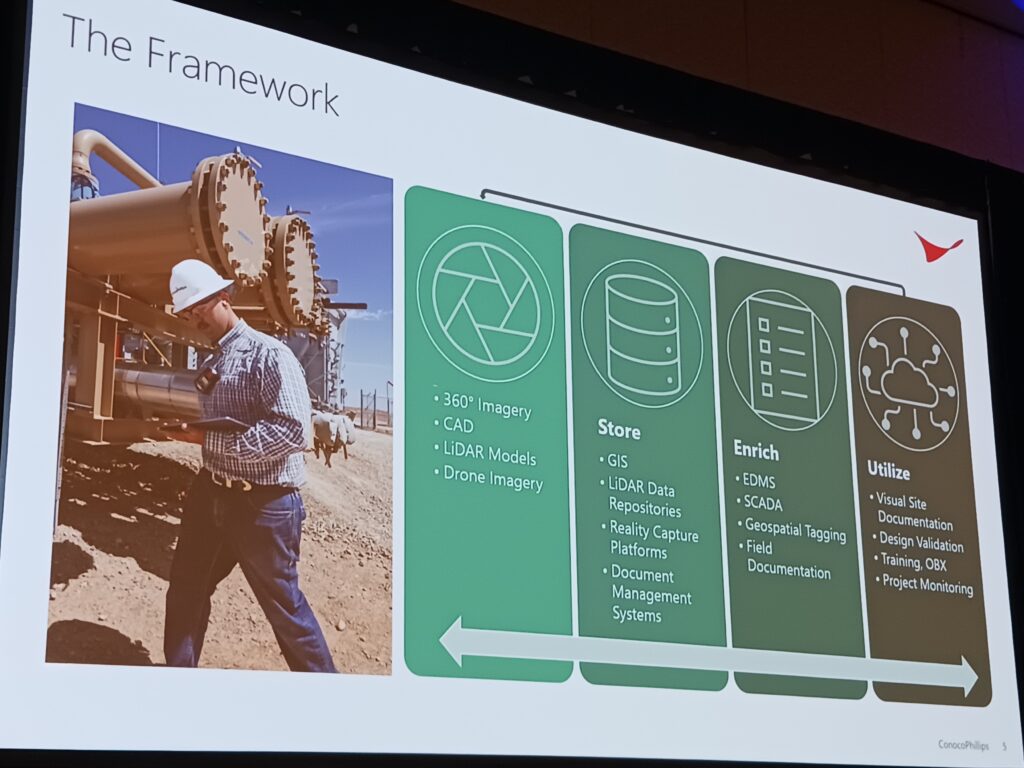
Karly Ott, EDT solution architect, ConocoPhillips (Figure 4), said her company seeks a more effective digital reality to turn data into information more effectively. Idea is to spend less time looking for data and more time creating value from information. AI is being integrated to create digital reality efficiencies in a visual intelligence platform that can scale across the enterprise, using 360-degree images, CAD, light-detecting and ranging (LiDAR) models and drone imagery to better store, enrich and use information (Figure 5).
Open interoperable standards help future-proof investments to stay competitive, Ott said. With digital reality software, many assets verify with equipment in the field to lower risk, improve decisions and capture and store information. Frameworks have tremendous amounts of data and operate by exception. New use cases emerge when we show people the technologies available, Ott said. Next will be reality-based digital transformation using AI to integrate some automation, part of a scalable, open, digital ecosystem. It helps that costs are falling and accuracy is increasing, she added.
Eight steps to smarter digital twins
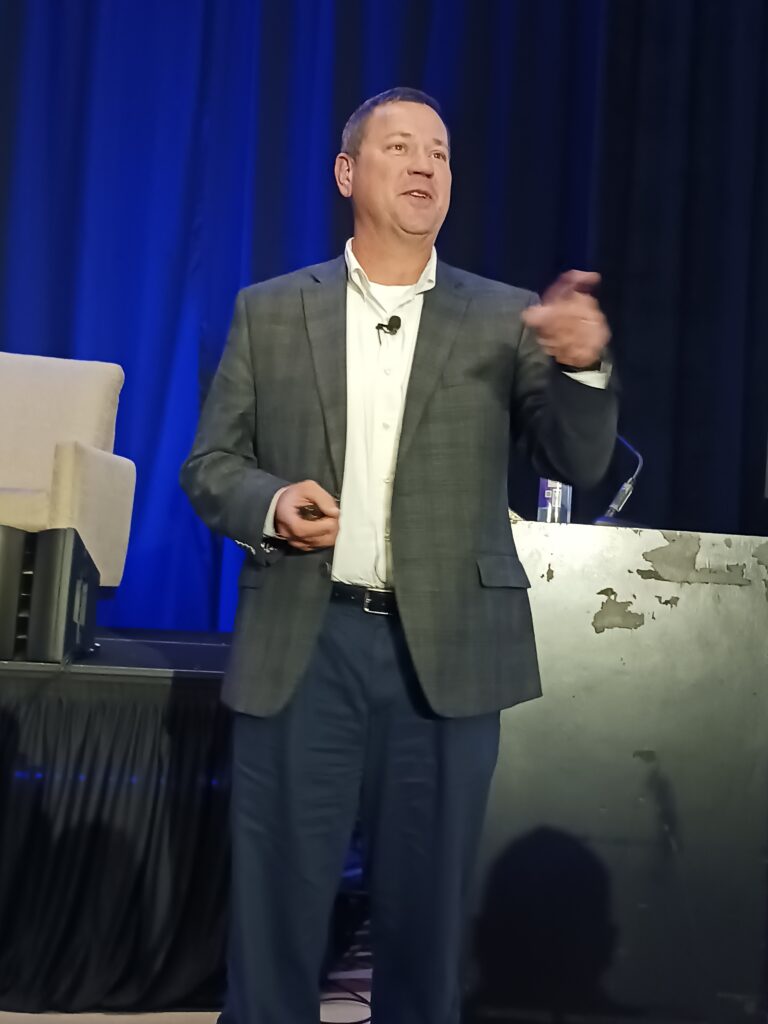
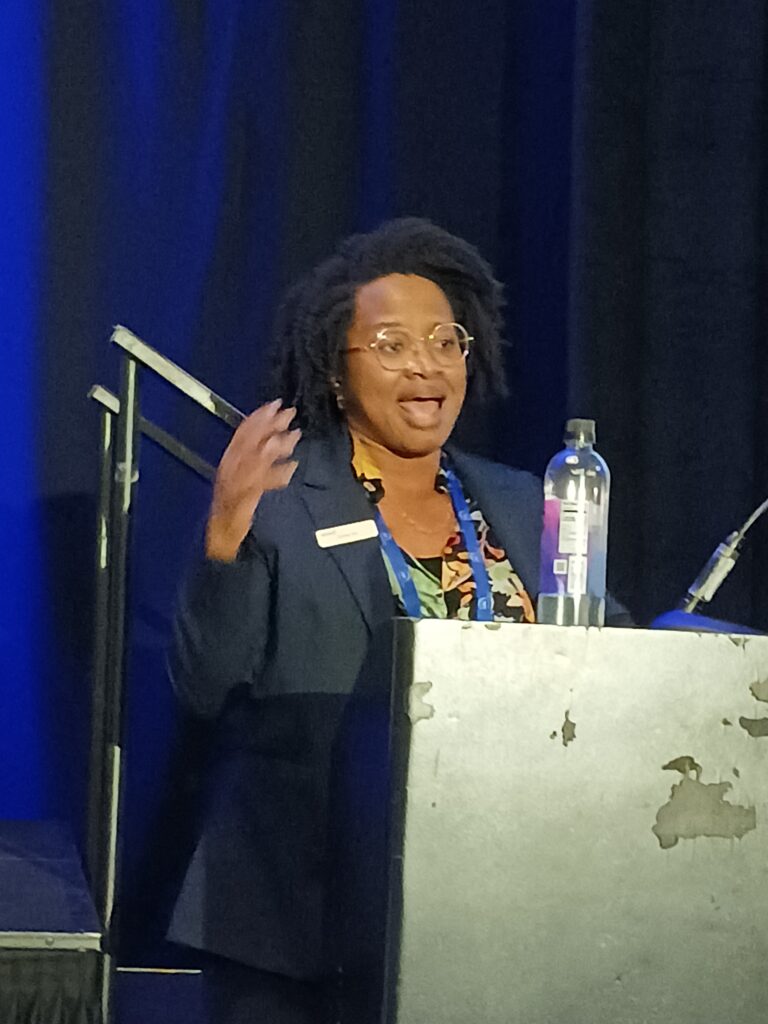
Michael Hotaling, technology scouting, innovation and ventures, ExxonMobil (Figure 6), said communication remains a challenge within organizations. How do you refine messages within the aligned vision of an open digital ecosystem? It requires open process automation standards, open secure data, data separator software, plug and play capabilities, rapid innovation and value creation. Workflow shifts from gathering data to validating accuracy of P&IDs working at scale.
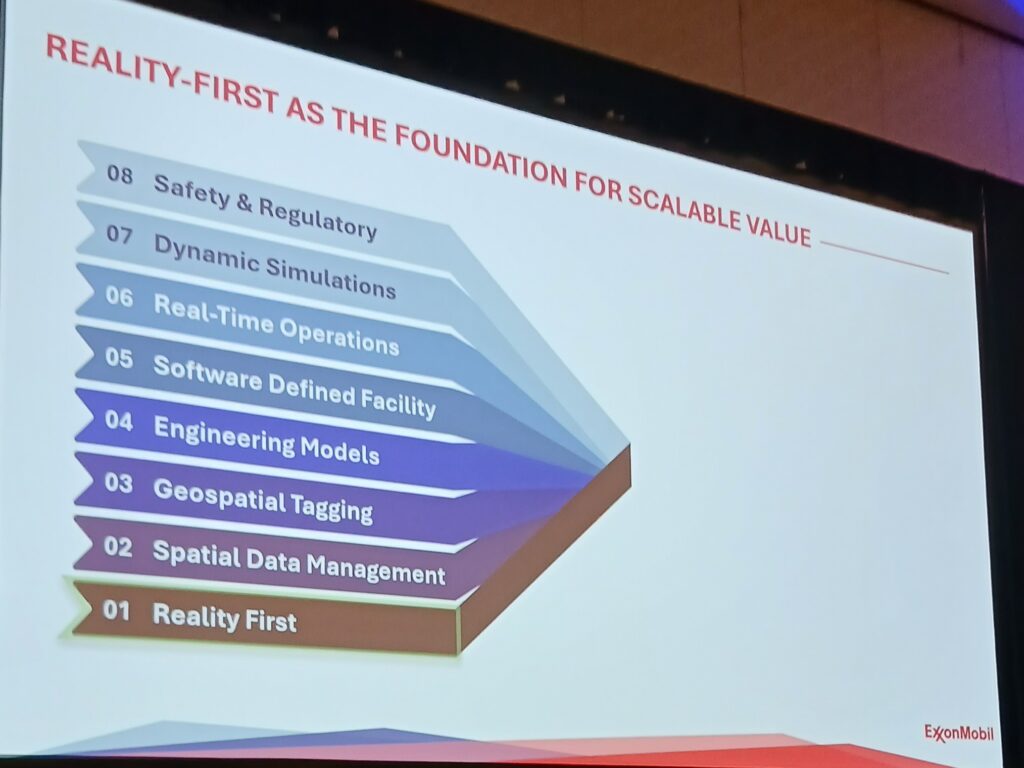
Other industries are using these tools, Hotaling said, and our industries also should (Figure 7), with:
1. A reality-first understanding
2. Spatial data management
3. Geospatial tagging with information on where and when it was collected and if data sets are trusted
4. Engineering models
5. Software-defined facility
6. Real-time operations (RTOps)
7. Dynamic simulations
8. Safety and regulatory attributes.
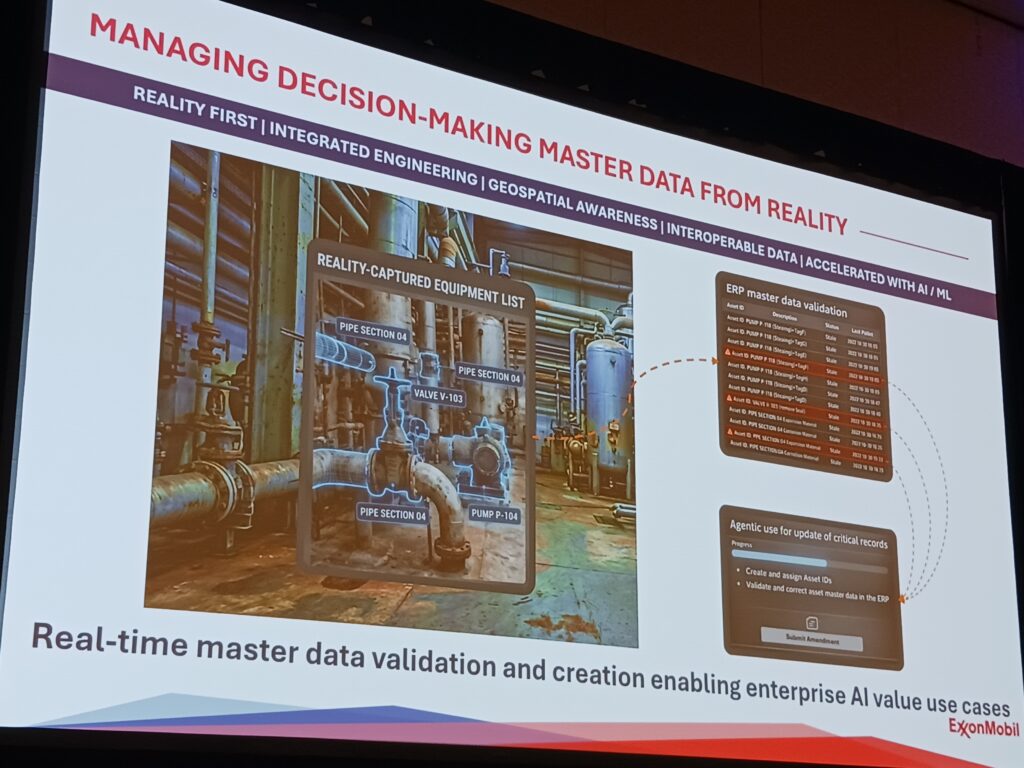
Focus is on reality, Hotaling said. Updating as-built models will become irrelevant. Reality first will be the rule (Figure 8). We’re improving practices to lower risk. Agentic data goes on top of agnostic data sets, and reality capture leads to master data validation. [Agent-based systems (agentic AI) learn, adapt and evolve without frequent reprogramming.]
“Why have look-up tables when you can look at assets in real time?” Hotaling asked. Demand simpler architectures to reduce cognitive load.
Industrial problems, integrated solutions: How digital twins can help
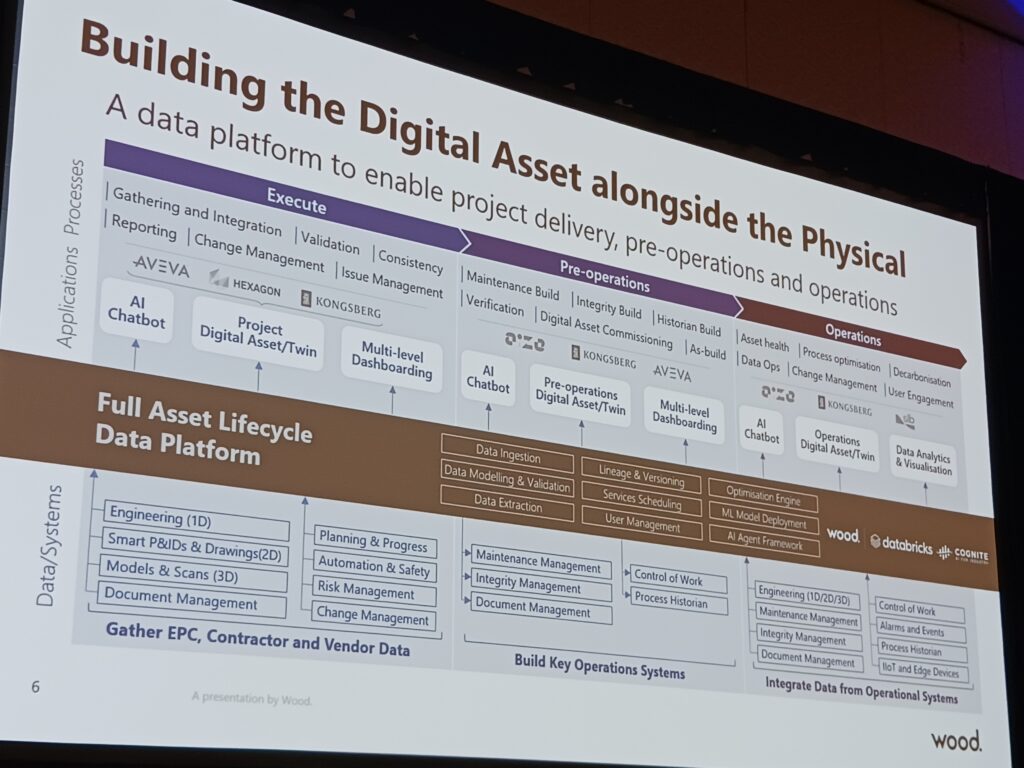
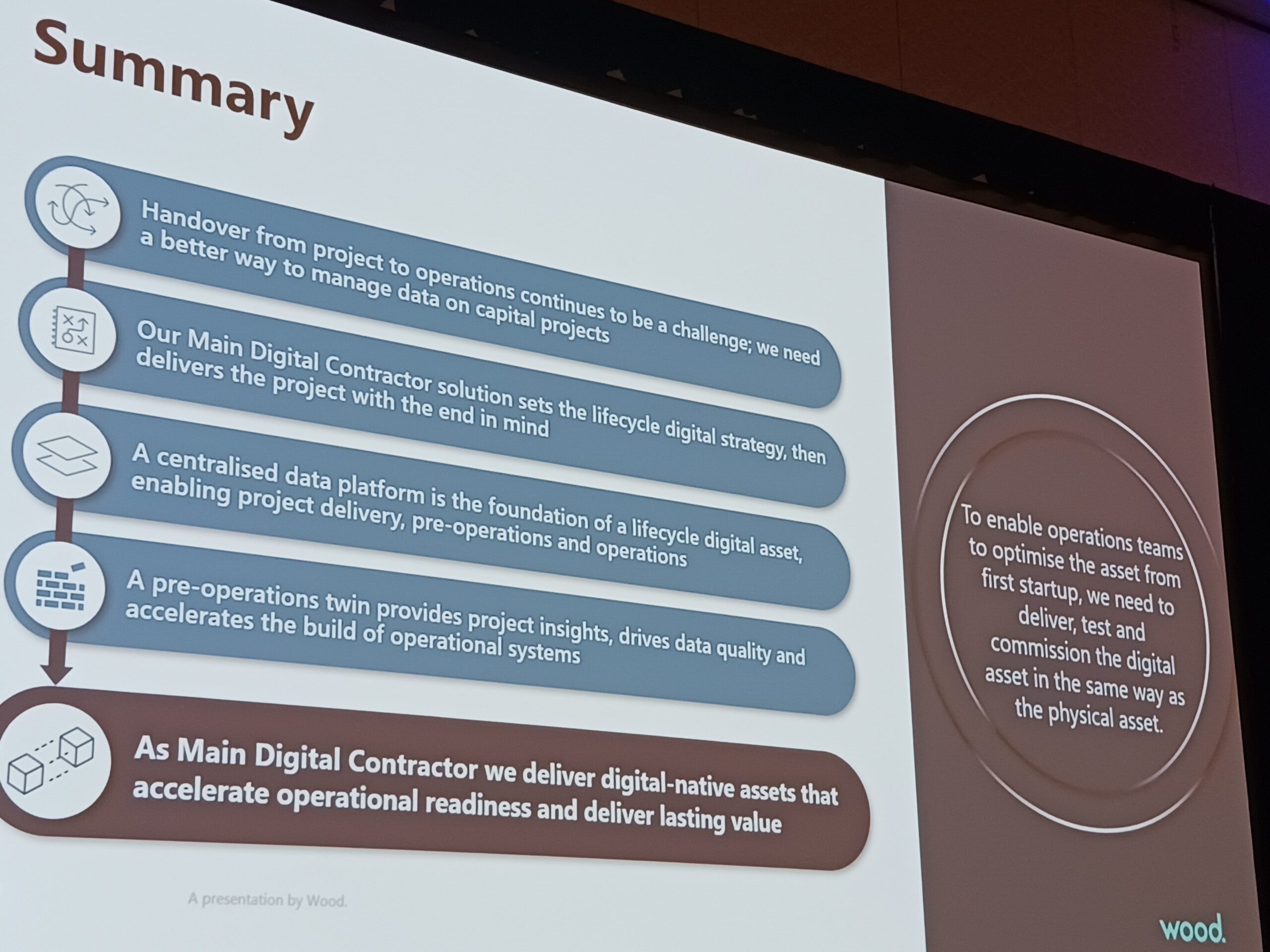
Shirley Ike, global director of data management consulting, Wood (Figure 9), said that as industrial customers have fewer experienced staff, handing over automation projects from the system integrator to the customer becomes more challenging. One resolution is to work with a main digital contractor (MDC) on projects that create digital asset twins before a project operates as part of digital transformation lifecycle (Figure 10). This helps with digitalization and digitization alongside physical greenfield or brownfield projects.
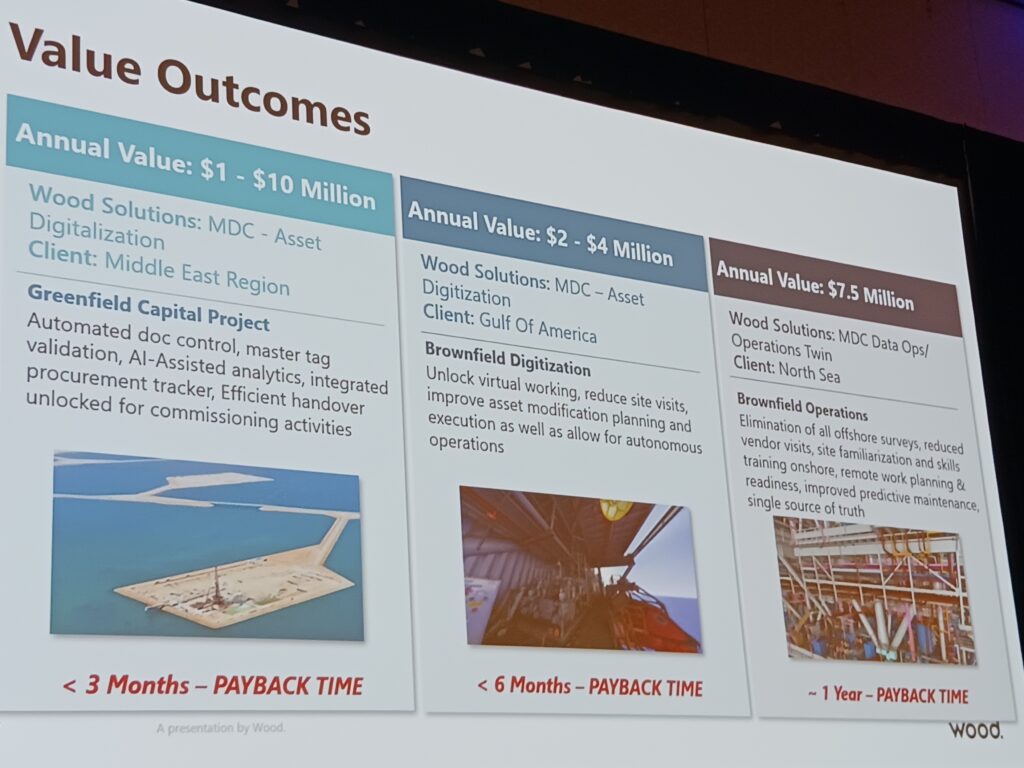
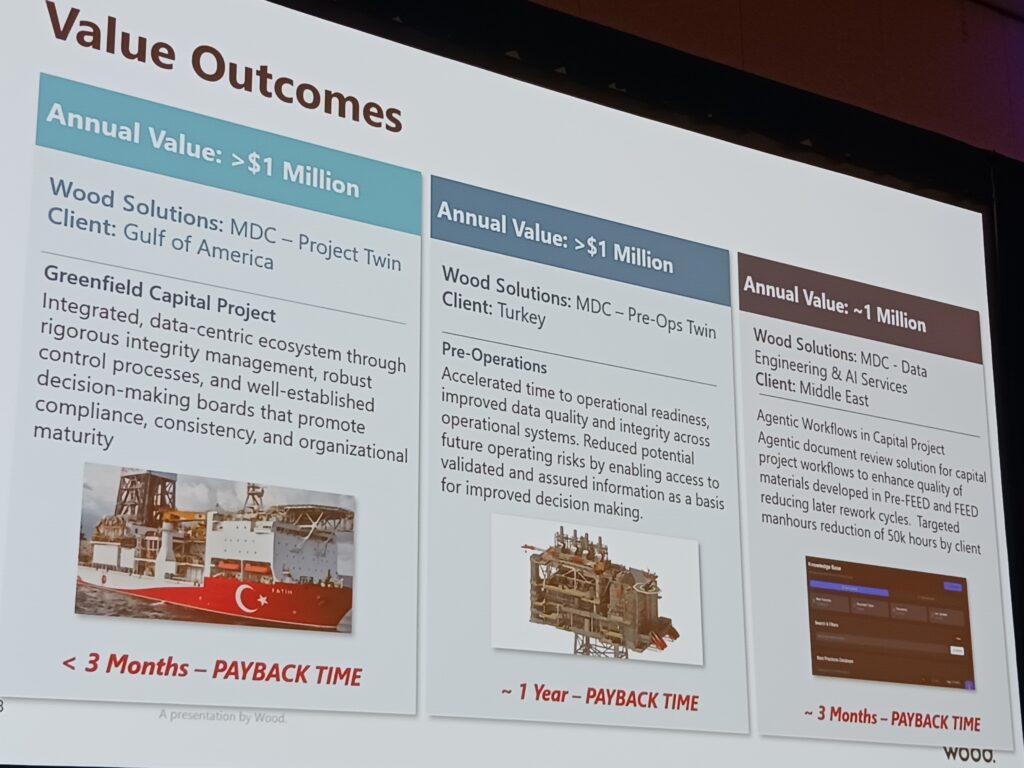
Ike outlined six projects with return on investment of 3 to 12 months returning $1 million to 10 million in annual value, $2 million to 4 million, and $7.5 million (Figures 11, 12).
Critical to success with digital-twin, automation and control capital projects are design, delivery, testing and commissioning of digital assets in the same way as physical assets (Figure 13), Ike said.
More answers about digital twin implementations
Question: How is digital twin data maintained to ensure validity and usefulness?
Hotaling said data can be “ever known, but not evergreen.” With data assets you need to need to know when, where and to what fidelity updates were made. Reality is matched when a rescan provides an update in real time, he said.
Finn Boysen, chief revenue officer, NavVis, said data maintenance is a huge issue and not easy to resolve. If data scanning is 10 times faster and cheaper, then you can do so faster and easier, using software to enable data sets with data stamps. Technology is possible in a sustainable way.
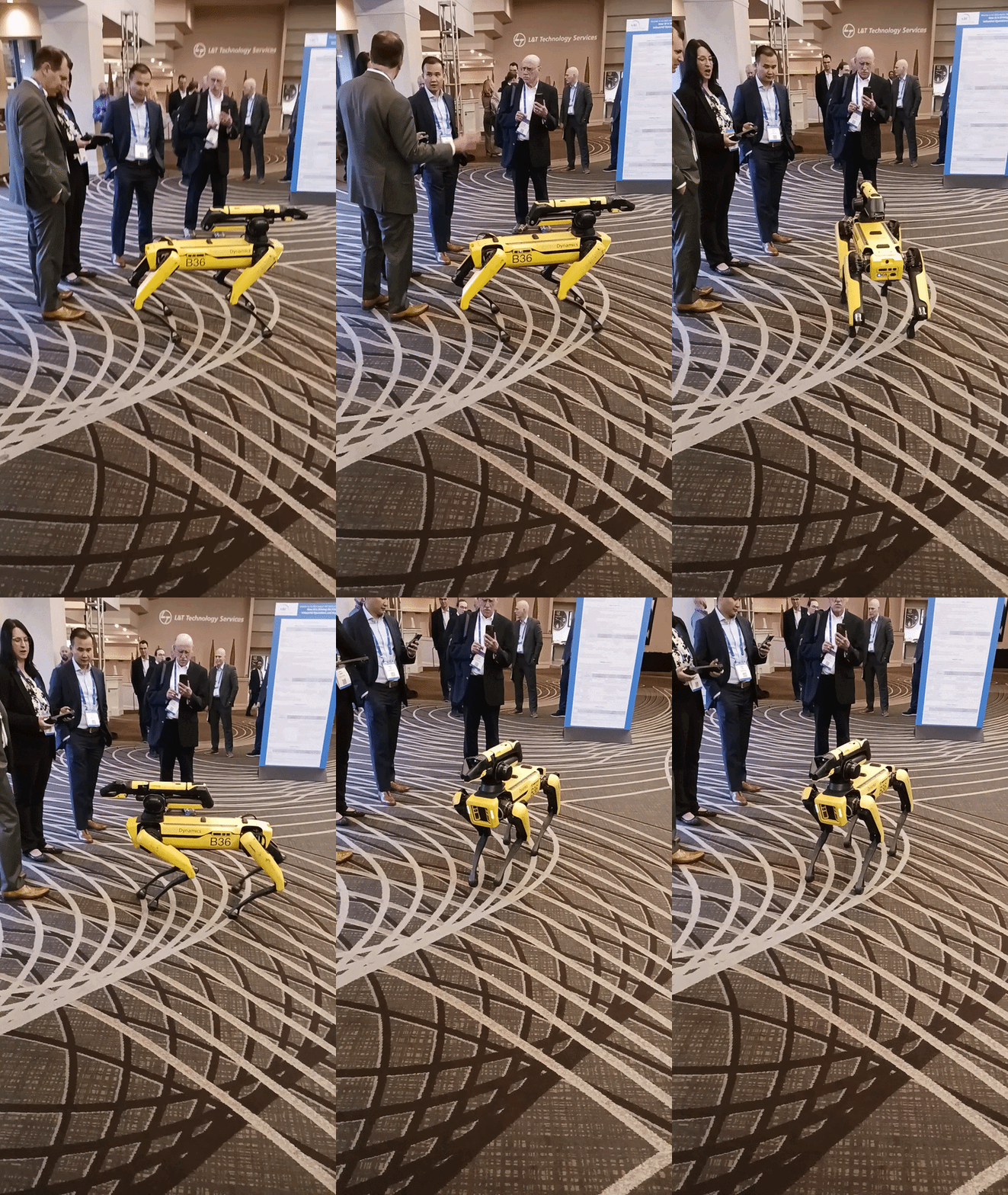
Figure 14: Boston Dynamics Spot mobile robot can be fitted with sensors and used for digital twin data gathering, lowering risk and saving time for humans, as shown at the 2026 ARC Industry Leadership Forum in Orlando. Courtesy: Mark T. Hoske, Control Engineering
Question: How should mobile instrumentation be treated differently than fixed equipment?
Hotaling: Repeatable assets used in the field are stitched together in space and time. A system tag that says FlowControl100 may represent five assets, not one asset. There must be a visible way to look at activities. Failure analysis can be done for specific data sets, unlocking knowledge with AI tools.
Laurent Bourgouin, CEO, Samp, said it helps to align multiple data sets in a consensus graph.
Ott said enterprise resource planning (ERP) software can integrate missing pieces and reverse engineer as needed.
Question: How can data sets be integrated into digital twins?
Hotaling said efforts are looking at open operation data sets to see the significance of data across equipment.
Question: With agentic AI, what workflows are most valuable?
Ike said a project automating document control provided the ability to find needed information in 10 to 30 minutes rather than 2 weeks.
Question: Are priorities given for using industry standards for digital twins?
Hotaling said it’s not a standards problem. Interoperability is key. Focus on what’s most important.
Ott said interoperability is a spectrum, but users need plug-and-play tools that don’t require extra integration.
Question: What is hardest for interoperability as facilities scale up to larger digital transformation and digital twin projects?
Hotaling said management alignment is needed.
Ott suggested giving the easiest technology a chance first by starting small.
Ike noted that some organizations are challenged about how to make data integrate using the relationships that AI tools require.
Bourgouin suggested it’s hard to make sense of a mountain of data. Start with something easy. Try a different approach and prove it to convince the rest of the business of the value of digitalization and digital twins.
Mark T. Hoske is editor-in-chief, Control Engineering, WTWH Media, [email protected].
Keywords
Digital twins, digitalization, digital and physical automation projects
Consider this
If digital twins provide metadata with context easily used across applications, does that make them more useful?
You also might like
Control Engineering provides more digital twin information.
https://www.controleng.com/digital-transformation/digital-twins
Also see Control Engineering at 2026 ARC Industry Leadership Forum
AI expert explains trends in AI automation integration
New projects for open process automation, software-defined automation