AI-powered, autonomous production starts with connected automation. Industrial AI can generate insight and intent. Software-defined automation can make functionality more adaptable and scalable. Connected automation turns digital intelligence into reliable, real-world actions.
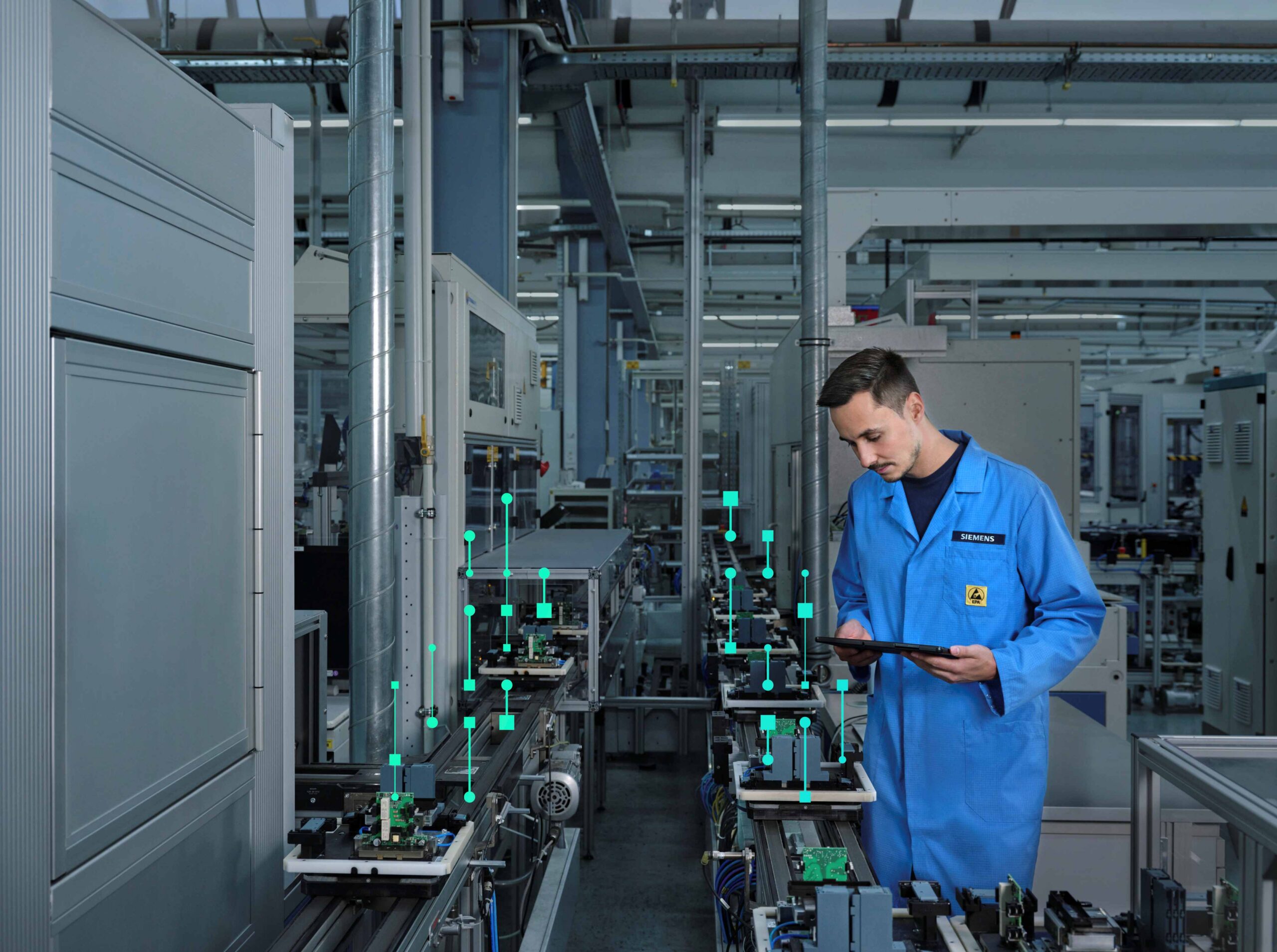
AI-powered autonomous production insights
- Future factories won’t be built to last forever; they will adapt using AI-powered autonomous production.
- In brownfield environments, digital transformation builds on existing connected automation.
- Industrial trends include moving from digital intelligence to shopfloor actions and from rule-based to goal-based automation.
Industrial automation has been designed for decades to control machines, production lines and plants reliably, efficiently and deterministically. Integrated automation architectures have already brought together hardware, controllers, process control systems, engineering, HMI, drives and industrial communication into a closely integrated system. But the demands on production are changing; they are becoming increasingly dynamic, individualized and adaptable. Pharmaceutical companies are working to make more specialized medicines for patients. Vehicle manufacturers are dealing with the customization of their already vast product portfolios. Consumer packaged goods companies are constantly adapting to the trends of their customer base.
The challenge is not the capability of automation hardware, but how it can become more adaptable as production requirements change. The opportunity is to design and operate the shop floor in ways that provide greater flexibility while preserving the reliability, performance and determinism of established automation. Industrial AI and software-defined systems will play a major role in this transition, enabling a new level of manufacturing agility by extending the capabilities of the traditional automation hardware.
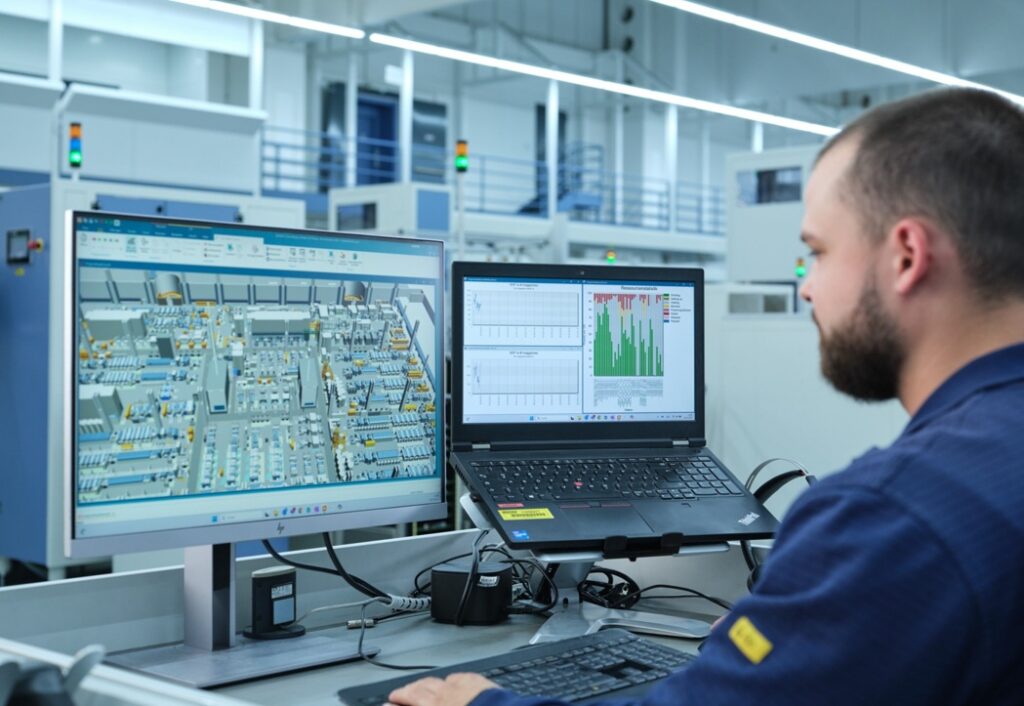
Future factories won’t be built to last forever; they will adapt
Today, automation hardware largely executes predefined logic. This is great, but every time requirements change, engineers often need to adapt control programs, configurations and interfaces individually, or worse; work around the existing predefined setup. In some cases, additional functionality also requires changes to the underlying hardware or system architecture. As production requirements become more dynamic, businesses need new ways to adapt that logic and connect it with higher-level intelligence. Software-defined systems create new opportunities to connect automation hardware with higher-level intelligence through virtualized runtimes, integrated human-machine interface (HMIs), new agentic-driven operation workflows and the many sensors on the shop floor. Deploying functionality through software enables more rapid customization and adaption without every change requiring a hardware configuration with tightly coupled control logic. This is the core of software-defined automation (SDA).
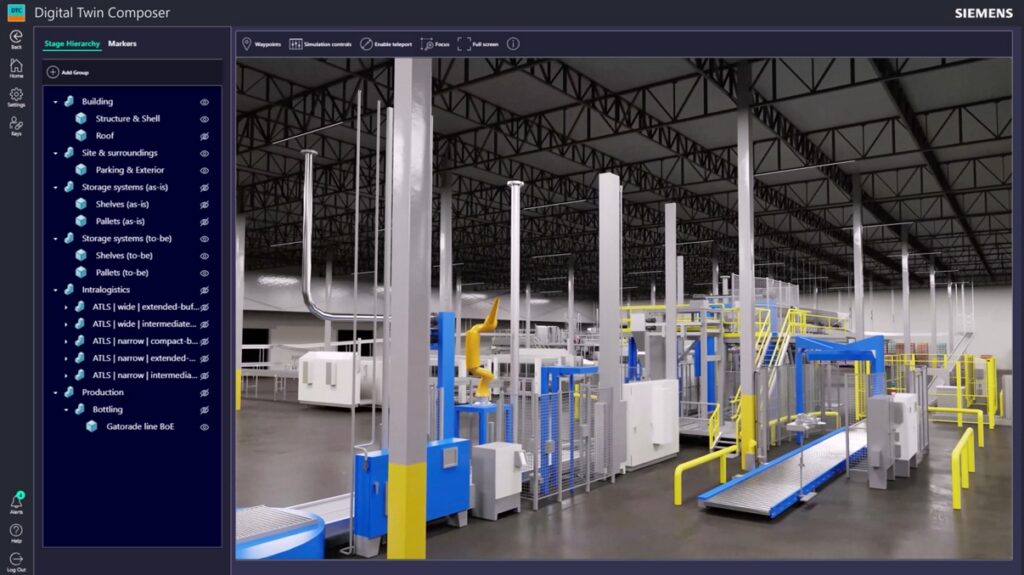
Building software-defined capabilities on connected automation
SDA builds on connected automation by decoupling selected automation functionalities from dedicated hardware and predefined workflows to manage them through software-defined architectures. This makes automation easier to configure, deploy and update across production lines and plants, while preserving the real-time performance and reliability that is needed in manufacturing.
This layered architecture for automation allows controllers, process controls or motion systems to continue providing deterministic, real-time execution while remaining connected to higher-level software and intelligence. SDA is the technology that enables this new dynamic approach of automation to scale. Layering is particularly important for brownfield projects. The software needs to be able to integrate with existing systems so that businesses can evolve their infrastructure while building on their existing automation investments.
In brownfield environments, transformation builds on existing connected automation
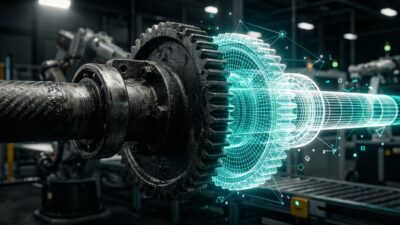
When the integration between the two is established, businesses can start to layer higher order optimizations onto their lines. For example, access to compute or AI tools for insights, predictions and recommendations is only valuable when it can be translated from the digital twin back into physical action. Digital intelligence ultimately depends on its ability to interact with and influence the automation hardware controlling production. An insight into shop floor operations might be found with Industrial AI, but that conclusion was only possible because of data fed to the model from the real world. And to implement the insight, that intelligence needs to be translated through SDA into actions that can be executed by the underlying automation hardware, ultimately influencing the physical process.
For an individual challenge on the shop floor, this layering would be excessive. A custom solution would be much more efficient. But the goal is to leverage this established work across many more systems on the shop floor. Audi is a great example of this reuse. After implementing virtual PLCs on their shop floor, people in other groups were curious about the data they made accessible. What began as a way to create more flexible automation expanded into a process for quality inspection. The goal is to enable hardware and software to work together while remaining sufficiently decoupled to allow changes and updates with minimal disruption to production. For Audi, this meant the ability to scale solutions easily across several production facilities, achieving higher quality and becoming even more efficient.
From digital intelligence to shopfloor actions
A common architecture built around software-defined systems also enables some of the tools and practices developed in the world of information technology (IT). The layers for control, automation and operations mirror the abstraction used in IT. It opens the door to complementing the graphical programming tools and methods widely used in automation today with plain-text and document-based approaches. These approaches can unlock additional possibilities for the shop floor, particularly by making automation logic more portable, reusable and ultimately useable for AI.
On its own, this can be valuable with more young people, who are often influenced from traditional software development. Being more comfortable with standard industry tooling than with wiring makes it easier for them to get started and get familiar with the special needs of industrial automation.
But it creates the basis for automating automation itself. Reusable automation capabilities can increasingly be deployed across machines, production lines and locations. Commissioning or updates can be greatly accelerated by deploying the code to multiple production lines simultaneously in both the real and digital worlds. In addition to this accelerated validation and deployment, AI tools can be implemented on top when a business is ready, even adding agentic workflows in the future.
Agentic and physical AI are major aspects of this possible future, enabling the systems themselves to perceive, decide and act within their defined bounds and with oversight. In a future scenario, an unexpected drop in production might trigger an agent to inspect the different machine capabilities and compare their expected values against historical data or simulation models. Then if an issue is found, it could surface the information to an operator via an HMI. Doing so requires a bridge between increasingly intelligent software and the deterministic, real-time behavior required by industrial automation.
Industrial AI is already augmenting what can be done within the digital twin. PepsiCo is using the physics in the digital twin alongside industrial AI to simulate, validate and optimize changes to their existing manufacturing and warehouse facilities before ever implementing them on the real shop floor. Siemens’ industrial-grade solution helps find patterns where optimizations might be found, while the deterministic simulation capabilities of the digital twin help identify infeasible options before investing in the physical changes on the floor. In cases like this, SDA has the potential to further accelerate broad implementation by enabling software-based capabilities to be deployed across machines, production lines and plants.
From rule-based to goal-based automation
Whether a company produces vehicles, pharmaceuticals, chemicals or food products, the objective is the same: make industrial automation and operations more adaptable without compromising reliability, safety or performance. The opportunity is to combine the strengths of connected automation with software.
Software-defined automation plays a central role in this evolution. It connects software, data and AI with controllers, process control systems and drives that execute actions in the physical world. And it allows companies to build on existing automation hardware, an essential requirement for brownfield factories and plants.
The future of automation is evolving beyond purely predefined instructions toward increasingly goal-oriented approaches. Systems will gain a better understanding of what is happening on a line or in a machine. They will support engineers and operators with contextual information, recommendations and actions for the real world. This is why AI-powered, autonomous production starts with connected automation. Industrial AI can generate insight and intent. SDA can make functionality more adaptable and scalable. Connected automation turns digital intelligence into reliable action in the real world.
Rainer Brehm is chief operating officer (COO) for the automation business and chief technology officer (CTO) at Siemens Digital Industries. Edited by Mark T. Hoske, editor-in-chief, Control Engineering, Arrowfly, [email protected].
Keywords
Software-defined systems, software-defined automation
Consider this
Are you using AI powered autonomous production and connected automation?
You also might like
Discover how Pepsico realized early digital transformation results