Will industrial automation rapidly accelerate manufacturing productivity by integrating smarter industrial artificial intelligence? And what about cybersecurity?
IMTS 2026 automation and AI insights
- AWS offered advice on using artificial intelligence for automation and manufacturing productivity in a presentation at IMTS 2025.
- Moving from automation to autonomy requires greater connectivity and embedding AI decision capability.
- In a self-programming factory, a robotics-specific foundation model learns from production data, generates optimal robot programs automatically, deploys them and continually learns through a synchronized digital twin.
Industrial artificial intelligence was widely integrated with industrial automation at IMTS 2026, the International Manufacturing Technology Show organized by AMT. How will it help automation, and is it safe?
Smarter, autonomous production is needed
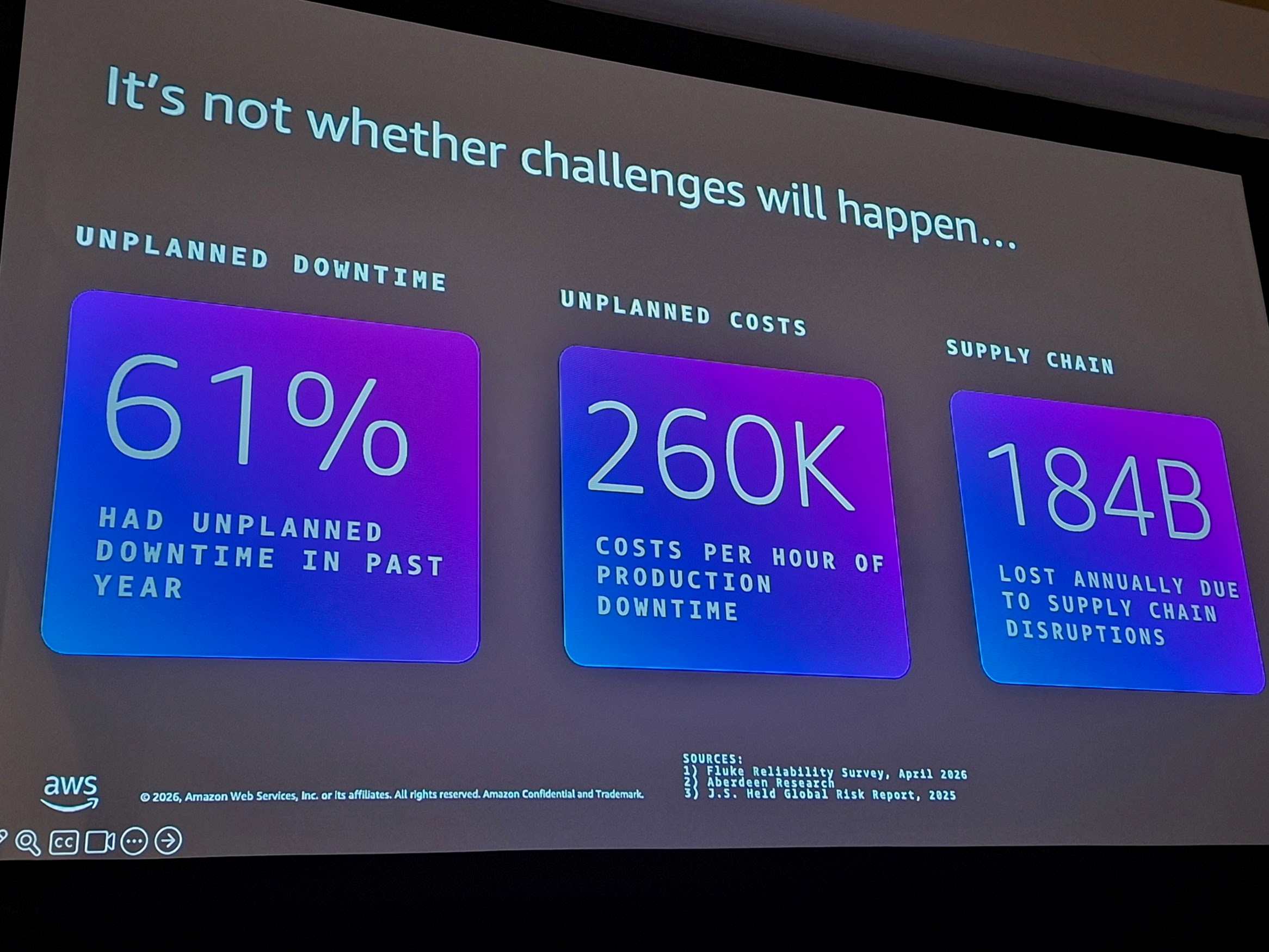
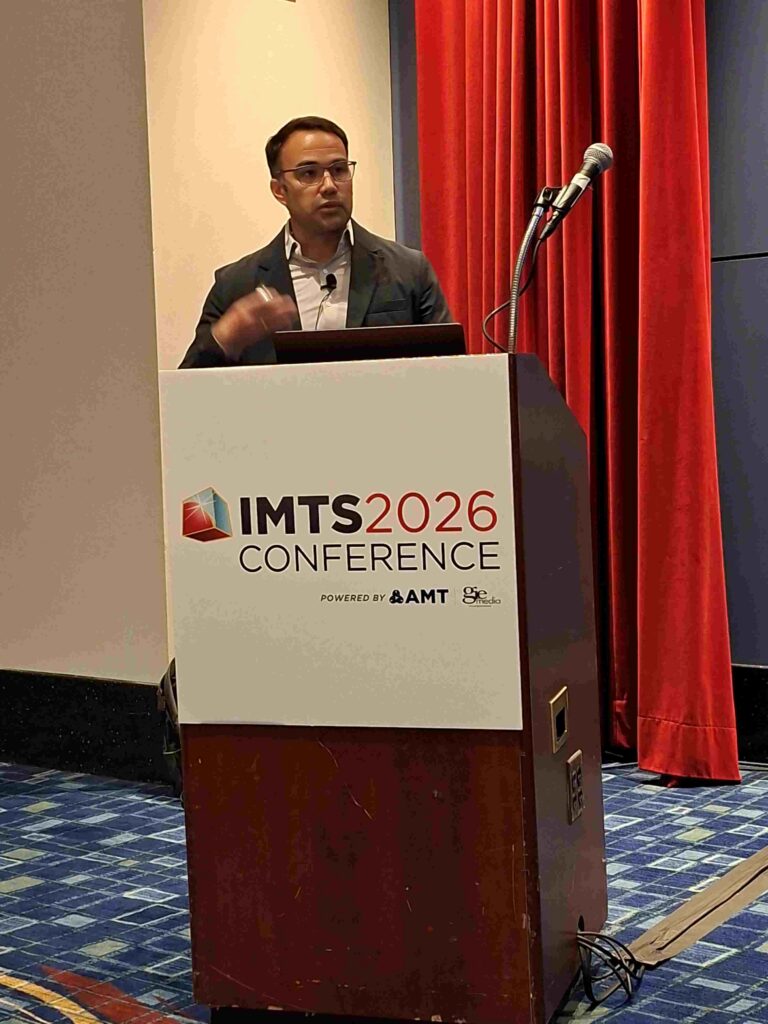
The need is there; 61% of manufacturers had unplanned outages in the last year (Figure 1), said Joseph Rosing (Figure 2), manufacturing and supply chain center of excellence leader, Amazon Web Services (AWS), in a presentation titled, “From automation to autonomy: The next era of manufacturing with physical AI.”
Decision latency costs result in yield losses, scrap, idling and small stops of unplanned downtime. Getting intelligence into hands of teams faster can help, but autonomous operations can provide an even greater advantage, suggested Rosing (Figure 2).
Benefits beyond robotic AI
Among benefits are zero latency mitigation, physical AI adaption and proactive supply chain actions. Rethinking traditional manufacturing tradeoff includes considering safety first, always.
Rosing quoted Jason Ballard, vice president digital innovations Toyota Motor North America, as saying: “The differentiator isn’t who has the best algorithm. It’s who can embed AI in daily decisions without breaking trust.”
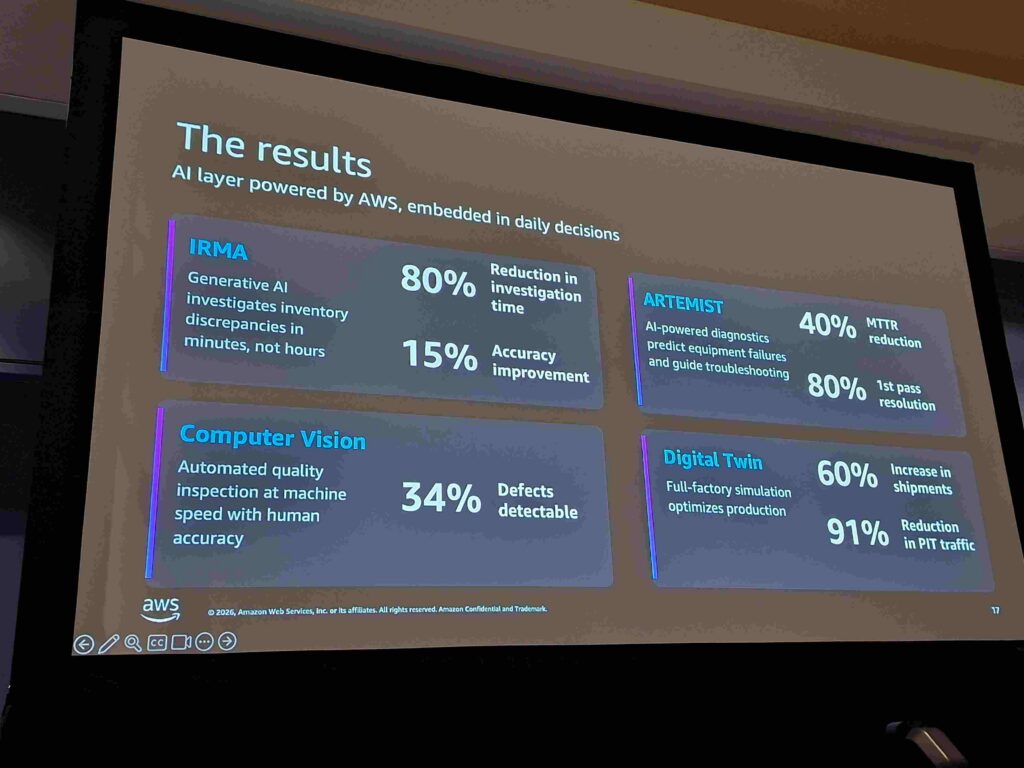
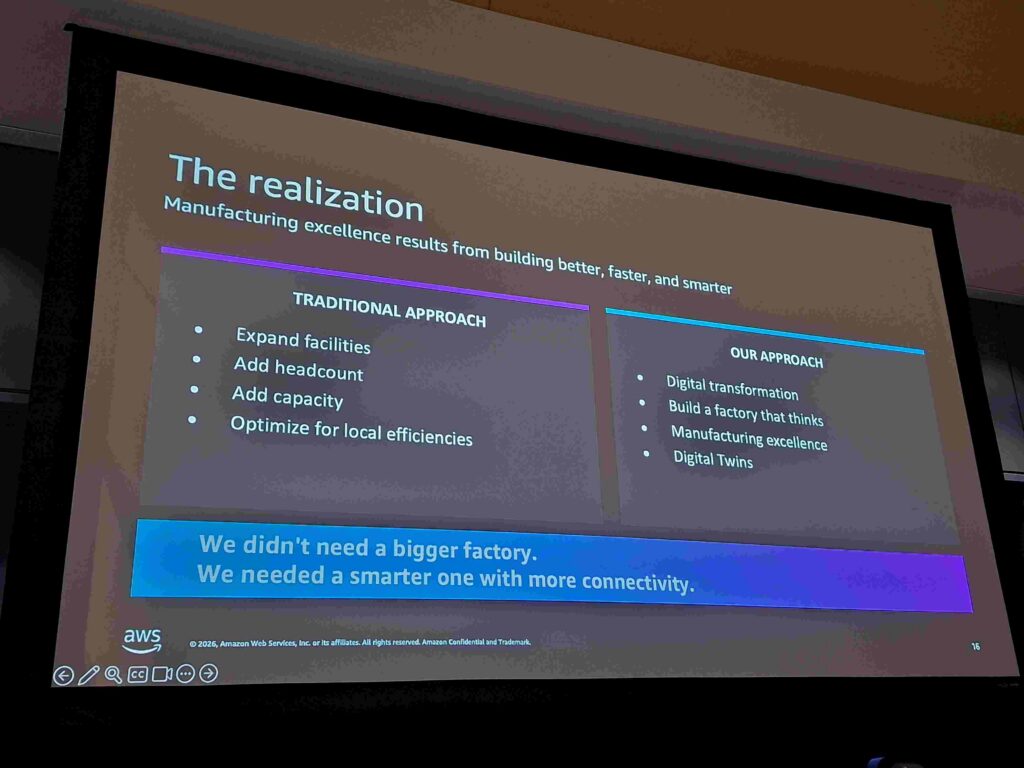
How? Looking past traditional manufacturing (Figure 3) requires looking at data (acquiring, preparing), model training (learning physics and motor skills), simulation (virtual environments for safe scalable, physics-based learning and testing), simulation to reality (testing trained models). Each can be powered by agentic orchestration, AI that perceives, reasons and acts in concert. AWS shows results with double-digit improvements in various Figure 4 metrics, including accuracy, mean time to repair, detectable defects and shipments.
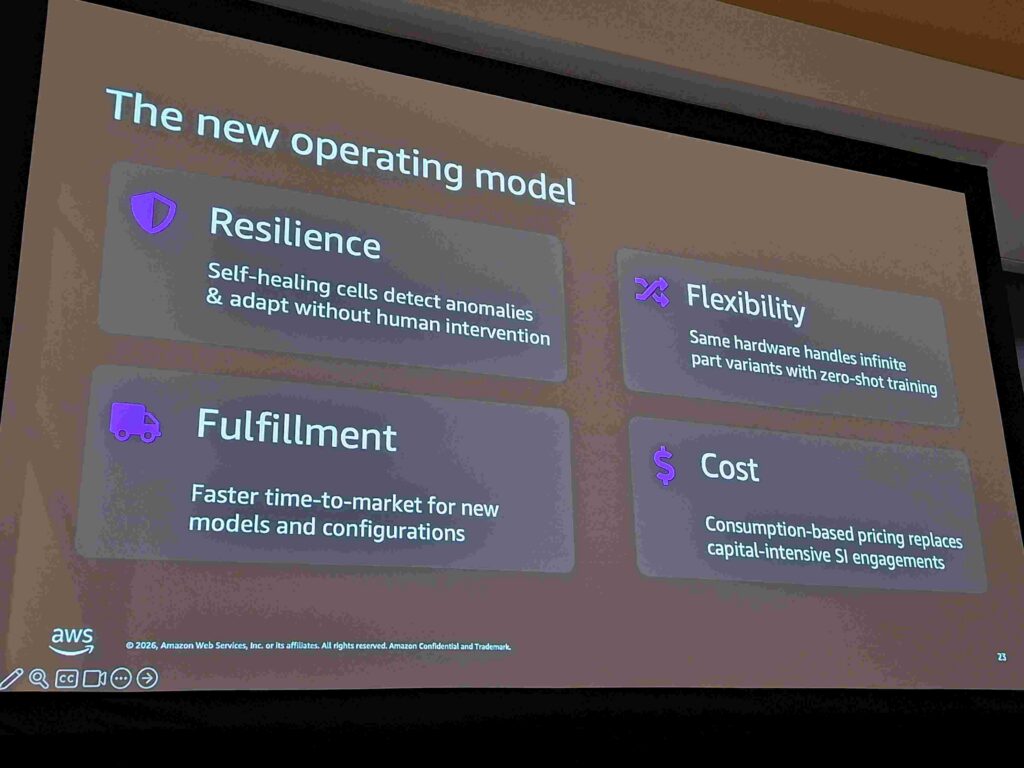
Adaptive production lines with automation, AI
Production optimization shortens from months to a couple of weeks. Eventually, a fully adaptive production line results in the shift to scalable, adaptive manufacturing (Figure 5). In a factory that programs itself, a robotics-specific foundation model learns from production data, generates optimal robot programs automatically, deploys them and continually learns through a synchronized digital twin, Rosing said. The system looks at the most cost-effective way to accomplish a task. Traditional automation may work, but having connected data is the first step toward that decision. Is there an opportunity to integrate greater intelligence? Working backwards from the problem statement is the path, Rosing said, rather than to create a solution looking for problem.
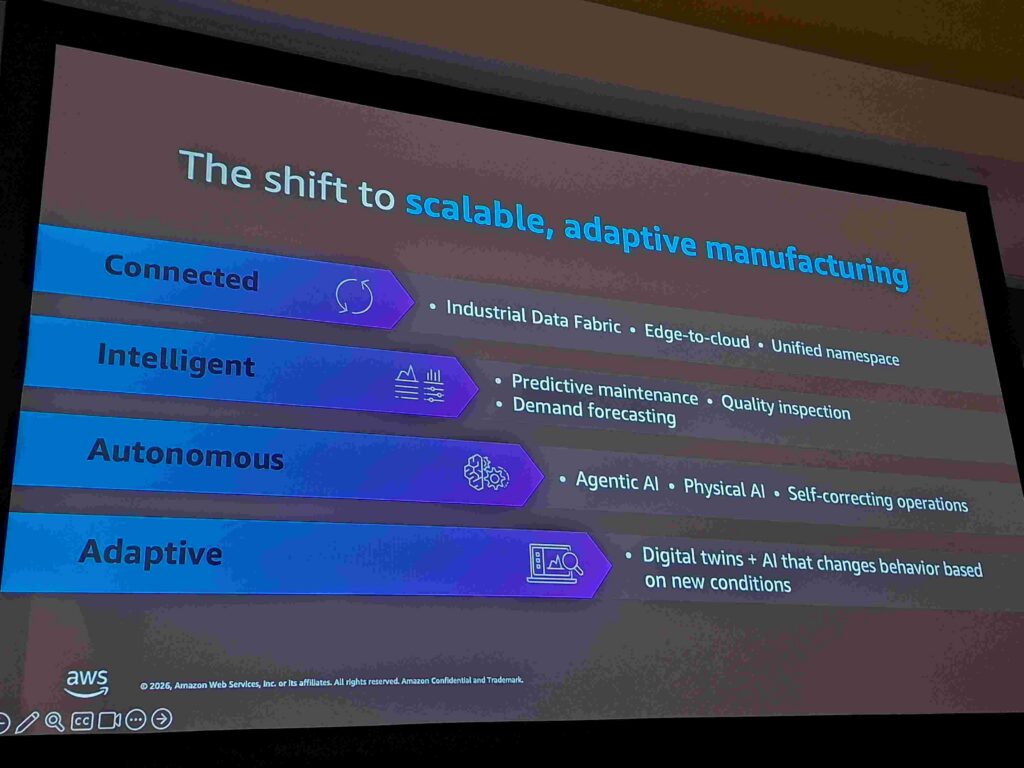
The AI works beyond a cell simulation, to build a proper knowledge graph. Intuitive relationships develop, knowing how this monitors that. Large language model (LLM) AI doesn’t know what to do with relationship definitions, Rosing said. Deterministic answers results from a probabilistic model to become more connected, intelligent, autonomous and adaptive (Figure 6).
Are you thinking again about how AI can integrate with automation to accelerate productivity without compromising safety and cybersecurity?
Mark T. Hoske is editor-in-chief, Control Engineering, Arrowfly, [email protected].
Consider this
How are you expanding use of industrial AI and automation? Will industrial AI be as transformative for productivity as industrial automation has been in the right applications? Will exponential gains result as they integrate?
You also might like
https://www.controleng.com/can-robots-do-general-manufacturing-tasks-toyota-research-institute-asks
https://www.controleng.com/how-integrating-new-ai-tools-helps-automation-motion-control/
https://www.controleng.com/arrowfly-new-ai-for-engineers-includes-year-round-resources