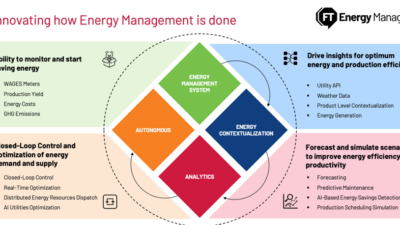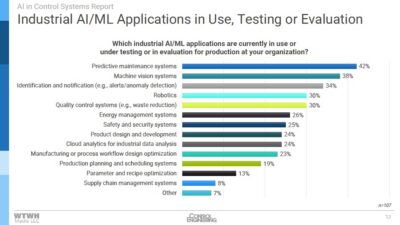
How much data do industrial robots need to learn to respond to variable challenges without specific, traditional programming for each?
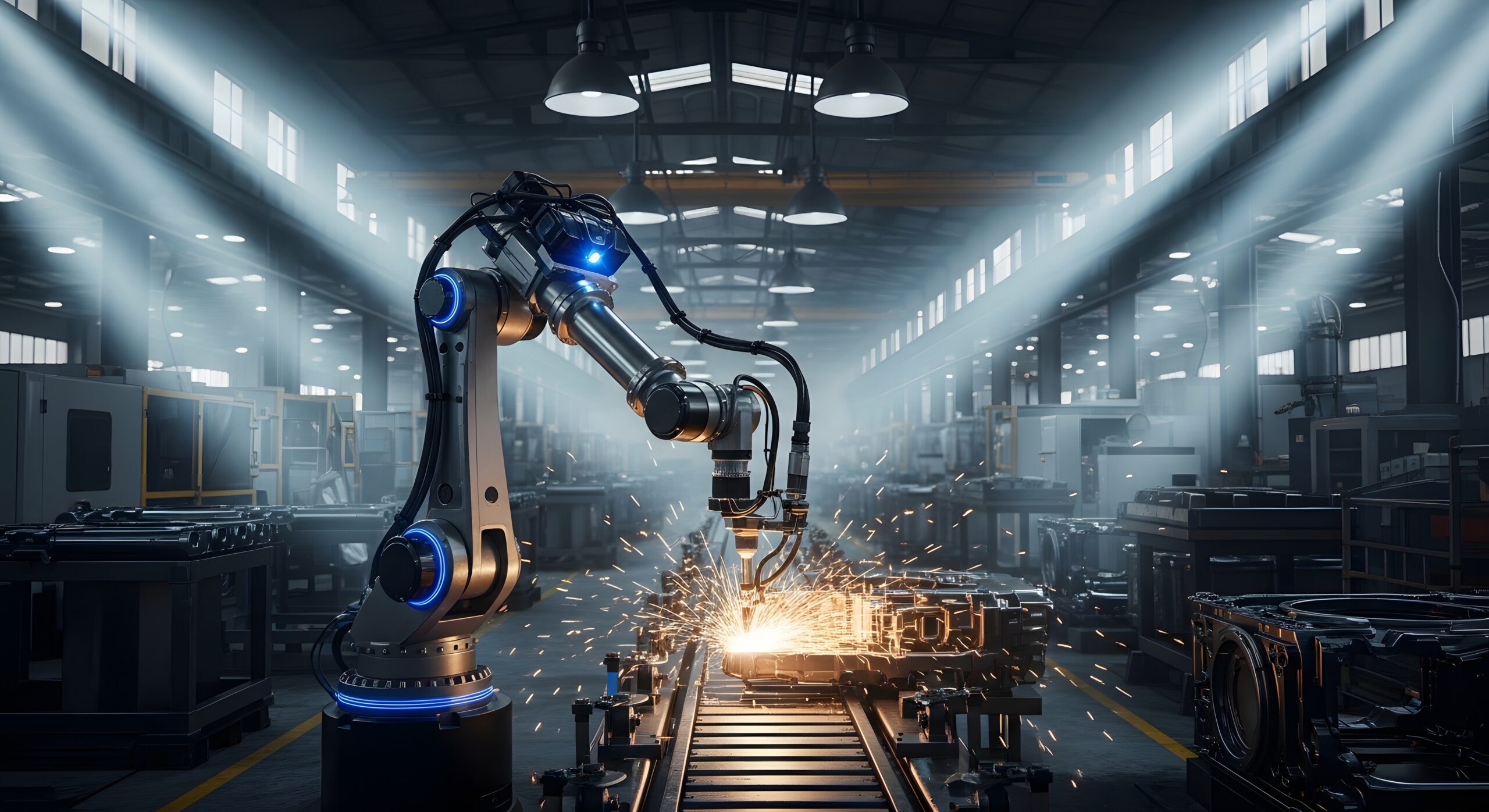
Easily adaptable AI-robot insights
- Toyota Research Institute presentation at Automate 2026 to a packed room discussed “Bridging the gap: Toyota Research Institute’s approach to real-world robotics in manufacturing.”
- Erin McColl, director, robotics technology adoption, Toyota Research Institute, works with a team to increase use of AI and robotics to advance robot capabilities from specific to more general.
- TRI’s strategy is to build robots as tools to learn in the field to add value in short-term.
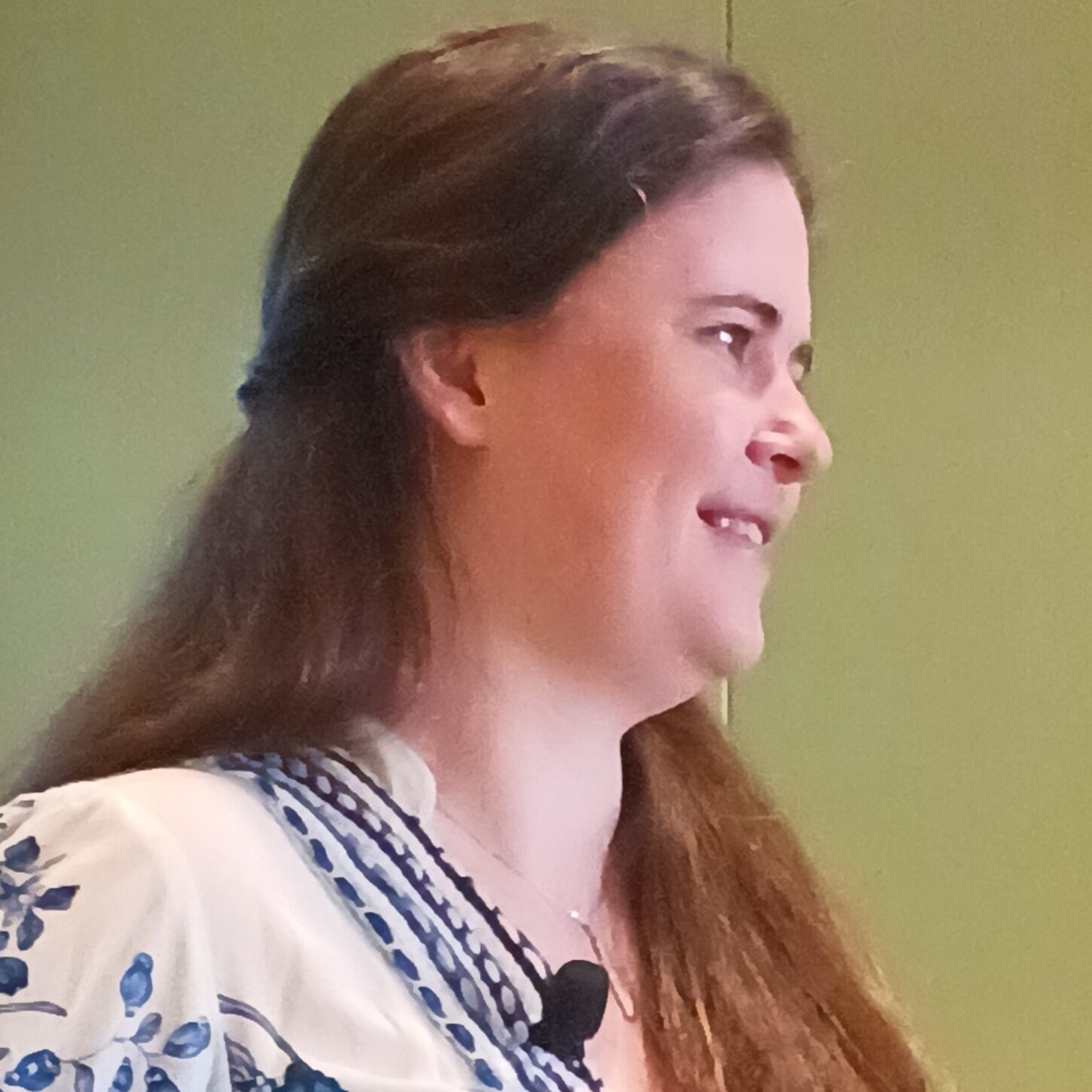
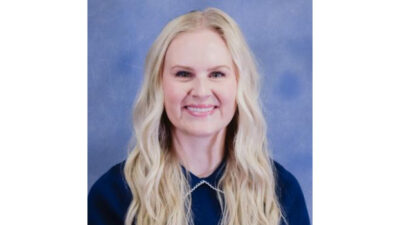
When will robots learn and adapt to varied tasks more easily? How much data do industrial robots need to learn to respond to variable challenges without specific, traditional programming for each? Robotic and industrial artificial intelligence (AI) breakthroughs (Figure 1) have helped enable smarter, easier-to-use robotics. Those questions and others are under consideration by Erin McColl (Figure 2), director, robotics technology adoption, Toyota Research Institute and her team. The presentation at Automate 2026, to a standing-room-only room, discussed: “Bridging the gap: Toyota Research Institute’s approach to real-world robotics in manufacturing.” Automate organizers are A3 – Association for Advancing Automation.
“Our strategy is to build robots as tools to learn in the field to add value in short-term,” she explained.
Goal: Create value while making robots more useful to humans
Making robots easier to use and more useful on the plant floor for humans remains a challenge. “How do we cross bridge valley of death, from research to implementation?” she asked, looking at rapid changes underway in physical artificial intelligence (AI) and machine learning, robots in manufacturing, robotics strategy. “Our bet and why it’s different,” McColl said, is focusing on valuable tasks on the way to implementation to get breakthroughs into the real world more quickly.
Toyota Research Institute (TRI), founded in January 2016 as a subsidiary of Toyota in Japan, reports back with intellectual property and findings, including artificial intelligence and software research. Locations are in Silicon Valley and Cambridge, Massachusetts; 45% of TRI staff have Ph.D. degrees. Mission is to create new tools and capabilities focused on improving the human condition, McColl said. Areas of research and departments include energy and materials, human-centered AI, human-interactive driving, robotics and automated driving advanced development.
Toyota’s multipath bet in robotics includes user-inspired, academic sponsored research and venture capital investments. Robots are looked at as tools to amplify, not replace, humans.
Vocabulary that helps understand AI-enabled robotic
Helpful terms to know with industrial AI and robotics are:
LLM: large language model – text in, text out, language and reasoning from internet-scale text.
VLM: vision language model adds eyes with images and text in, language out. Sees a scene and describes and reasons about it.
VLA: visual language action adds hand. Images and instructions in, actions out. It sees a scene, reasons about it and acts. (More data helps with VLM and VLA, McColl said. Diverse data helps more. We cannot see the data ceiling for performance, she said; an unknown amount of data is required to get from 44% to 90% success rate, for instance. We think the data recipe beats the architecture, she added.)
LBM: large behavior model (perhaps thousands of examples), in TRI’s frame, is a multi-task robot policy built on diffusion, learned from demonstrations. A diffusion policy is a single task trained on demonstrations (perhaps 100-200) and visuomotor policy, and an LBM is multi-task trained on all robot data and internet data to create a language-conditioned visuomotor policy.
Ultimately, goal is to have people work alongside robots, McColl said, so anyone can teach robots a set of behaviors that can adapt as environments change. A challenge is finding what type of data mix is best at what ratios, she said.
Manufacturing research questions about robotics
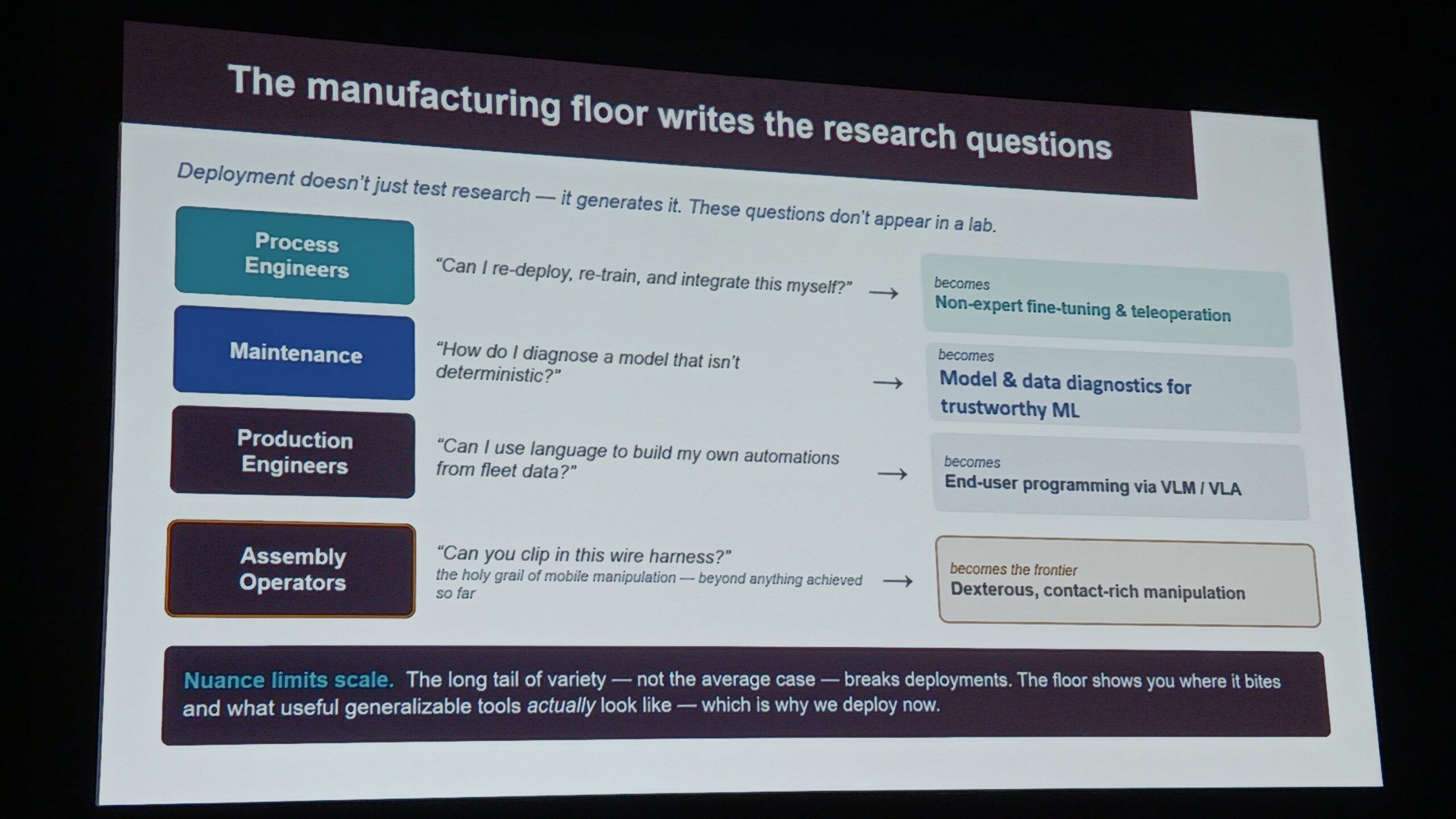
Humans in various plant-floor roles want to ask robots such questions as (Figure 3):
- Can I redeploy retrain and integrate robots myself?
- How can I diagnose a model that isn’t deterministic?
- Can I use language to build my own automation from fleet data
- Can you clip this wire harness? (Or do similarly dexterous, contact-rich manipulation tasks?)
Nuances can limit scale, McColl said. The long tail of variety breaks deployments.
Manufacturing is somewhat controlled and provides real-world data. Line trials are performed, small and undisturbed, and never away from reality.
Robotics for manufacturing strategy
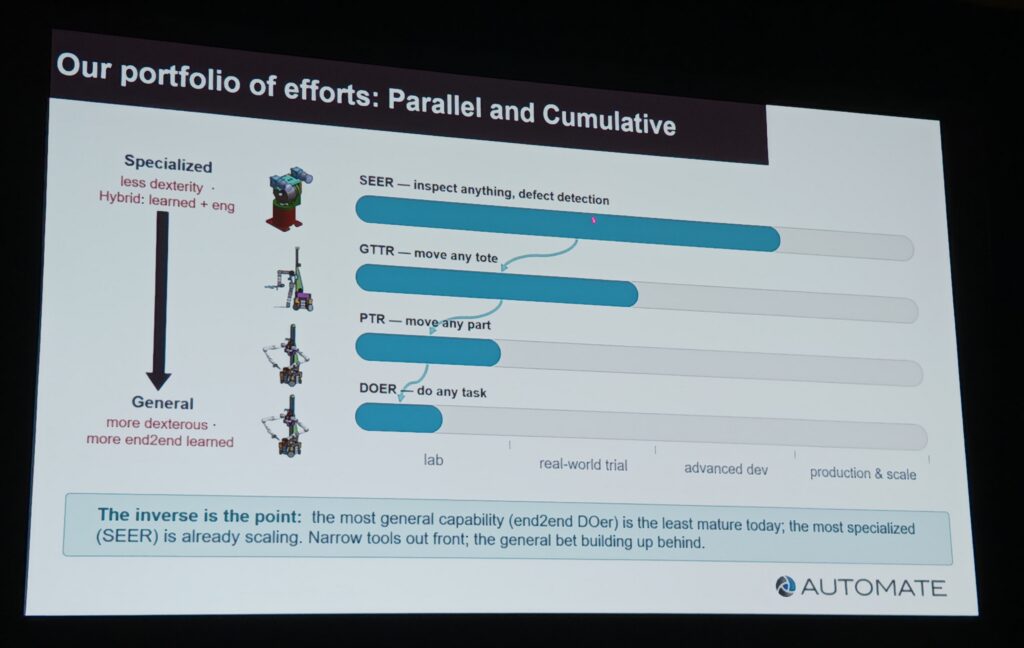
Growing portfolio of AI-enabled robotics (Figure 4) includes the ability to identify any unusual defect, transporting and a tote and parts with efforts progressing in parallel to higher levels of capabilities, going from specialized to more general-purpose.
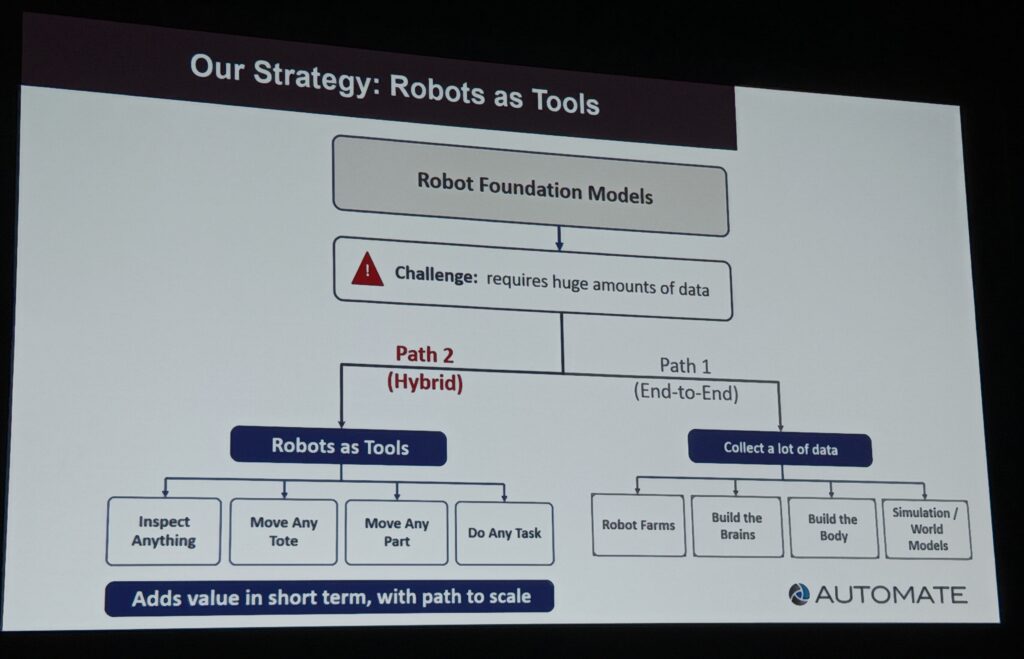
“Our strategy [Figure 5] is to build robots as tools to learn in the field to add value in short-term,” McColl said.
Mark T. Hoske is editor-in-chief, Control Engineering, WTWH Media, [email protected].
Keywords
Automation, Automate, industrial robotics, Toyota Research Institute
Consider this
Some future robots may be generalists, not as fast for specific tasks, but able to adapt and provide a wider range of capabilities with less exact programming directions.
You also might like
See other Automate 2026 coverage at www.controleng.com.
https://www.controleng.com/how-to-justify-automation-use-ai-to-help-robotics/