Industrial artificial intelligence helps machine vision provide more effective vehicle inspection systems in eight ways including higher quality, more effective automation and easier commissioning.
AI-enabled machine vision insights
- High-resolution machine vision enables more consistent quality control and automated, AI-driven specification checks help manage growing vehicle complexity.
- Machine vision virtual commissioning and synthetic data accelerate deployment to drive upstream process development, improve factory floor mobile inspection tools and consistency across paint finishes.
- Digital vehicle records strengthen liability protection, and high machine vision inspection throughput helps minimize production disruption.
Machine vision and industrial artificial intelligence (AI) are integrated into vehicle inspection systems to keep processes within setpoints and avoid rework. See eight ways machine vision can help.
1. High-resolution machine vision enables more consistent quality control
Traditional visual inspections remain an important part of automotive quality assurance, but they can be affected by human errors, subjectivity, fatigue and inconsistent decision-making over long production shifts.
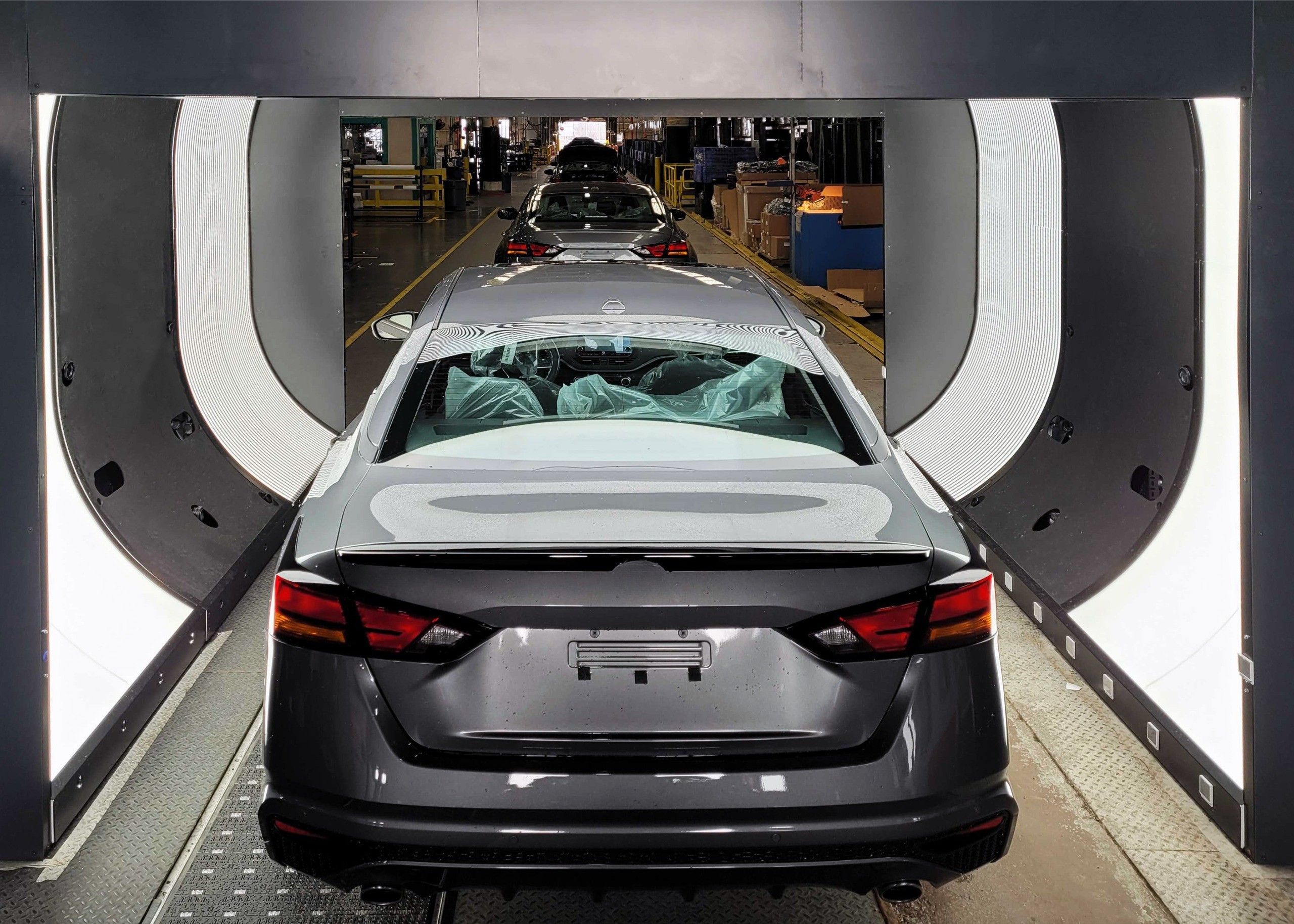
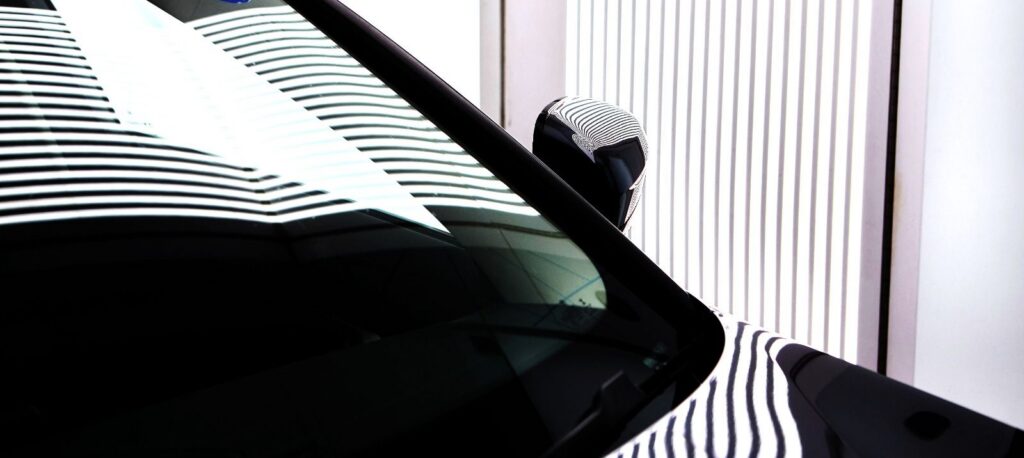
As a result, manufacturers are turning to automated imaging systems to create a more standardized inspection process. This can be achieved by passing finished vehicles through an automated imaging booth equipped with multiple high-resolution machine vision cameras that capture the complete surface area under controlled illumination.
By capturing the complete surface area AI-powered inspection systems can identify defects with a level of consistency difficult to achieve through manual checks alone. Unlike human inspectors, algorithms apply the same detection thresholds and evaluation criteria to every vehicle, every time. This consistency is becoming critical for quality assurance, for reducing costly rework and for improving downstream customer satisfaction.
2. Automated, AI-driven “spec checks” help manage growing vehicle complexity
Vehicle manufacturing has entered an era of mass customization. One production line may produce dozens of trim, wheel, grille, lighting and badge variations for the same model, often within the same production hour. The number of model variations can inevitably lead to a higher risk of errors.
Machine vision systems integrated with production data can help manufacturers automatically verify whether a completed vehicle matches its intended specification. By linking inspection systems to the vehicle’s unique vehicle identification number (VIN), AI can compare captured imagery against the original configuration data and flag discrepancies before vehicles leave the factory floor.
This capability is becoming increasingly valuable as original equipment manufacturers (OEMs) balance consumer demand for personalization with the operational pressures of high-volume manufacturing. Automated configuration auditing ensures accuracy and reduces the likelihood of costly specification errors reaching dealerships and customers.
3. Virtual commissioning and synthetic data accelerate deployment
Advances in simulation technology mean inspection systems can increasingly be designed and tested before physical infrastructure is installed to the factory floor. By mapping the cameras’ fields of view against a 3D computer-aided design (CAD) model of the vehicle, engineering teams can use the system to calculate an estimated performance coverage percentage in a digital sandbox.
This allows manufacturers to estimate inspection performance early in the deployment process, identify blind spots and optimize hardware layouts before installation begins. At the same time, synthetic image generation can be used to train AI models on a wide range of defect scenarios before live production data becomes available. The result is a faster deployment cycle, reduced commissioning risk and improved AI performance before the booth is even turned on.
4. Digital vehicle records strengthen liability protection
As vehicles move through increasingly complex supply chains, establishing accountability for damage or defects has become more challenging. Finished vehicles may pass through multiple logistics partners, ports, transport providers and dealerships before reaching the end customer.
To combat this, high-resolution imaging systems can create a permanent digital record of vehicle condition at key handover points throughout the journey, providing manufacturers with time-stamped visual evidence that can help resolve disputes quickly, improve traceability across the supply chain, and protect OEMs against false warranty claims.
Beyond logistics, digital vehicle histories can support warranty investigations, compliance reporting and broader quality management initiatives, providing the end customer with peace of mind that other OEMs may not be able to offer.
5. Inspection data can drive upstream process improvement
The value of AI inspection systems extends beyond identifying defects at the end of the line. Increasingly, manufacturers are using inspection data as part of broader continuous improvement strategies across the plant.
By aggregating defect trends over time, manufacturers can identify recurring patterns linked to specific processes, tooling, materials or production stages. This allows plant managers to address root causes earlier rather than repeatedly correcting the same issues, helping turn a quality-control tool into a proactive source of operational intelligence.
6. High throughput helps minimize production disruption
Automotive production environments operate at extremely high speed, meaning inspection technology must integrate seamlessly to avoid the risk of creating bottlenecks with lengthy inspections. This is why modern systems use low-latency drive-through booth configurations, designed to maintain continuous production flow.
By combining rapid-shutter camera networks with cloud or local edge-processing, the system can move a vehicle from initial scan to a complete line-side analysis dashboard in under 120 seconds. As factories continue to prioritize efficiency and automation, scalable high-throughput inspection capability is becoming a key consideration in deployment planning.
7. Mobile inspection tools improve responsiveness on the factory floor
Identifying defects is only valuable if teams can act on the information quickly. By integrating inspection dashboards with mobile inspection applications and handheld devices, manufacturers can bring AI-generated findings directly to frontline teams, reducing delays and accelerating decision-making.
Inspectors can review, approve or reject AI-flagged defects directly beside the physical vehicle and validate findings in real time to accelerate decision-making without interrupting workflow. This type of connectivity can improve response times, reduce communication delays and support more efficient collaboration between quality and production teams.
8. Advanced imaging systems maintain consistency across different paint finishes
One of the longstanding challenges in automotive inspection is the variability introduced by different paint colors and surface finishes. High-gloss black vehicles, metallic paints and matte finishes all reflect light differently, potentially affecting image quality and defect visibility.
To maintain reliable detection performance, modern machine vision systems increasingly rely on adaptive lighting strategies and dynamic camera calibration. Automated camera setting adjustments and optimized lighting arrays help deliver uniform image clarity on every vehicle in the production queue, regardless of vehicle color or finish.
As manufacturers continue to introduce more complex paint options and premium finishes, robust imaging performance is becoming essential to maintain consistent quality standards for both OEMs and customers.
Spyros Karachalios is head of R&D at DeGould. Edited by Mark T. Hoske, editor-in-chief, Control Engineering, Arrowfly, [email protected].
Keywords
AI-enhanced vehicle scanning and inspection, machine vision
Consider this
Are your machine-vision systems improving with integration of industrial artificial intelligence?
You also might like
Control Engineering provides more on machine vision and sensors
https://www.controleng.com/mechatronics/vision-and-discrete-sensors