Industrial artificial intelligence software provides a “dual‑engine.” One empowers engineers, the other enables AI deployment at scale. Significant engineering time savings can result.
Industrial AI insights
- Industrial artificial intelligence software can integrate across parts of the engineering lifecycle.
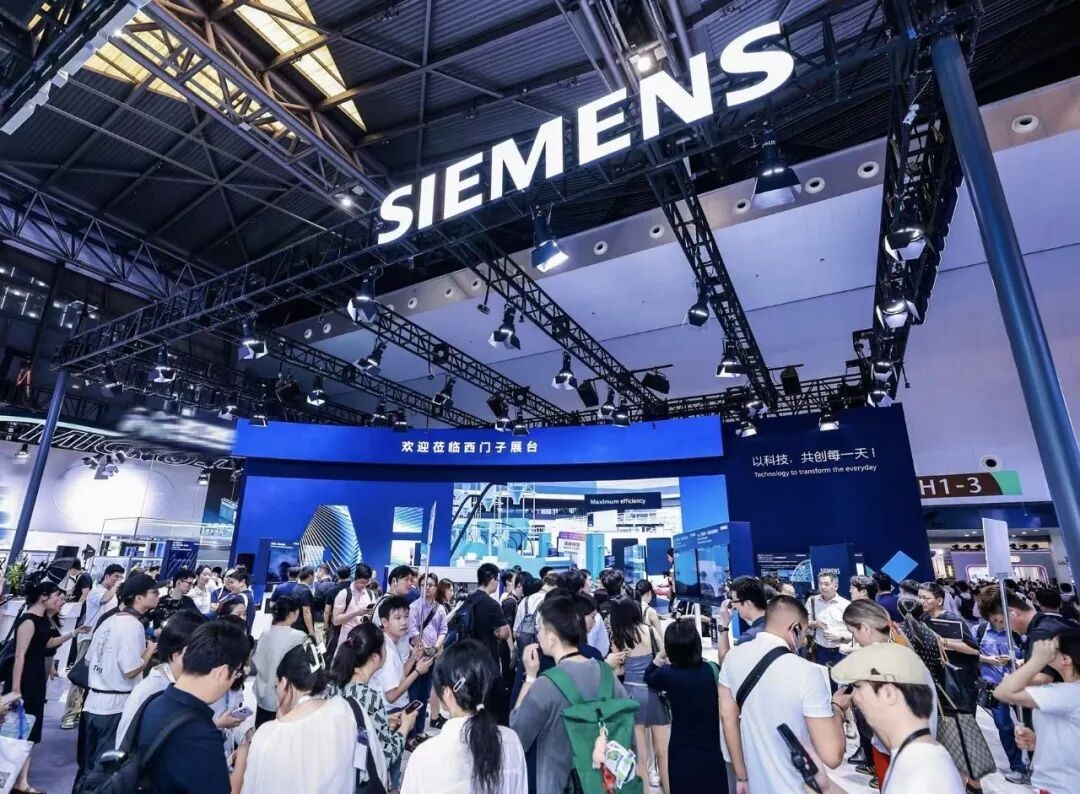
- Siemens Eigen Engineering Agent and industrial AI orchestration software Intelligence Center X for the Chinese market launched at the 2026 World Artificial Intelligence Conference (WAIC).
- In one example, deployed on customer production lines, the tool has cut test‑procedure duration per line by 60%.
Manufacturing enterprises share a clear and straightforward pursuit of growth: launching new projects, delivering more production lines, and venturing into brand‑new business sectors. While every company aspires to expand, the automation engineering capabilities underpinning project delivery can only improve gradually. This hard‑to‑bridge gap has quietly become an “invisible ceiling” constraining corporate development.
This can be illustrated by how automation engineers spend their time: from hardware configuration and network topology setup, to programmable logic controller (PLC) programming, human-machine interface (HMI) screen design, drive parameter commissioning and project documentation. These repetitive, time‑consuming tasks take up most of their energy, leaving little time for process solution development and architecture design. Meanwhile, projects often span multiple countries and language environments, yet experienced automation engineers are in increasingly short supply.
Some may wonder: given the boom of large language models, why not use ChatGPT to write code? But can ChatGPT comprehend automation projects, PLCs, file libraries, drives or even engineering specifications? Obviously not. This marks the starting point for the creation of Eigen Engineering Agent from Siemens. Consumer‑grade AI creates possibilities, while industrial‑grade AI delivers trustworthiness.
From talk to action: An engineering agent that gets practical engineering work done
At the 2026 World Artificial Intelligence Conference (WAIC), Siemens launched the Eigen Engineering Agent together with the industrial AI orchestration software Intelligence Center X for the Chinese market. These two products form a “dual‑engine” system: one helps engineers get work done, the other enables large‑scale AI implementation.
Fundamentally different from general‑purpose AI that only outputs textual proposals, the Eigen Engineering Agent is an industrial‑native agent deeply integrated with Siemens TIA Portal. At the exhibition booth, Siemens engineers gave a live demonstration. In the hardware configuration phase, engineers previously had to manually configure devices and build network topologies item by item. Now, simply uploading a hardware configuration table to Eigen triggers automatic setup: device addition, Profinet network configuration and tag generation are completed in one go.
Next comes PLC programming. When engineers describe process requirements in natural language, Eigen automatically generates SCL‑compliant code, complete with accompanying test cases. The same applies to HMI screen development: by specifying what to control and display, Eigen adds screen objects and finishes configuration directly within TIA Portal. [SCL stands for Structured Control Language, the proprietary Siemens’ implementation of the IEC 61131-3 programming language, Structured Text (ST).]
Eigen can also automate drive configuration, legacy project parsing and multilingual document management — repetitive work that used to drain massive engineering resources.
Most critically, Eigen Engineering Agent integrates seamlessly with TIA Portal. Rather than acting as an external add‑on tool, it issues direct commands to TIA Portal to carry out programming, configuration and setup inside the platform. Engineers focus on defining requirements and performing validation, freeing up bandwidth for solution design and innovative work. Eigen Engineering Agent gets practical tasks completed rather than only offer suggestions.
Measurable efficiency gains from real‑world client deployments
CASMT, a manufacturer specializing in new‑energy non‑standard production lines, has long grappled with iterative challenges for custom projects. Under conventional workflows, basic configuration development for one production line would take two to three weeks. Minor adjustments to customer product processes would demand extensive manpower for reconfiguration, putting project delivery timelines under constant pressure. After adopting Eigen Engineering Agent, basic hardware setups and standardized control programs can be rapidly generated. Engineers no longer waste effort reworking foundational frameworks and can fully focus on customized process requirements, bringing a qualitative leap in delivery efficiency for non‑standard projects.
An industrial inspection equipment provider has achieved remarkable results in AI deployment. Previously, substantial R&D effort was tied up writing low‑level standardized code, diverting resources away from core process algorithm development. With Eigen taking over repetitive configuration and coding work, senior R&D staff can concentrate on proprietary AI inspection algorithms. Deployed on customer production lines, the tool has cut test‑procedure duration per line by 60%, alongside multiple benefits including lower site footprint, simplified maintenance and reduced energy consumption.
Chongqing Changan Automobile, a major complete‑vehicle manufacturer, plans to embed Eigen Engineering Agent in R&D and manufacturing operations. The enterprise is executing its “One Core, Two Wings” AI strategy, extending AI capabilities forward from downstream manufacturing links. Eigen Engineering Agent serves as a key enabler for this initiative. The company has deployed Eigen at production‑line installation and commissioning stages and extended it to front‑end process design and analysis, leveraging AI to connect the manufacturing value chain.
Moving toward a larger industrial AI roll‑out
Many manufacturing enterprises face a shared pain point: how to move from scattered AI pilots to enterprise‑wide scaled adoption. Multiple AI projects get initiated, yet data remains siloed across disparate systems. Models operate in isolation without aligned business workflows. What appears to be widespread adoption is a collection of “data silos” and “showcase pilots.”
Siemens Intelligence Center X addresses this challenge. As a new‑generation industrial AI orchestration software, it functions not as a standalone AI tool but as a unified standardized foundation. It consolidates enterprise data, models and workflows, enabling humans and AI agents to collaborate within shared business contexts. It propels industrial AI from fragmented pilots toward governed, expandable large‑scale deployment.
Three Siemens technologies support the platform: Graph Studio for building industrial knowledge graphs to visualize data correlations; AI Studio for training and deploying machine‑learning models; and the Mendix low‑code platform for rapid business‑application development. Together they deliver a sequential pathway for scaling industrial AI:
- Unify data sources
- Train models on real‑world operational data
- Execute tasks via intelligent agents.
AI is no longer limited to “identifying problems.” Multiple agents can collaborate to diagnose, resolve and continuously optimize operational issues.
The underlying logic of industrial‑AI “dual‑engine” becomes clear when considering both Eigen Engineering Agent and Intelligence Center X. Eigen brings AI capability directly to front‑line automation engineering, putting practically capable intelligent tools onto engineers’ desktops. Intelligence Center X undertakes enterprise‑wide orchestration, turning fragmented AI trials into stably deployable, replicable and reusable production capabilities. Importantly, the two solutions do not operate independently. They form a closed loop spanning engineering development to enterprise‑wide large‑scale reuse.
Stone Shi is executive editor-in-chief, Control Engineering China. Edited by Mark T. Hoske, editor-in-chief, Control Engineering, Arrowfly, [email protected].
Keywords
Industrial AI, AI implementations, AI system integration
Consider this
Are your engineering AI tools integrated across the engineering lifecycle?
You also might like
https://www.controleng.com/integrate-automation-digital-twin-ai-for-autonomous-production
https://www.controleng.com/generative-ai-tool-recognized-for-innovation-in-industrial-operations