Control Engineering offers an hour of webcast instruction on how “Control system integrator advice maximizes automation investments” on Feb. 24, and this article offers related system integration advice.

Control system integration project optimization insights
- Explore how to maximize automation control system integration investments from system integrators experts, also instructors in a Feb. 24 Control Engineering webcast.
- Understand how to improve return on investments in automation projects.
- See the webcast for more advice: Register for the Control Engineering webcast, “Control system integrator advice maximizes automation investments,” archived until Feb. 24, 2027.
Are you getting the return on investment (ROI) expected from your automation projects? Learn how “Control system integrator advice maximizes automation investments.” The Control Engineering Feb. 24 webcast is archived for a year; webcast instructors provide automation and control system advice below. The instructors (Figure 1) are from the three System Integrator of the Year winners for 2026:
- Daniel Gomez is the CEO of Omnicon. With a strong background in operations and strategic management, he leads the company’s global mission of delivering world-class industrial automation and digital solutions. He specializes in driving organizational growth and fostering a culture of innovation, ensuring that Omnicon remains at the forefront of the digital transformation era.
- Titus Crabb is Vertech founder and president, an industrial systems integration firm specializing in automation, SCADA, MES and industrial networking. He earned a Bachelor of Science in Electrical Engineering from LeTourneau University in 1993 and founded Vertech in 2004. He has combined engineering, business strategy and team development to deliver world-class technical solutions, with success for clients, employees and partners. Crabb is a scuba diver, Arizona desert hiker and science fiction enthusiast.
- Eric Silk, CEO of Thermo Systems, brings 19 years of industry experience to his role. After earning his mechanical engineering degree from Rutgers, he started as a control systems engineer, later strengthening his business acumen and moving into a sales leadership position in 2016. By blending technical know-how with business insight, Eric assumed the CEO position in 2023, where he now sets strategic direction and promotes a culture of collaboration and excellence. Under his guidance, the company has grown while maintaining its focus on customer and employee success.
Moderator for the webcast is Mark T. Hoske, editor-in-chief, Control Engineering.
Advice on industrial automation project investments
In today’s rapidly evolving industrial landscape, maximizing the return on automation investments requires more than just selecting advanced technologies. It demands expert integration strategies that align technical design with business objectives. In this session, three experienced control system integrators from leading integration firms share field-proven insights to help end-users, manufacturers and other system integrators optimize automation, controls and instrumentation systems. Through real-world case studies and lessons learned, the presenters will demonstrate how collaborative integration approaches improve project outcomes, reduce lifecycle costs and minimize risk. They will examine strategic planning practices that increase project return on investment (ROI) and tactical execution techniques that avoid common pitfalls in system design, implementation and commissioning.
With a broad range of examples drawn from discrete manufacturing, process industries and hybrid environments, the session will emphasize scalable, standards-based solutions using a variety of control platforms and architectures. Attendees will gain an understanding of how to improve stakeholder alignment, define realistic project scopes and apply proven methodologies that lead to long-term success. Whether you’re specifying automation upgrades, delivering turnkey systems, or supporting installed operations, this session offers practical, vendor-agnostic guidance on how control system integrators deliver value across the automation lifecycle.
Learning objectives for the webcast are to:
- Identify key strategies control system integrators use to align automation solutions with end-user business goals and operational priorities.
- Understand how early engagement and clear scope definition between integrators, manufacturers and end-users can reduce rework and improve project ROI.
- Apply proven technical approaches from real-world case studies to optimize integration of control, instrumentation and networking systems across various industries.
- Recognize common pitfalls in automation design and implementation and learn how integrators mitigate technical and operational risk through standard practices and lifecycle planning.

How to improve automation project ROI: Start early
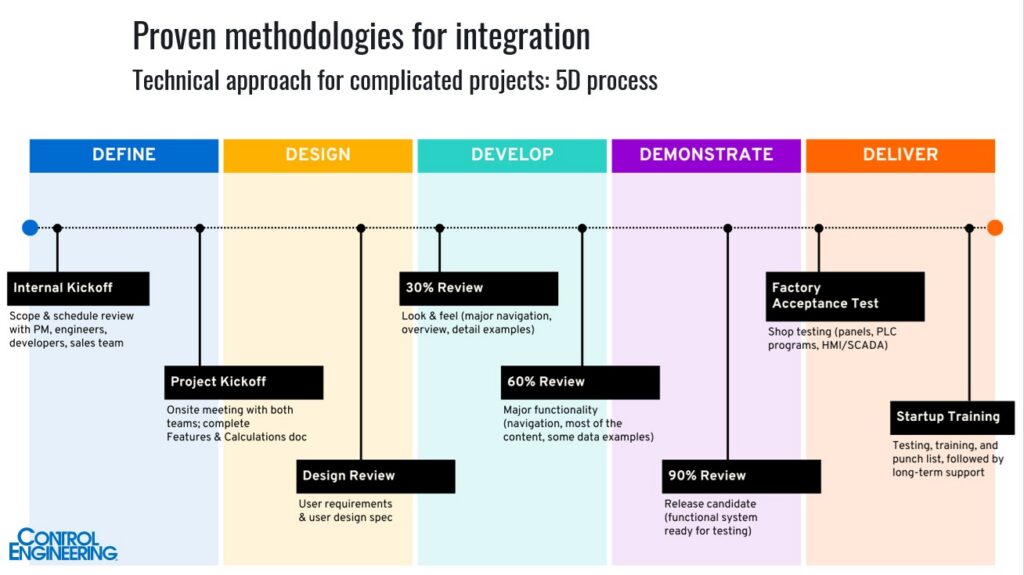
Gomez, talking about automation ROI, said that maximizing ROI begins early (Figure 2), during front-end engineering design (FEED) studies and value workshops. Early engagement ensures solutions are aligned with business drivers and operational realities. This phase helps clarify the purpose of the project and ensures technology decisions support measurable outcomes.
Applying a structured project methodology ensures consistency and predictable execution, Gomez said. Clearly defined roles, responsibilities and decision authority reduce risk and improve project efficiency.
Clearly defining scope during the design phase prevents scope creep, delays and unexpected costs, helping to protect project timelines and ensure alignment among stakeholders, Gomez said.
Using defined standards ensures solutions are maintainable, scalable and reusable. This reduces future engineering effort and improves long-term ROI.
A disciplined and structured approach ensures automation investments deliver sustained business value, Gomez added.
Reduce friction in automation projects
To minimize automation project friction, Crabb advised:
1. Front-load the definition because ambiguity turns into cost, delay and frustration. Those involved much clearly define system functionality, design standards, roles and responsibilities and review and testing requirements.
2. The “law of diminishing options” explains that choices get more limited the further a project progresses.
3. Changes should be decided during design because they cost more as the automation project progresses. Crabb used building a house as an example. A house begins with floor plans based on how the owners expect to use the place. Construction plans provide greater details. Trades apply their expertise, often concurrently, as needed.
Inspections are performed along the way (rather than only at the end), because changing underground plumbing is way cheaper before the slab is poured.
Automation project progression
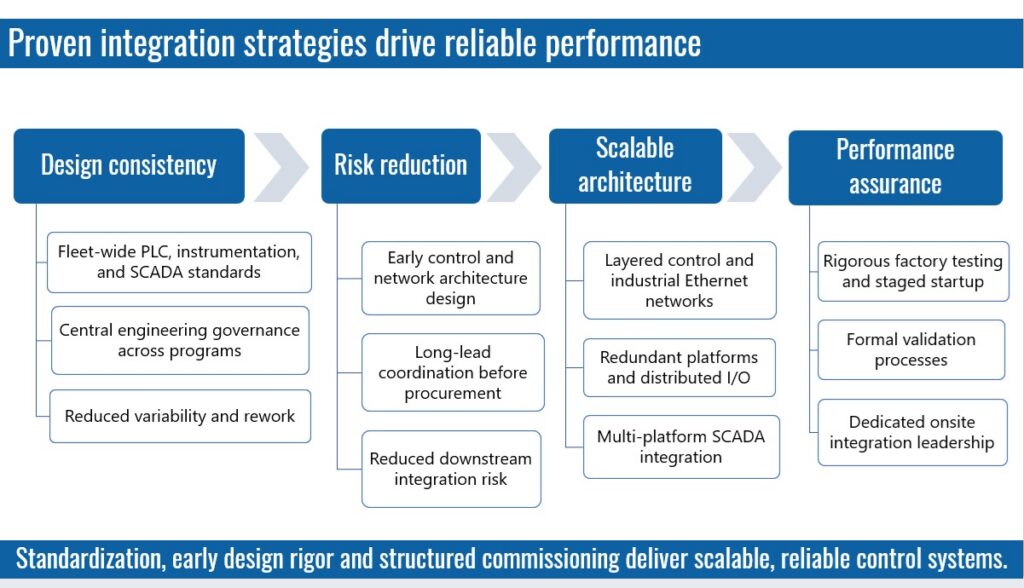
Silk provided an example of a large mission‑critical facility program, where a centralized engineering approach was used to standardize control strategies, instrumentation specifications and network design across multiple sites. By defining system boundaries early and reusing proven architectures, the project reduced commissioning effort and improved consistency while supporting parallel project execution.
Fact-based elements can be applied along the way, Silk said, including:
- Centralized engineering model used to standardize designs across projects
- Early coordination of controls, instrumentation specifications, and network architecture
- Defined system interfaces to support parallel execution and multi‑site delivery
- Reduced commissioning effort through reuse and early testing strategies.
The Feb. 24 webcast provides additional automation advice and examples. See link below.
Mark T. Hoske is editor-in-chief, Control Engineering, WTWH Media, [email protected].
Keywords
Industrial automation optimization, control system integration, automation integration, automation ROI
Consider this
Are you getting the return on investment expected from automation projects?
Online
Register for the Control Engineering webcast, “Control system integrator advice maximizes automation investments,” archived until Feb. 24, 2027.