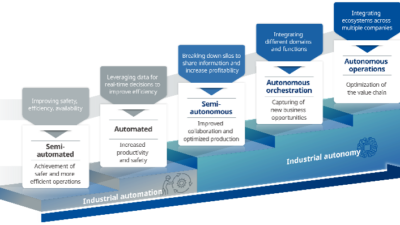
Through persistent but calculated AI analytical tool adoption, manufacturers are optimizing production efficiency, bolstering predictive maintenance and accelerating time from data to insight.
OT cyber threats insights
- AI-powered advanced analytics platforms help manufacturers convert growing volumes of industrial data into actionable insights that improve operational efficiency, maintenance planning and decision-making.
- Machine learning enables predictive maintenance by identifying anomalies and early warning signs of equipment issues, allowing organizations to shift from reactive or schedule-based maintenance to condition-based strategies.
- Advanced analytics platforms also help capture and scale operational expertise by turning historical data and subject matter expert knowledge into reusable insights that support knowledge transfer and faster problem solving.
As competition in global markets continues to hasten, digital transformation is increasingly differentiating successful innovation from stagnant production. A recent Digitopia study reports a widening divide between digital pioneers and those hesitant to modernize, as many companies prioritize endurance and reliability over transformation. This is especially true in risk-averse environments, such as the process industries.
However, as sensors, control systems and automation technologies grow in quantity and generate increasingly vast amounts of data, attaining meaningful outcomes by storing, accessing and processing this information effectively becomes ever more challenging. Left to traditional automation toolsets, companies are struggling to keep pace with escalating customer demands.
Artificial intelligence (AI) software tools, including leading advanced analytics platforms, are helping bridge the gap from data generation and management to actionable insights. Data analytics plays a key role in the shift, transforming raw data into valuable knowledge. Some of the most groundbreaking innovations are occurring in this area.
AI in the process industries
AI is transforming nearly every business environment, but its adoption is distinctively different across different sectors. Consumer-focused fields like retail, logistics and health care are latching onto AI tools quickly, using them to innovate and achieve immediate value. The process manufacturing industries, by contrast, are more deliberate. With regulatory compliance, consumer and employee well-being and operational reliability at stake, industrial organizations must proceed methodically.
Safety, security and quality remain top manufacturing priorities when evaluating AI tools. Applications range from narrow use cases, such as self-driving vehicles adapting to traffic, to more sophisticated systems with human-like adaptability. Within the industrial context, today’s emphasis is on machine learning (ML) and generative AI (GenAI). These technologies analyze patterns, predict outcomes and improve with iterative experience, helping organizations strengthen reliability, optimize operations and deploy predictive maintenance strategies.
While adoption across the sector may not be explosive, the steady growth is still highly consequential. For example, McKinsey estimates that petrochemical companies can capture 3 to 5 percent additional margin from existing assets by investing in digital and AI capabilities, redefining how organizations plan and optimize their capacity.
Like earlier waves of cloud computing and big data, AI is surrounded by buzz. Yet unlike some past trends, AI’s tangible impact is already evident, and it is here to stay. However, high-quality and accessible data is the critical enabler for success, and many process manufacturers either lack sufficient usable data or are burdened with silos that prevent effective analysis. Overcoming these barriers is essential for AI models to deliver insights that directly improve performance and KPIs.
AI in the automation lifecycle
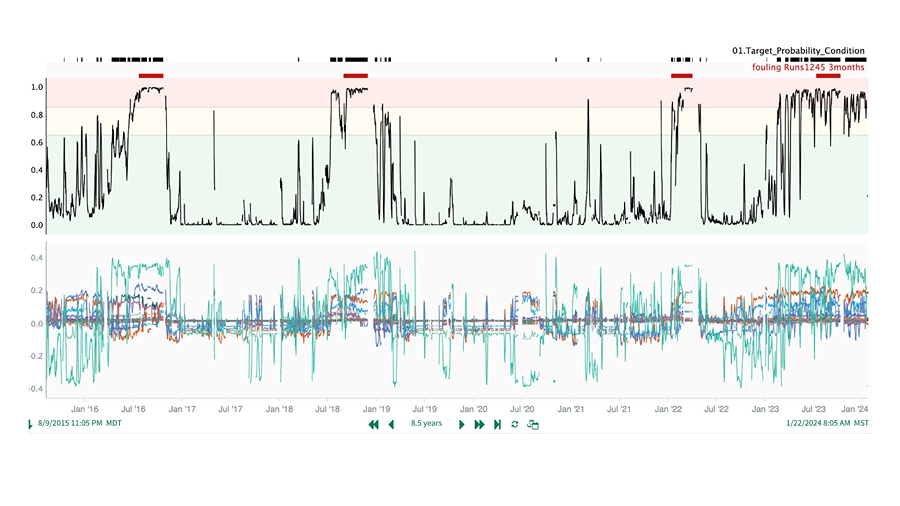
AI and machine learning are transforming the automation lifecycle by enhancing key stages such as optimization, decision support and maintenance. AI is pivotal in predictive maintenance, where it helps organizations shift from reactive to proactive equipment health assessments and data-driven upkeep strategies. Traditional maintenance relies on historical patterns or fixed schedules, which often result in unnecessary downtime or unexpected failures, but AI changes this dynamic. By applying machine learning algorithms to sensor and performance data, manufacturers can detect subtle anomalies that signal emerging issues, often well before they deteriorate into costly breakdowns (Figure 1).
Additionally, continuous monitoring through AI-driven models improves anomaly detection and enables more accurate failure predictions. Leveraging these insights, organizations can optimize maintenance schedules that are tailored to actual asset conditions, which reduces unplanned downtime, extends equipment lifespans and empowers subject matter experts (SMEs) to focus on high-value tasks rather than routine monitoring. AI can also automate the data interpretation process, reducing the manual effort required for diagnostics.
Integrating AI into advanced analytics platforms further expands its impact. Beyond identifying potential failures, AI enables prescriptive analytics to provide recommendations for the most effective corrective actions. This helps organizations move beyond simply predicting problems to actively optimizing their responses.
Case study: reducing fouling with AI-powered predictive maintenance
A global specialty chemicals manufacturer used an advanced analytics and AI platform to predict fouling in its distillation towers and significantly improve operational efficiency. Before implementing the software, unexpected fouling frequently caught the facilities team off-guard, prompting unplanned shutdowns and operational interruptions.
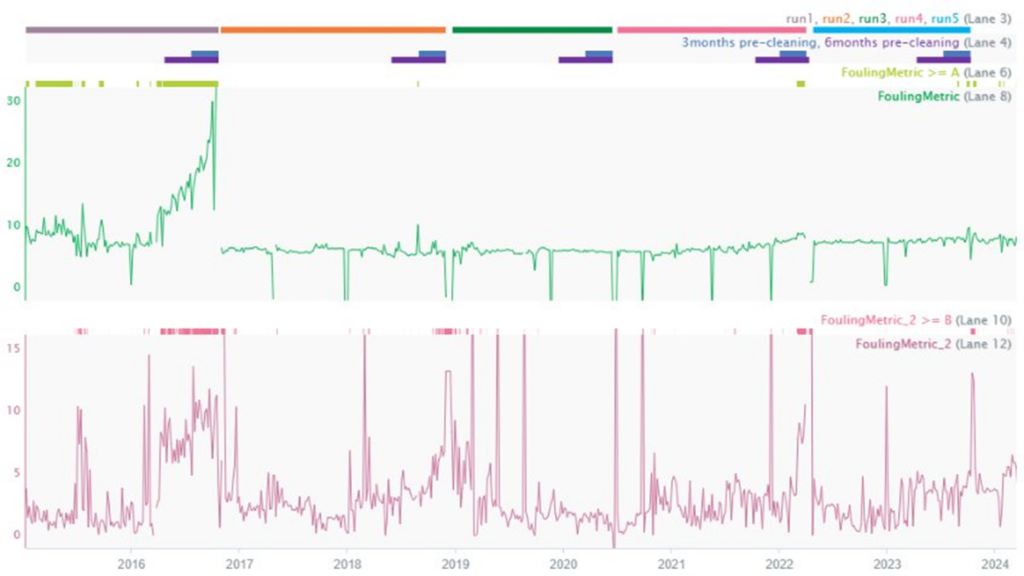
A mixed team of engineering and operational SMEs collaboratively specified a wide range of operating conditions — including composition, temperature, pressure and flow rates — for analysis using the platform’s multivariate modeling capabilities, with the objectives of identifying and eventually predicting fouling events. The machine learning model generated rapid insights into the contributing factors and their complex interactions, providing high-level summary metrics, trend views and recommended maintenance actions to plant personnel for clarity and actionable guidance.
The first step was establishing baseline operating conditions and selecting target analysis periods. Using the platform’s signal selection tools, SMEs identified and removed low-variance signals and filtered out highly correlated variables. They then ranked the importance of remaining signals, revealing which factors most strongly influenced fouling. This approach not only identified key contributors but also highlighted causal relationships across the stages before, during and after fouling, enabling a clearer view of root causes (Figure 2).
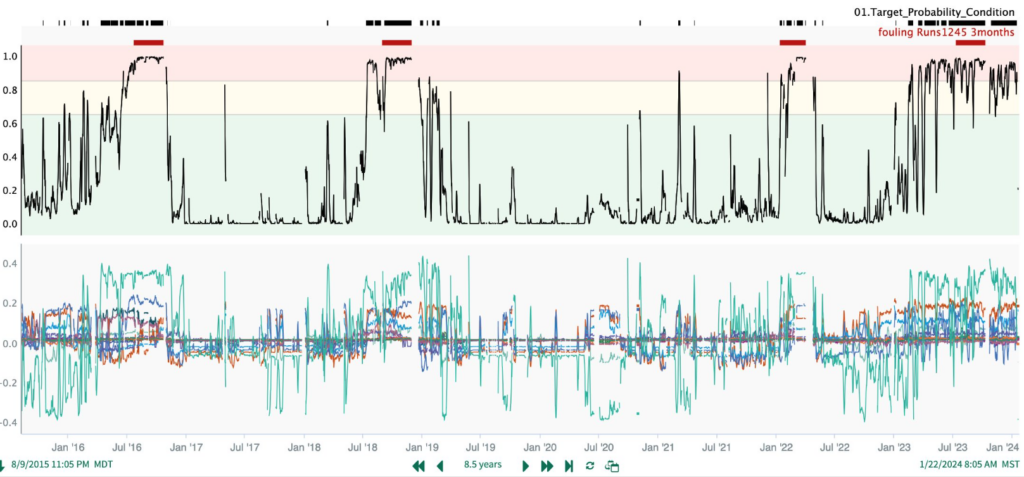
Over time, the model self-optimized to more reliably detect precursory conditions to fouling, providing the team with up to two months before serious anomalies appeared. These predictive capabilities now inform proactive planning so staff can conduct maintenance activities during scheduled downtime to significantly reduce unanticipated interruptions.
The analysis revealed condenser temperature variances as the primary contributors to fouling. Armed with this knowledge, the company adjusted operations to extend runtime between cleanings, reducing unnecessary upkeep. These alterations increased efficiency, reduced downtime and delivered measurable profitability gains.
AI and knowledge transfer
AI helps close the loop of the automation lifecycle by institutionalizing knowledge, which is often overlooked but increasingly vital. With nearly a quarter of today’s engineering workforce expected to retire within the next decade, establishing a strong knowledge transfer process is critical to prepare the next generation of engineers for success. This effort extends beyond conventional documentation, to building a living knowledge base where every insight, success and failure becomes part of an organization’s collective memory.
These occasions also feed AI tools, which continuously draw from historical and real-time data to uncover long-term trends, root causes and best practices. By codifying operator expertise into decision-support systems, AI makes human knowledge scalable across plants, shifts and geographies, ensuring critical insights are always within reach.
Historically, SMEs lacked the time to sift through extensive reports to extract actionable insights, but AI models excel at mining these resources. With a structured knowledge base that includes process documentation, troubleshooting records and maintenance logs, AI can rapidly surface relevant information, empowering SMEs to make faster and better-informed decisions that ensure past lessons continually improve present and future performance.
As AI proliferates, manufacturers cannot afford to stand idly by. Fused with methodical and calculated approaches to safety, quality and operational reliability, advanced analytics and AI platforms are propelling continuous improvement and predictive maintenance throughout the process industries.
Janelle Armstead-English, industry principal for chemicals, Seeq Corporation; edited by Gary Cohen, Control Engineering senior editor, [email protected].
Learning objectives
- Understand how AI-powered advanced analytics platforms convert large volumes of industrial data into actionable insights that improve operational performance and decision-making.
- Learn how AI and machine learning enable predictive maintenance, anomaly detection and prescriptive recommendations that optimize equipment reliability and reduce unplanned downtime.
- Recognize how advanced analytics platforms help institutionalize operational knowledge and support knowledge transfer by capturing expertise and integrating it into data-driven decision support systems.
Consider this
How can you leverage AI-powered advanced analytics platforms to turn existing process data into predictive insights that improve equipment reliability, operational efficiency and decision-making across the automation lifecycle?