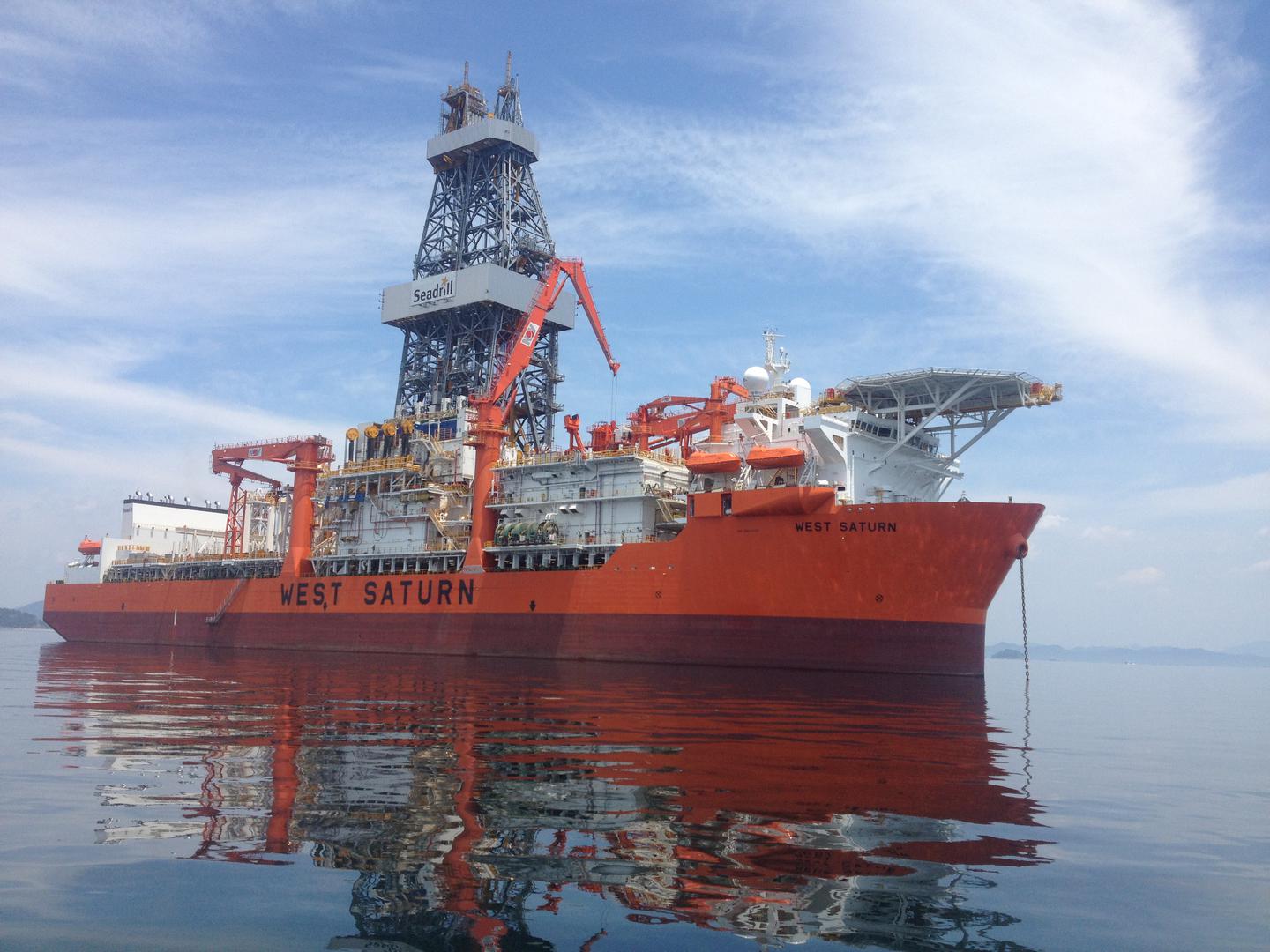
Seadrill Ltd., an offshore drilling contractor, operates one of the most advanced fleets of drill ships and semi-submersibles in the world. Technologies like edge computing help the company maintain its assets deployed in some of the most challenging offshore environments.
Learning objectives
- Learn how Seadrill partnered with others to develop an edge computing platform to empower digital transformation.
- Discover the ways in which edge computing can empower data collection, transformation and communications remotely.
- Determine who edge computing can act as a foundation for future upgrades.
Insights
- Edge computing helped an oil & gas company enable real-time data collection from rigs.
- Digital transformation empowers local encryption and secure data transfer, as well as on-rig data brokering with MQTT
- The solution Seadrill employed required minimal setup required with plug-and-play field devices
As Seadrill Ltd. sought to enhance its operational efficiency and shift toward more predictive maintenance models, the company ran into a familiar industry barrier –– legacy systems that were inflexible, expensive to scale and slow to adapt. The solution? An industrial internet of things (IIoT) platform called Metis.
Metis was developed in partnership with WAGO Corp., Cedalo and Portainer. [WAGO is a portmanteau, combining the names of Wagner and Olbricht, originators of the company’s Cage Clamp technology.]
“The ideal system is one where, three years from now, no one even knows what Metis is, because it just works,” said Matt McLendon, project lead for Seadrill. The architecture helped Seadrill develop and deploy a transformative edge computing solution that not only solved immediate pain points but also laid the groundwork for a data-driven future across its global drilling fleet.
Overcoming legacy limitations and rising costs
Seadrill’s operations team faced a common yet critical issue. Legacy control systems made it difficult and prohibitively expensive to add new data points or prototype innovative monitoring solutions. Cost was a critical component of the company’s plan.
The legacy approach involved:
- High upfront and ongoing costs
- Vendor lock-in with limited extensibility
- Complex licensing models
- Inflexible architectures requiring bespoke engineering
- Risk of potential delays in implementation and commissioning
As McLendon and his team explored alternatives, it became clear that they needed a new approach –– one that was open, secure, modular and repeatable across the fleet.
Metis was built on open standards and strategic partnerships
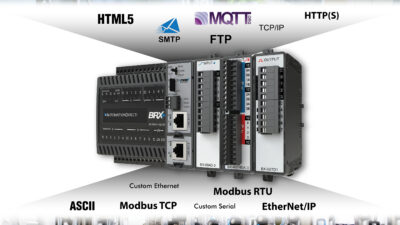
Seadrill’s Metis architecture blends off-the-shelf hardware and open-source software to deliver an edge computing framework designed for industrial scalability and simplicity.
The key components of the platform are twofold. They include hardware and software components.
Hardware:
- Edge computers
- Controllers
- I/O modules
- Cloud virtual machines
- Software:
- Software for edge device management
- Messaging queuing telemetry transport (MQTT) broker
“The idea is that we can deliver something plug-and-play for our field teams,” McLendon said. “No one needs to learn a new automation vendor platform.”
How edge computing is powered by data
A central innovation in the Metis project is the use of edge computers to enable real-time data collection, transformation and communication, right from the drilling rigs.
Traditional programmable logic controllers were considered, but edge computing offered key advantages, which include:
- Local encryption and secure data transfer
- On-rig data brokering with MQTT
- Offline operation with up to seven days of data reconciliation
- Minimal setup required; field devices simply plug in and transmit
“Our offshore personnel are maintainers, not engineers,” McLendon said. “Choosing edge computing for the Metis solution enabled it to be simple, repeatable and robust. If the system requires advanced coding skills, it’s not viable.”
Scalability was a core concept
Metis was developed with scalability as a core principle.
“We designed the architecture so that any stakeholder –– onshore, offshore, engineering or maintenance –– can add a sensor and get that data flowing in real-time,” said Alec Spedding, head of mechanical systems at Seadrill.
Each rig hosts its own edge broker and firewall, allowing Seadrill to manage bandwidth usage while ensuring continuity of operations, even during connectivity outages.
Determining effectiveness through rollouts
Metis has already proven its value during the initial proof-of-concept and pilot rollouts. Some key performance indicators include:
- A more than 50% reduction in deployment costs compared to legacy original equipment manufacturer solutions
- Faster deployment with systems installed and operational in hours instead of weeks
- Greater reliability in extreme offshore conditions
- Immediate field acceptance with minimal training required
A foundation but not one solution
The Metis platform isn’t a single solution to Seadrill’s pain points, but the company views it as more of a foundation. With a flexible architecture in place, the possibilities for future use cases include:
- Wireless sensor integration using low-power, low-range for hard-to-reach areas
- Continuous integration and continuous delivery/deployment automation for streamlined software deployment
- Real-time analytics to support asset life cycle management
- Expanded control capabilities, including skid control and subsystem automation
- Democratized data access enabling insights from every level of the organization
“This platform allows us to test bold ideas quickly and cost-effectively,” Spedding said. “It’s not just about monitoring; it’s about empowering innovation from every corner of the business.”
Edge computing fixes legacy control system issues
The legacy control system model is breaking down under its own weight: proprietary architectures, exorbitant upgrade costs and slow delivery cycles have created a bottleneck in industrial innovation.
The Metis platform that empowers digital transformation proves that there’s a better way, and the evidence comes with Seadrill’s experience developing a system that enabled real-time data collection, transformation and communication from the drilling rigs.
“The vendors should be helping us solve problems, not selling us software license managers,” McLendon said. “We built this with open standards, trusted partners and a relentless focus on user experience. Now we can respond to new challenges in days, not months — and that’s a game-changer.”
Barry Nelson and Ken Brunnbauer are marketing representatives with WAGO Corp. Edited by Sheri Kasprzak, executive editor, Automation & Controls, Control Engineering, WTWH Media, [email protected].