Software, services and improved workflows help industrial customers optimize and create value, say AspenTech (Emerson) executives at Optimize 26.
Industrial process optimization insights
- Executives from Aspen Technology (part of Emerson) answered questions from media and analysts at Optimize 26, hosted by AspenTech in May.
- Topics included how software is moving optimization from machines to the enterprize.
- Industrial artificial intelligence software is helping with data contextualization, simulation, productivity, and education; it can improve, but seems unlikely to replace controls.
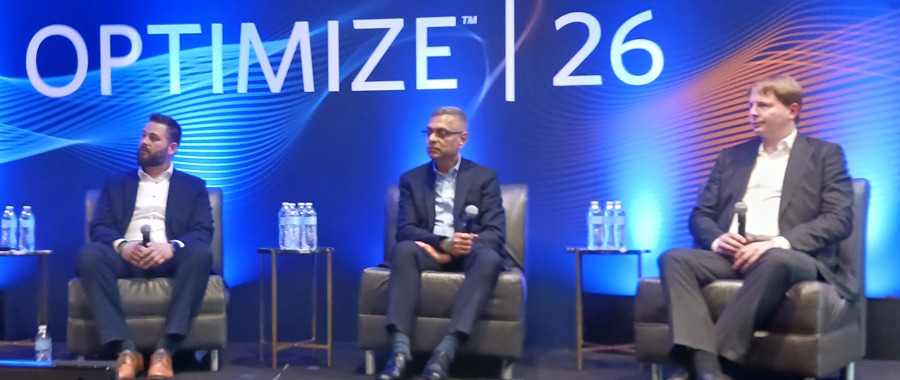
Executives from Aspen Technology (part of Emerson) answered questions from media and analysts at Optimize 26, hosted by AspenTech in May. Answering questions and offering insights on automation industry trends were:
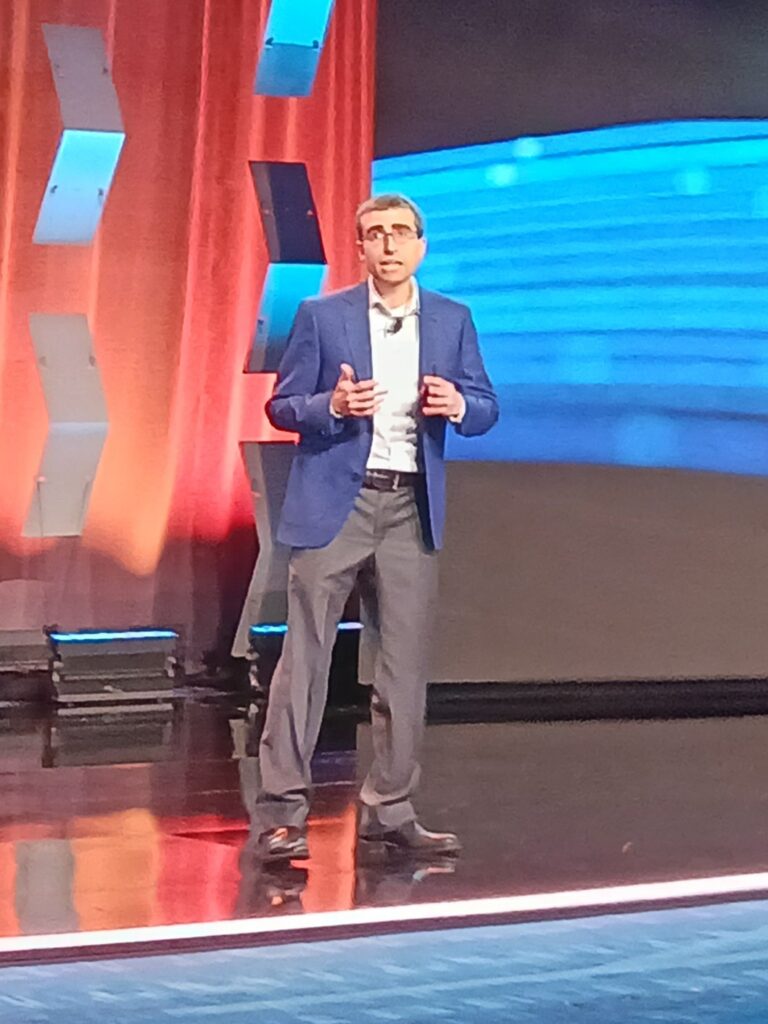
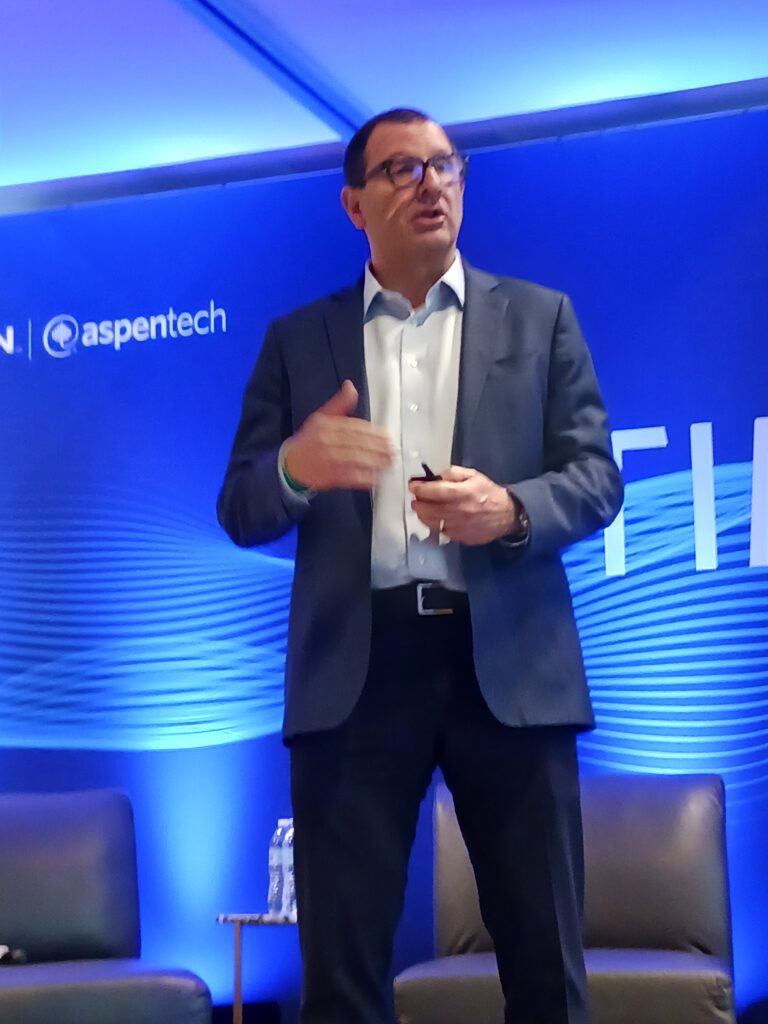
- Vincent Servello, president, Aspen Technology (Figure 1),
- Claudio Fayad, chief technology officer, Aspen Technology (Figure 2)
- David Streit, vice president, enterprise operations platform, Aspen Technology
- Vikas Dhole, senior vice president, in modeling and optimization, Aspen Technology
- Heiko Claussen, chief technologist, AI, Aspen Technology.
See more Control Engineering coverage of Optimize 26 here: “Industrial AI, performance optimization, better OT data needed.” Answers below have been edited for length and style.
What AspenTech Optimize 26 themes are helping customers?
Servello: First, technologies continue to transform how we work. AspenTech had more than 100 research and development initiatives. We’ve refocused those into ten areas with significant investments. We’re moving from waterfall software development into an agile framework. And we’re accelerating progress on industrial artificial intelligence (AI) initiatives by expanding the Aspen Visualization Assistant (AVA) to help across all platforms, not only those from AspenTech and Emerson.
Secondly, Emerson has helped AspenTech expand services and support for so its complex, domain-specific software can deploy more quickly and effectively.
Third, AspenTech has moved to a more programmatic rather than transactional approach, providing help from software program directors as needed to get more value from deployments. [In multiple sessions during Optimize 26, users noted that if operators don’t trust or use automation software features, there’s no value.]
How can today’s software move optimization from the machine to the enterprise?
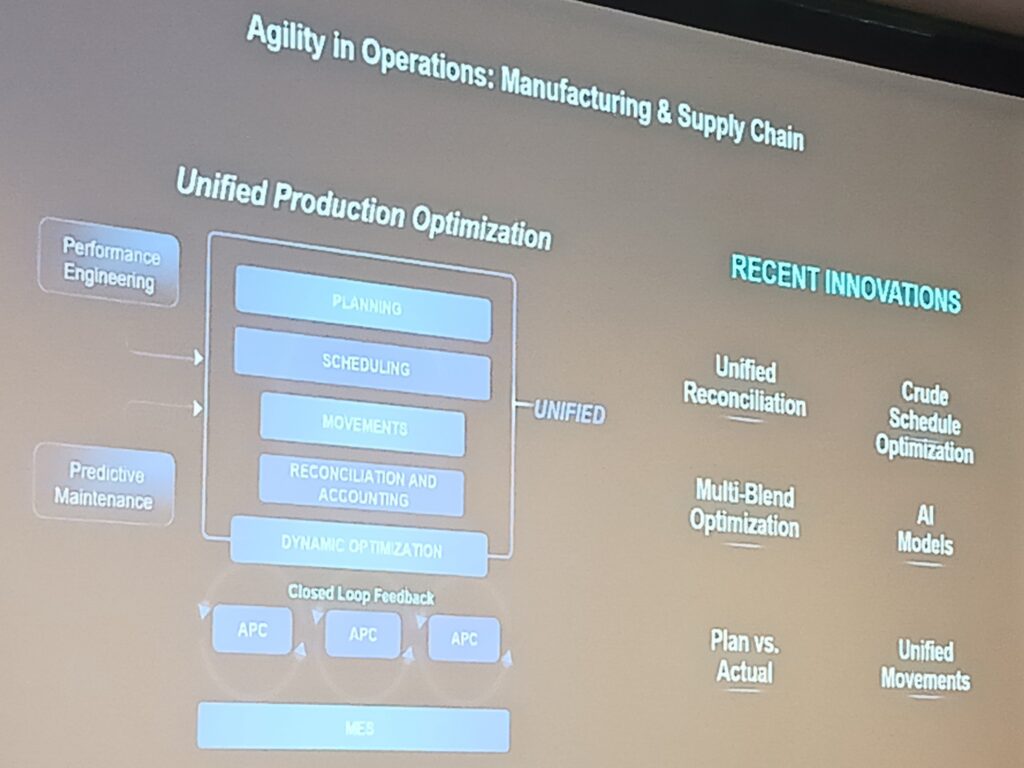
Fayad: Changing the way industries think about optimization requires a shift in our product roadmap (Figure 3). Starting with the end in mind, the investments optimize value in resource selection, planning and scheduling, once separate silos. Now it’s possible to optimize enterprise, where plants used to be the single focus. We believe customers will be more competitive if they combine different systems in an enterprise operations model. Integration was very complicated because of disparate systems with different data models.
How is industrial AI helping?
Fayad: AI is an enabler for data analytics. AI has become the ultimate orchestrator, integrating applications, making data available to the data fabric. Requirements include security, ease of deployment and ease of use. The learning curve for industrial AI applications is quite low, which shifts the roadmap, allowing improvement of engineering tools. I don’t believe AI will replace controls anytime soon, but AI will leverage controls by combining data into a single data model. Benefits of greater agility include reduction in planning, better orchestration of resources, improved safety, more productivity and lower costs.
Looking at the right constraints allows effective rescheduling in minutes.
Automation experts have used AI for a long time, and a lot of work was required to tune and adjust its use. Now hybrid models accelerate value creation.
At the lower layers, AI is improving access, providing analytics and optimization at a particular terminal, rather than having to walk a mile to a control room. The idea of being able to watch TV anywhere on smart phones and tablets has led to AVA’s use across AspenTech applications, such as DMC3, GDOT and Subsurface Science & Engineering.
Anyone can type in questions for AVA at https://aspentech.ai, creating an open workspace. Answers can be combined into a report PDF. Why force users to look for something? Ask for what you need. AI can change how we interact with technology. AVA operates as a platform on top of all applications. Industrial AI cannot accept 5% hallucinations. It must be right 100% of time, as an expert across all operations.
How will integration of AspenPlus and Hysys simulation tools help?
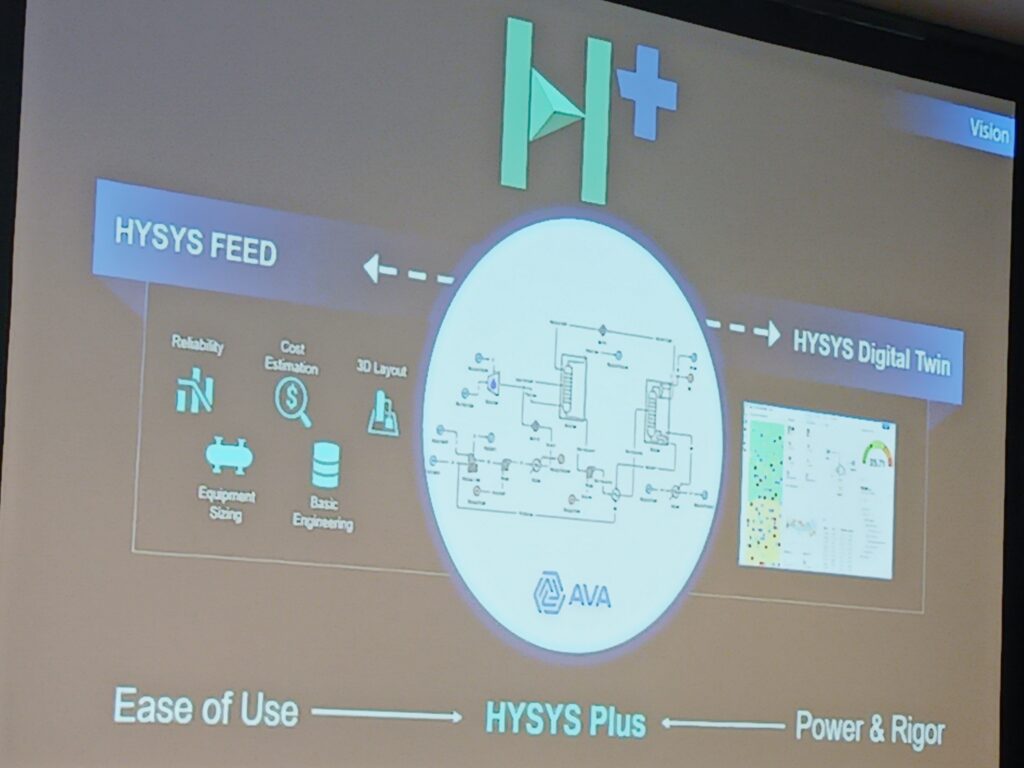
Fayad: Digital twins take lot of work. Why force customers to use two tools? We will combine the rigor and power of AspenPlus with the ease of use of Hysys so customers can accelerate innovation (Figure 4).
The software creates a digital twin and model of how to optimize throughput to move closer to the ideal state. Customers create value with those connections.
Aspen Inmation, a zero-trust industrial data platform, exists on premises (on prem) and in the cloud. It provides data contextualization, visualization, AI orchestration and enterprise scalability. Inmation is very distributed, connecting to all assets. OT data is different than IT data and often cannot be connected to IT systems. They need an industrial data platform as an intermediary.
What does the continuing integration of AspenTech and Emerson software look like?
Fayad: Continued collaboration will expand knowledge and deep understanding of processes. We’re bringing our best minds together to shape the future of automation. User value from services will increase. It will Importance and need for services. AspenTech will remain agnostic. What we’re building sits on top of existing automation infrastructures, control systems and field devices. Customers are seeing benefits of more diverse perspectives from collaborations.
How are services changing from what AspenTech did before?
Fayad: We’re providing more focus on software installation side with more support, more complex products, and a larger advanced control contingent. Many customers were not getting full benefit. We’re increasing value of the automation software with services.
How can industry companies start with an AI strategy?
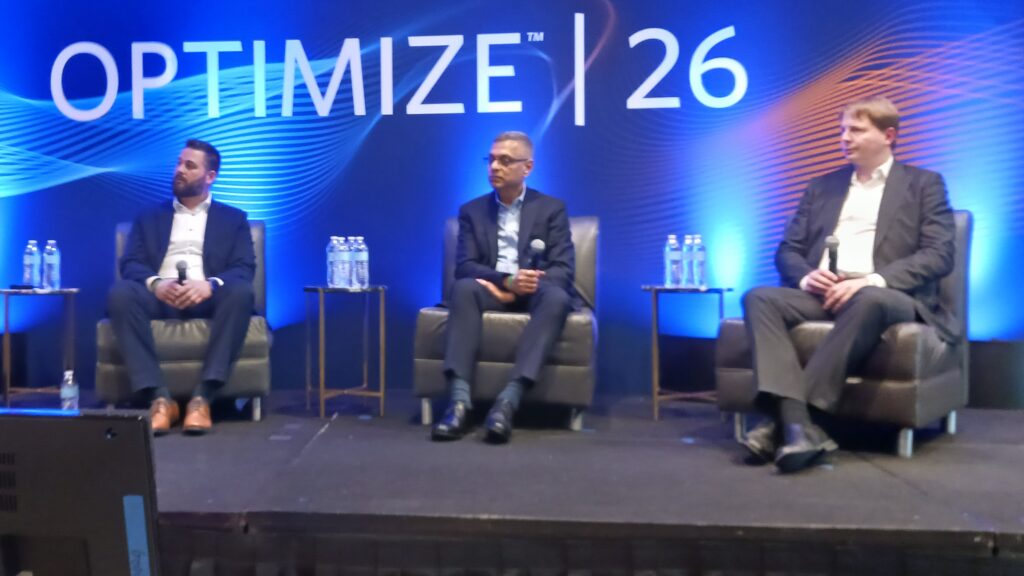
Dhole: We’re working with partners like system integrators to customers. We’re in the software business so are using a programmatic approach and more services. (Streit, Dhole and Claussen are in Figure 5.)
Claussen: Being closer to customers helps them create more value more quickly.
Fayad: Creating a partner ecosystem helps us be strategic about finding gaps. System integrators are welcoming that to create more value and accelerate adoption.
Will Emerson support Open Process Automation standards?
Fayad: Automation standards can be too prescriptive and all encompassing, and that’s not aligned with how we see standards. We want to be more flexible and modern. Not all standards are prescriptive. We like Ethernet APL, which defines physical media but not all protocols.
OPAF, like fieldbus standards, defines everything. Interoperability doesn’t require everything to be defined. OT doesn’t need one standard to rule everything. We’re a big proponent of interchangeability and interoperability. An IT laptop may not work after six years without a new system. The whole structure changes. Plant infrastructure can run for 50 years. We cannot wait for all new infrastructure. Generational interoperability requires bringing AI and data contextualization on top of existing systems.
Claussen: We’re active in standards and do not promote vendor lock-in.
Is AspenTech modernizing its pricing?
Dhole: Pricing is in line with the value the software creates. Customer value created can be 100 to 300 times the software cost. We have a flexible commercial model to help customers get more value from engineering models.
Fayad: Our licensing models favor simplicity and tiers to create value. Nickel and diming customers does not help.
Are safeguards built into AVA software to avoid hallucinations?
Claussen: AVA is probabilistic by nature. We can create guard rails in different ways. There are examples where users ask general language model software for math formulas, and the model justifies the wrong answer. Now software has become more robust, and queries can include requests to prove the results.
AVA is proven and reliable.
What use cases are there for AVA beyond training and information?
Claussen: Alarm prioritization is something different work groups are applying. Sensor counts are exponentially increasing, creating incidents with hundreds of cascading alarms. AVA can be applied to look at designs, prevent damage from alarm inefficiencies and reduce operator load.
Fayad: There’s a lot of talk about AI and fear of missing out (FOMO). Commercial tools are great at predicting the next word, but they lack industrial knowledge and can hallucinate.
Are AspenTech and Emerson using simulation software for control?
Fayad: Simulation software is process control. Simulation software with industrial AI can be used to empower digital twins, training and simulate setpoint changes. I don’t think we’ll see AI replace control theory in the next 100 years.
Dhole: A simulation model can be set up for remote control ahead of commissioning and startup to help with design and training and feed into the control loop.
How are you counting $1 trillion in customer savings by 2036?
Fayad: AspenTech has created $500 billion in real economic value for customers in the last 12 years, and it’s not a stretch to top $1 trillion by 2036. The $500 billion is conservative. We serve many super-large facilities interested in investing in digital transformation. We can optimize together. AI is helping to change and create value by integrating complex things.
Dhole: We see hundreds of success stories, and many benefits are highlighted and quantified at Optimize 26.
How are you helping with operational agility?
Fayad: Operations are changing, with more challenges for raw materials, oil, gas and crude supplies. Software helps operations to more quickly adapt to changes. Examples include how to produce more jet fuel quickly when the market demands it. In life sciences, contract manufacturing organizations (CMO) seek to effectively produce multiple drugs without reconfiguring the whole operation to produce the next drug.
Streit: We’re moving away from waterfall development and adopting agile workflows for changing demands and better economics.
Dhole: Strait of Hormuz conflicts are increasing energy prices, and customers are responding with production re-optimization by driving collaboration across disciplines, making more money and adding flexibility.
Claussen: Software helps with more complex, integrated and interactive systems. AI helps but is not the only solution. We work with customers to find the most effective way to drive value.
Mark T. Hoske is editor-in-chief, Control Engineering, WTWH Media, [email protected].
Keywords
Enterprise optimization, industrial AI, simulation, analytic software
Consider this
Is industrial data helping to optimize your enterprise?
You also might like
https://www.controleng.com/industrial-ai-performance-optimization-better-ot-data-needed/