“Powering your performance: Process opening keynote” explained how the next generation of industrial operations must be agile, efficient and increasingly autonomous at Aspen Technologies “Optimize 26” conference and training keynote May 11, 2026.

Industrial AI for process industry insights
- Industrial artificial intelligence (AI) is being used more widely in process industries.
- Benefits to greater process optimization need to be balanced with risks.
- Digitalization, optimization and OT data readiness can be helped with AI.
Process industries will benefit from an agile technology approach, faster innovation and more investment into services to accelerate time to value, according to keynote message at the Aspen Technologies “Optimize 26” conference and training, in Houston on May 11. In three days the process part of the conference has more than 120 sessions, including AspenTech industry experts and real-world case studies from experts at Aramco, Dow, ExxonMobil, Marathon, Takeda, TotalEnergies and others. AspenTech is part of Emerson.
Keynote speakers for the process industries track include Adriano Alfani, CEO at Versalis, Dylan Pugh, vice president engineering at ExxonMobil, and Emmanuelle Brechet, vice president, data technologies at TotalEnergies. More than 100 customer presentations follow dedicated tracks.
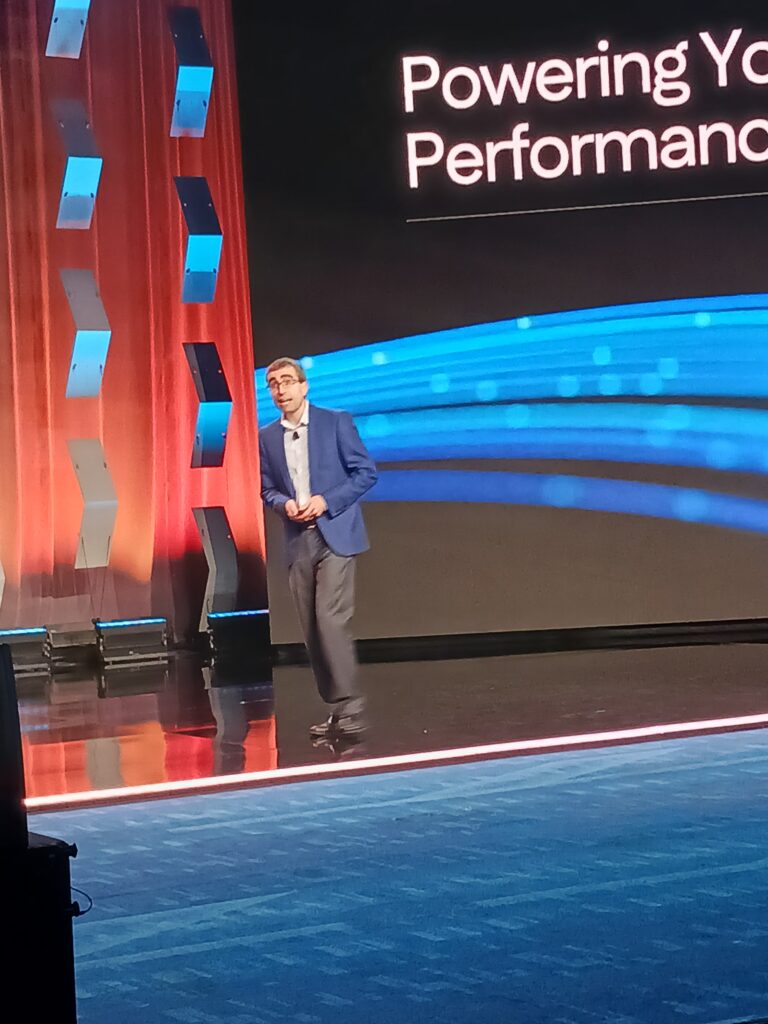
“In an era defined by volatility and uncertainty, the next generation of industrial operations must be agile, efficient and increasingly autonomous,” said Vincent Servello, president of Emerson’s Aspen Technology business (Figure 1). “Optimize 26 will demonstrate how our customers are applying decades of proven domain expertise and industrial AI to strengthen operational performance, accelerate decision making and strengthen reliability across their organizations.”
Optimize attendees are expected to number approximately 1,400 representing more than 350 companies, 20 industries and 45 countries. With 30 demos and more than 210 sessions, the agenda spans Emerson’s AspenTech portfolio providing examples of customers expanding operational performance.
Agile automation technologies
During the “Powering your performance: Process opening keynote,” Servello welcomed attendees on behalf of approximately 3,500 Aspen Technology employees. Servello joined Aspen Technology from Emerson in March 2025, touted an agile technology approach, faster innovation and more investment into services to accelerate time to value, along with a programmatic approach to deployment and sustainment. Program directors ensure customers prioritize and capture value.
He outlined three major changes since March 2025:
1. AspenTech had hundreds of small research and development programs, and that changed to 10 critical technology programs that are well-resourced to deliver industry-leading innovations.
2. Development changed from a waterfall to agile programming development framework.
3. Accelerated investments were made in industrial AI expansion, leading the Aspen Virtual Advisor (AVA) AI platform, “enabling industrial customers to orchestrate enterprise-scale AI.”
Updates to Aspen Technology software and services
AspenTech portfolio updates at the show are expected to include:
- Asset Performance Management –The latest release of Aspen Mtell, enabling companies to accelerate value realization and scale from foundational asset health monitoring to AI-enabled failure prediction and continuous operational improvement.
- Digital Grid Management – Innovations supporting power generation, transmission, distribution, and pipeline operations. Highlights include the integration of AspenTech Cimphony Network Model Management with advanced applications built upon the AspenTech OSI monarch SCADA platform, helping utilities shift from system centric to data centric operations driving improved grid optimization and enterprise efficiencies.
- Industrial Artificial Intelligence – Introduction of AspenTech AVA, an AI platform designed for industrial companies to accelerate AI adoption across the enterprise for measurable business impact. With AI-assisted recommendations embedded within operations, companies gain greater agility, efficiency and autonomy to help them respond quickly to evolving operating conditions.
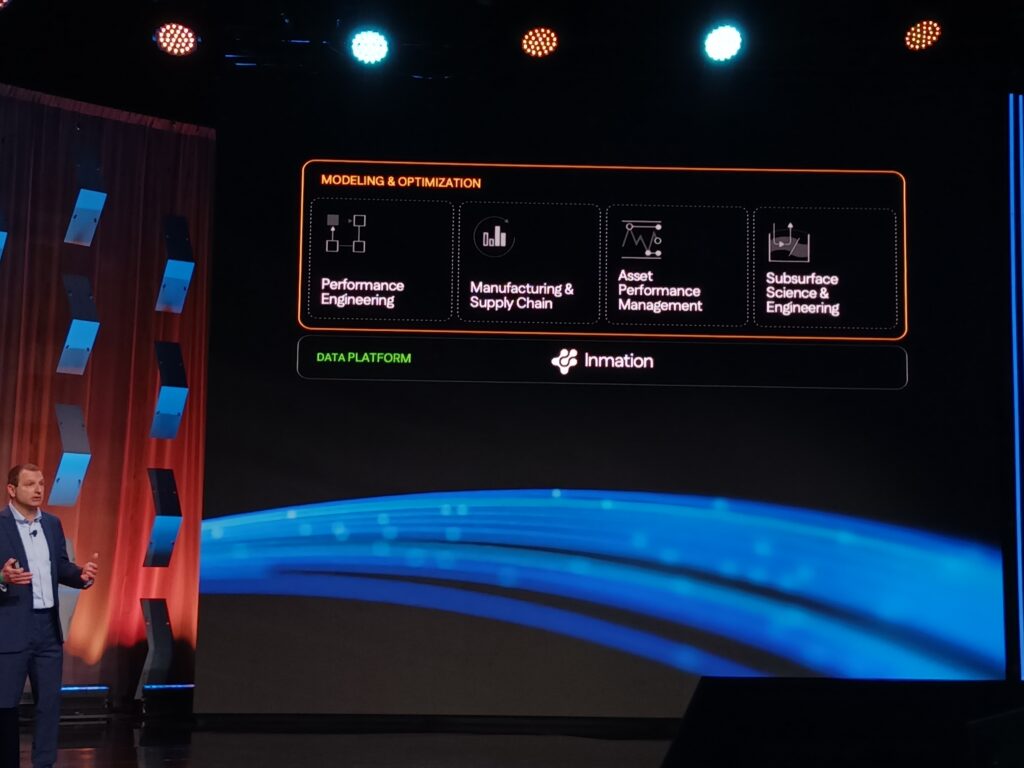
- Industrial Data Platform – Advancements to the AspenTech Inmation Data Fabric that unify OT data into a persistent, contextualized, AI ready foundation, enabling organizations to progress from data consolidation to increasingly autonomous, enterprise-wide operations.
- Manufacturing and Supply Chain – AI-powered innovations that support production optimization, including new advanced optimization capabilities for crude scheduling and blending in Aspen Unified, AI hybrid models for operational agility and new and enhanced AVA advisors in Aspen GDOT, Aspen DMC3 and Aspen Unified PIMS.
- Performance Engineering – Customer case studies highlighting how AspenTech solutions accelerate concurrent Front End Engineering Design (FEED), optimize design decisions with simulation, support operations with process digital twins and unlock Industrial AI value through hybrid modeling. This includes eventual integration of HYSIS Aspen Plus, to create HYSIS FEED, combining the depth of features of one with the ease of use of the other.
- Subsurface Science & Engineering – AspenTech Subsurface Intelligence (ASI), an open, cloud-native agentic environment that incorporates AI to transform the user experience and accelerate subsurface-related decision making while leveraging existing investments in legacy applications.
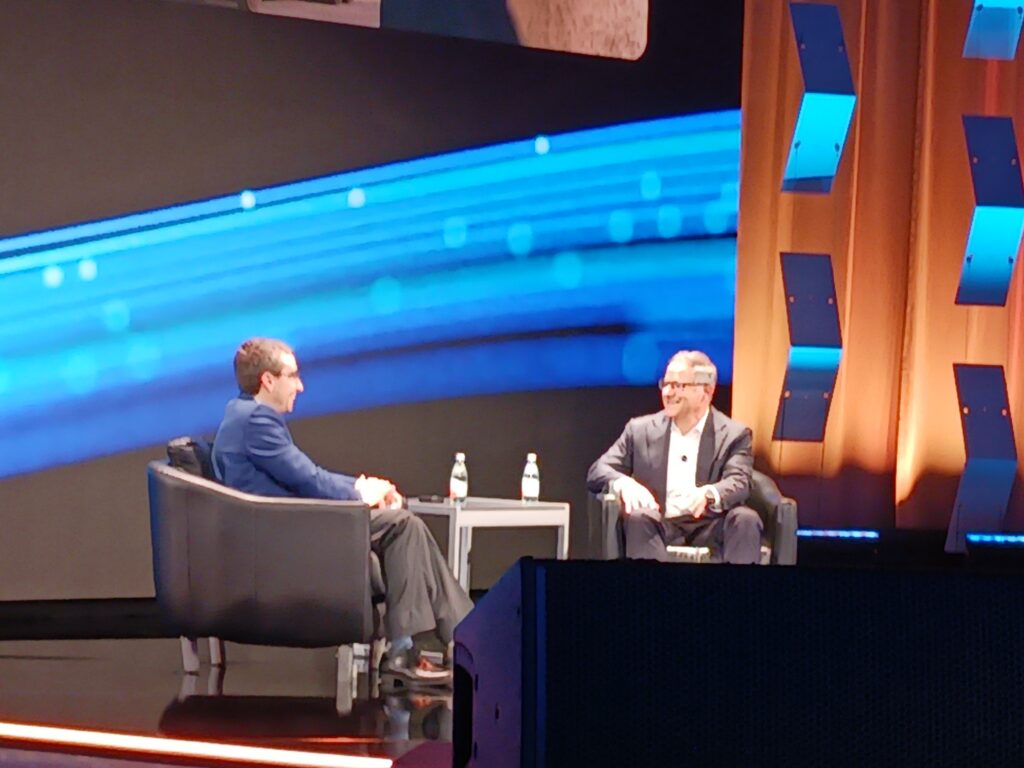
To explain the shared technology vision and strategy of long-time customer ExxonMobil, Servello interviewed Dylan Pugh, vice president of strategy and engineering, ExxonMobil (Figure 2). Discussion included how the process industry requires precision, discipline and a long view, along with real-time agility, efficiency and autonomy. Other topics included ExxonMobil’s strategic priorities, what it takes to sustain a culture of innovation at scale and where the industry is headed.
Pugh said transformation requires changes more quickly than historically, admitted there’s a lot of fear of missing out (FOMO) in the industry with AI advances. Risks must be understood.
The next five years may include more autonomous operations with complex agents orchestrating across many models. That required thinking differently because managing agents differs from managing people.
Servello said contextualized OT data is needed for AI to advance reliably.
Automation, process optimization value
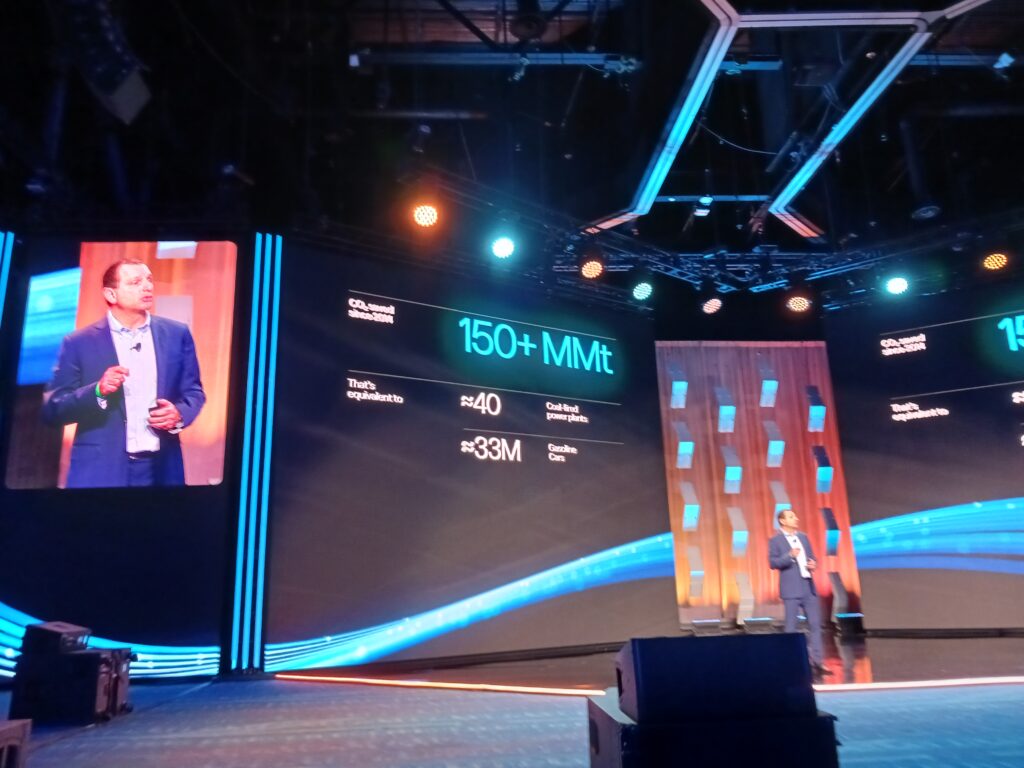
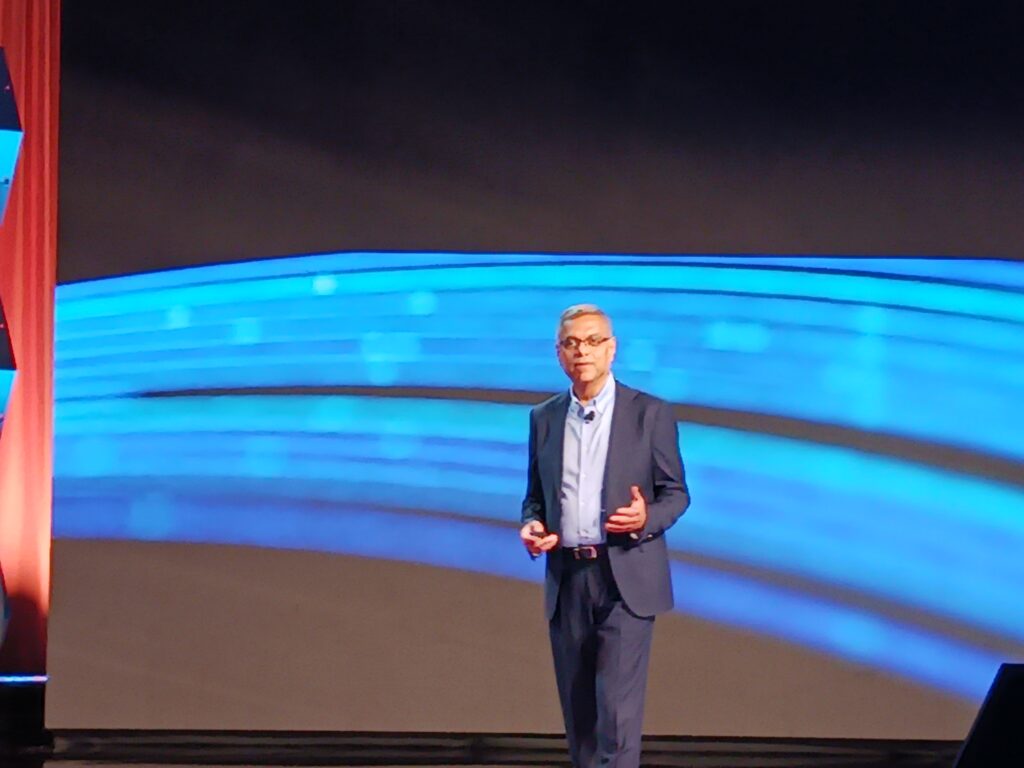
Claudio Fayad, chief technology officer, Aspen Technology (Figure 3), has been 32 years in automation industry, including tuning and optimizing controllers. “Nothing has been as exciting as what we’re seeing right now,” Fayad said. He said $500 billion in real economic value has been created in the last 12 years, and the number is expected to top $1 trillion by 2036. Benefits over 12 years include 150 million metric tons of CO2 savings, the equivalent output of 40 coal plants (Figure 4).
Industrial AI applications
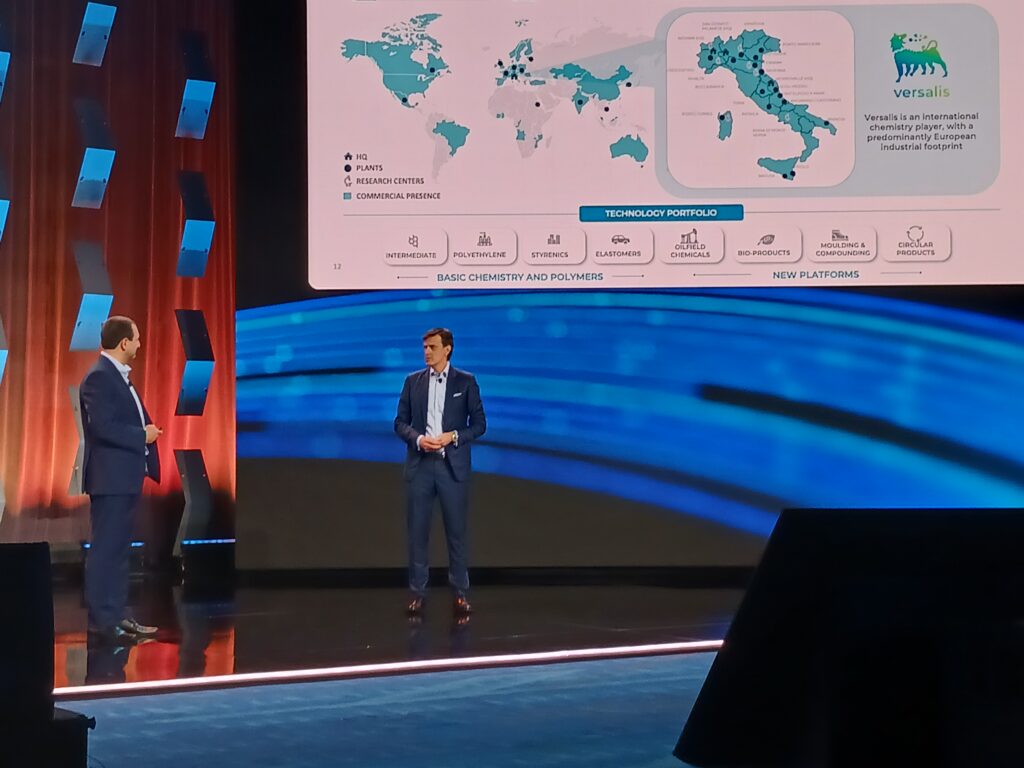
Adriano Alfani, chief executive officer, Versalis (Figure 5), said a transformative shift requires innovation to support operational changes that challenge the company’s foundation, at 26 sites, seven research centers, and three recently acquired companies. Raw materials, regulations and sustainability require changes in how Versalis helps industries meet goals. AI is more important for predictive analysis, machine learning, efficiency, safety, environment and other areas.
Differences in IT and OT data for AI implementations
Fayad said unique thinking is needed to move beyond unit-based optimization, which no longer enough. Enterprise-wide optimization is needed as the new operational model for OT data fabric.
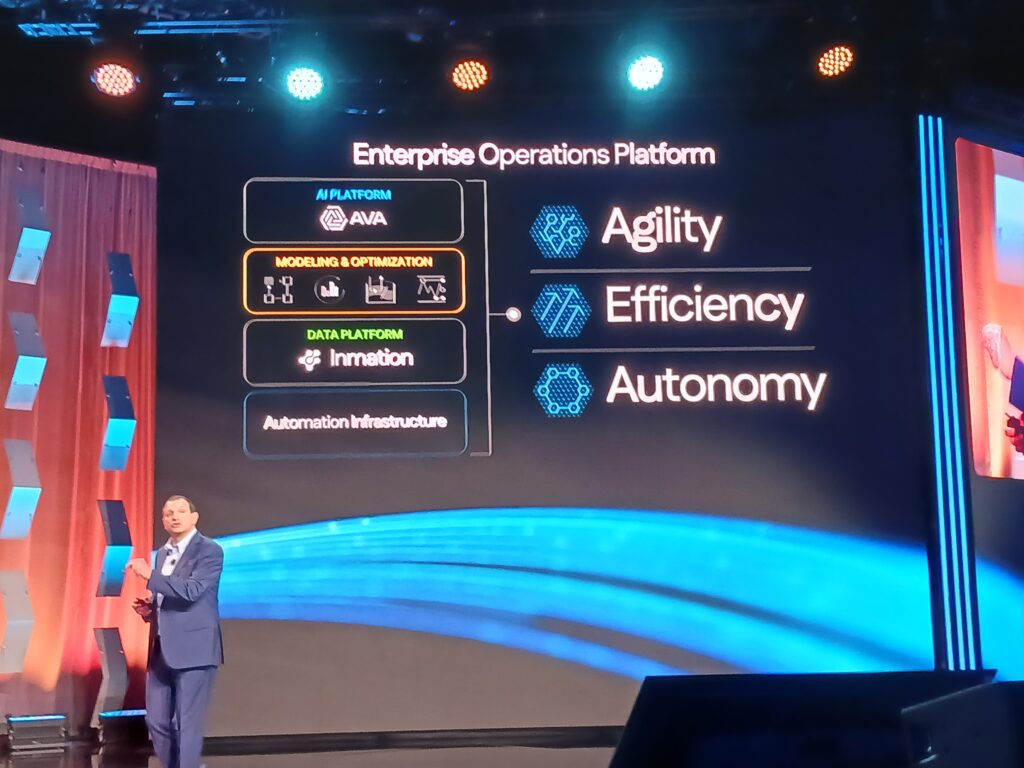
OT data is fundamentally different than IT data. OT has a more diverse set of data sources, and some are not designed to share. OT data integration often is more complex than initially thought, requiring aggregation and contextualization. An enterprise operations platform (Figure 6) brings agility, efficiency and autonomy. AVA, the new AspenTech AI platform, operates in the cloud and on premise (on-prem), to bring guard rails and operational reality to OT challenges, reducing some issues from weeks to hours, including construction of asset health dashboards. Replacing existing platforms isn’t necessary.
Planning and operational efficiencies
Vikas Dhole, senior vice president, in modeling and optimization, Aspen Technology (Figure 7), acknowledged the importance of control optimization in his 29 years at AspenTech.
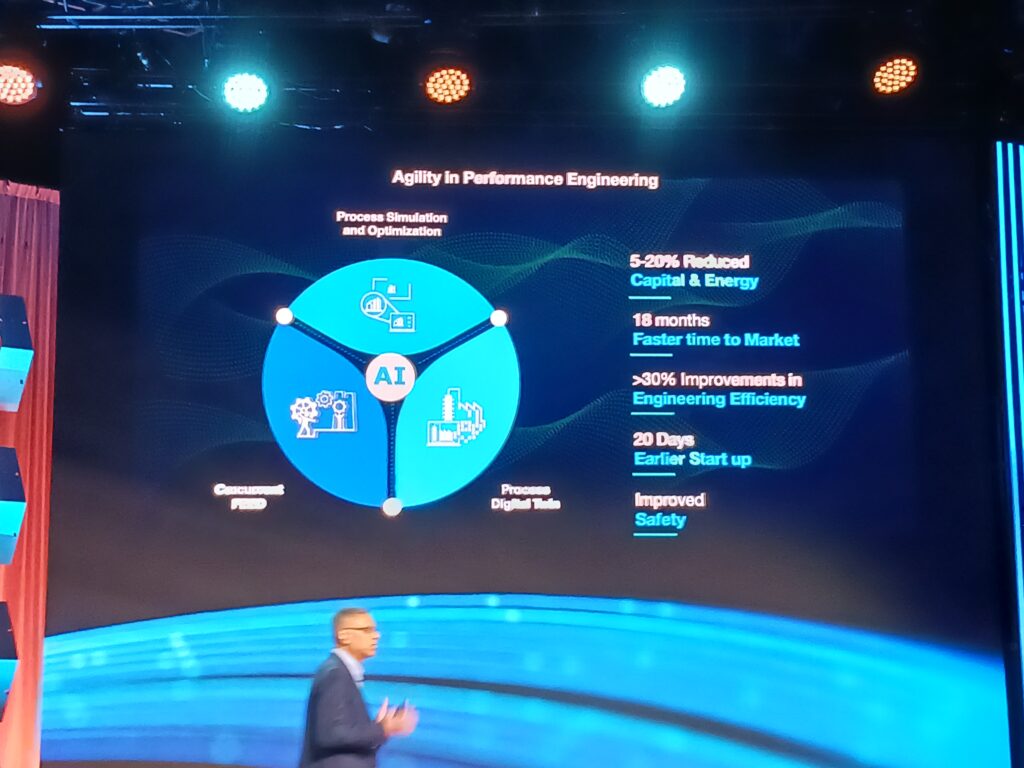
Hybrid models are improving planning and operational efficiency across global refining operations, Dhole cited Aramco as saying. Dhole said greater value will derive from bridging the gap between models and data with AspenTech Hysys Plus using AVA.
Challenges with OT data
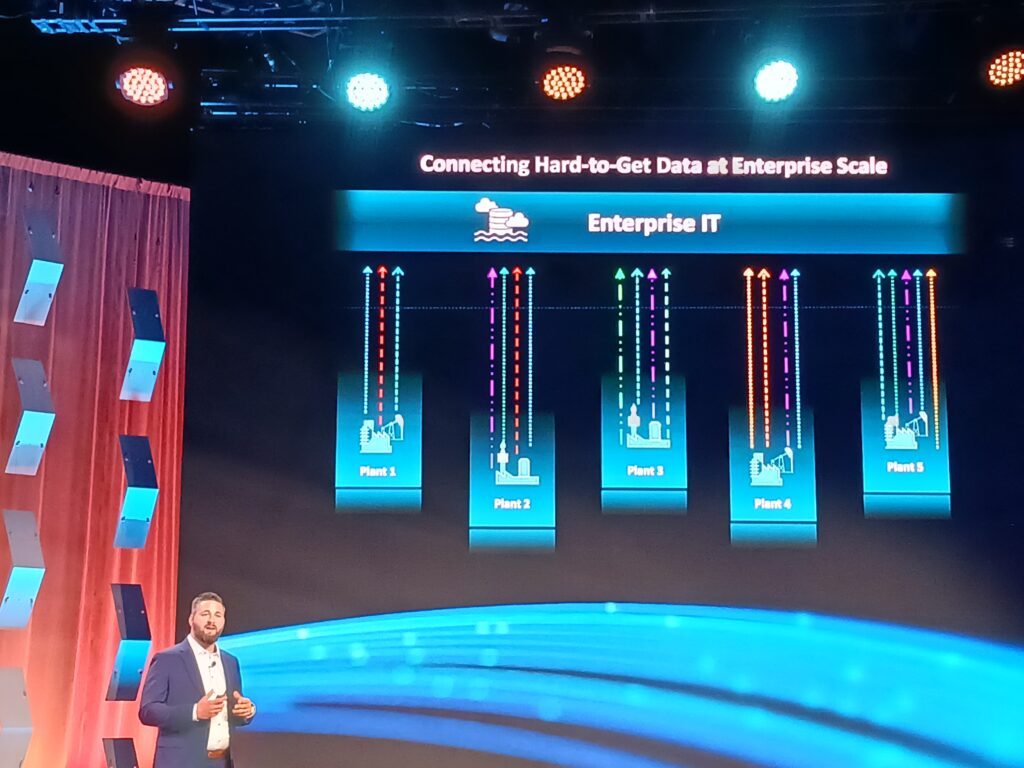
David Streit, vice president, enterprise operations platform, Aspen Technology (Figure 8), also came from Emerson, 10 months ago. Streit praised Inmation software adoption and use cases. More data can improve decisions, but OT data may include thousands of disparate data sources, often compounded in complexity with point solutions. The next-generation data fabric, Inmation OT Data Fabric, can operate in the cloud or on an Emerson PLC on the edge.
Digital transformation, integrated industrial data platform
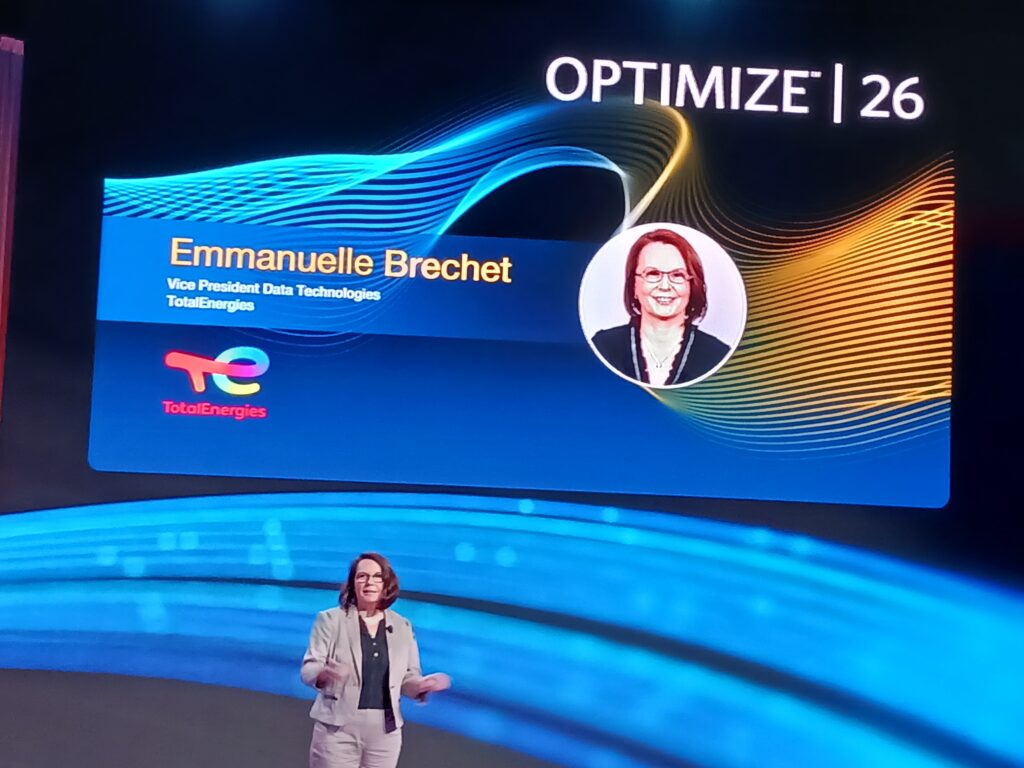
Emmanuelle Brechet, vice president, data technologies, TotalEnergies (Figure 10), explained her company’s expanding use of a highly integrated industrial data platform. A digital plant is being used with AI to boost asset performance, on existing and greenfield sites, including for advanced process control.
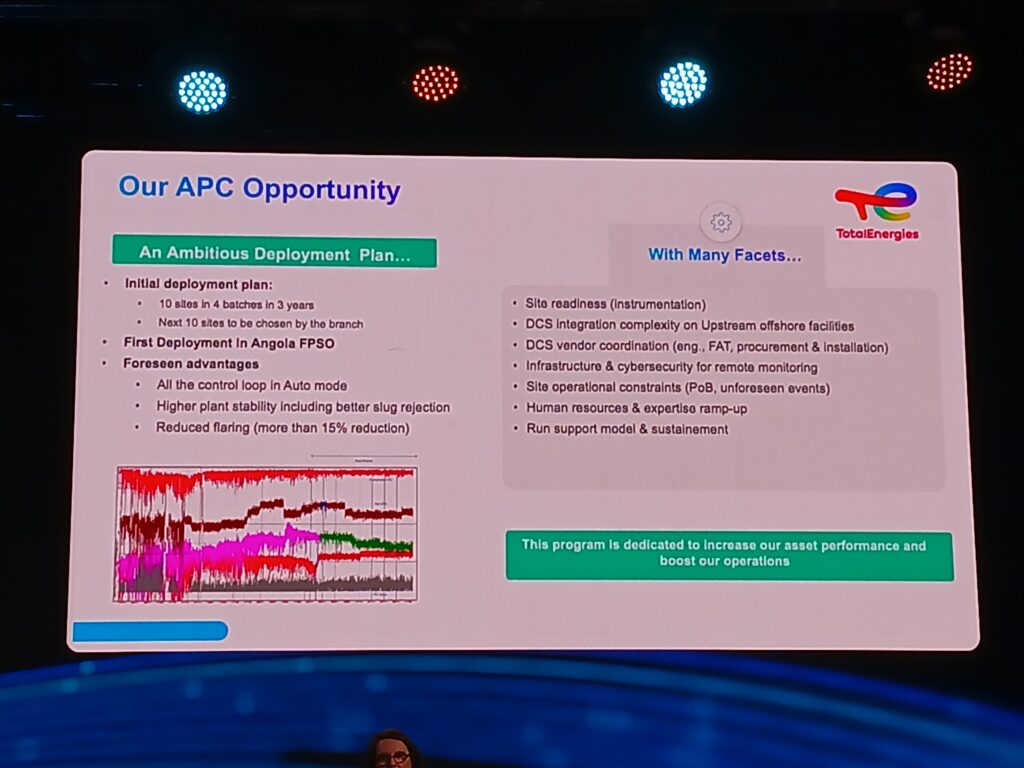
Advantages include moving all control loops into automode, higher plant stability including better slug reduction and greater than 15% reduction in flaring (Figure 11). Efforts are ambitious and require strong change management, she said.
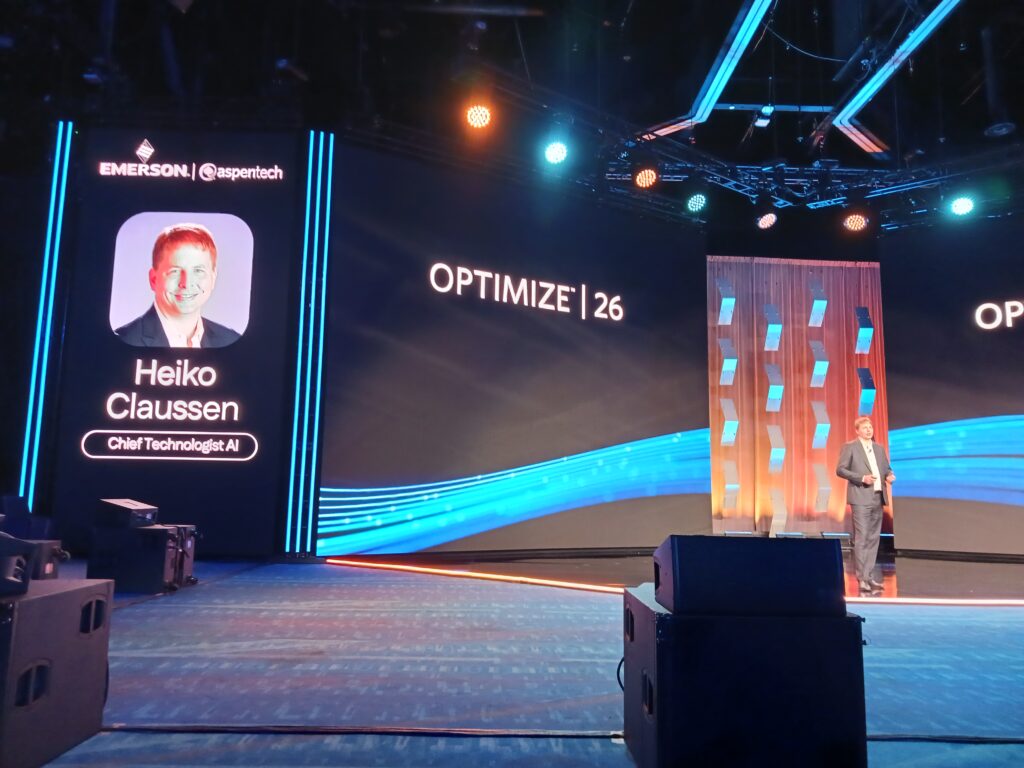
Figure 12: Heiko Claussen, chief technologist, AI, Aspen Technology, said an online version of AVA industrial AI software is available to try at https://aspentech.ai. Courtesy: Mark T. Hoske, Control Engineering
Industrial AI: try before you buy
Heiko Claussen, chief technologist, AI, Aspen Technology (Figure 12), said a demo version of AVA is available at https://aspentech.ai. Customers already are seeing results. With industrial AI implementation, it has stopped being when, Claussen said, and it is now how fast you move.
Mark T. Hoske is editor-in-chief, Control Engineering, WTWH Media, [email protected], using notes and Emerson press releases.
Keywords
Industrial AI, process optimization, advanced process control
Consider this
How quickly are you implementing industrial AI?
You also might like