Most U.S. warehouses predate robotics, so phased electrical and layout upgrades can enable modular automation without relocating.
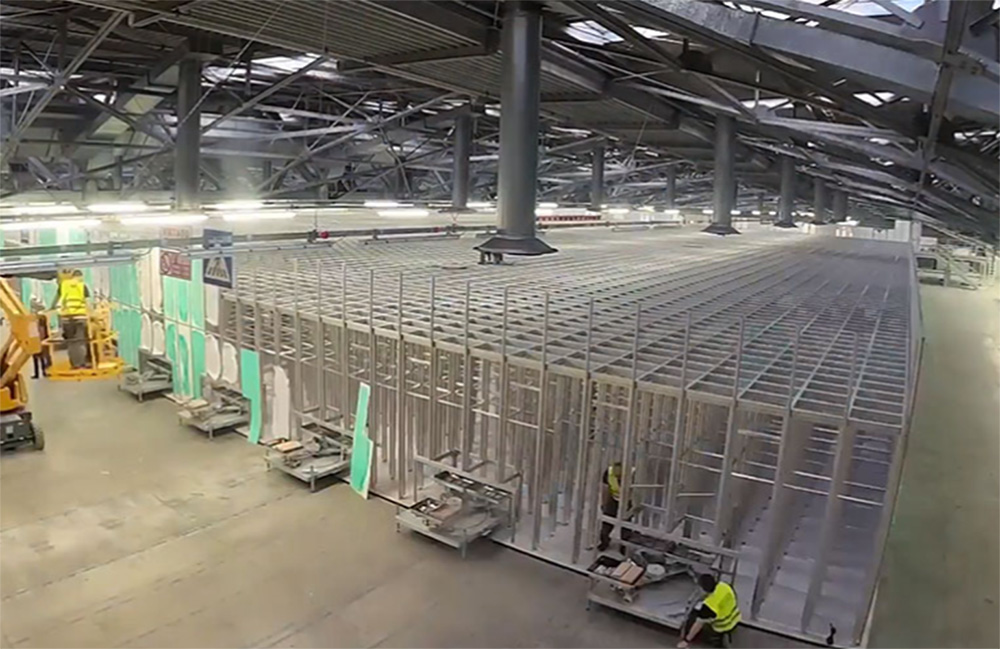
When supply chain executives talk about automation, their often picture mobile robots moving across warehouse floors, robotic arms handling sorting and packing tasks and automated sorters processing thousands of items per hour. But the challenge isn’t always the technology; it’s the facilities where it runs.
For example, about 80% of U.S. warehouses were built before warehouse automation became common. These older facilities, often well located, were not designed to support power, layout and operational needs of modern robotics.
According to Xpert Digital, around 80% of warehouses in the U.S. do not use automation, which aligns with global estimates showing a similar share worldwide.
The retrofitting versus rebuilding dilemma
Retrofitting older warehouses is often a more practical financial and operational option. While greenfield facilities are typically designed to support robotics from the start, new construction is not always practical.
Urban real estate is costly and limited, permitting timelines can be long and relocating logistics operations can disrupt supply chains in key markets.
Retrofitting lets companies upgrade in stages by improving electrical systems, reinforcing structures and adjusting layouts for robotic workflows while keeping the facility’s existing location.
Bridging the gap for warehouse automation
According to Grand View Research, the global warehouse automation market, including robotics, automated storage systems and software, was valued at $19.23 billion in 2023 and is projected to reach $59.52 billion by 2030, a compound annual growth rate of 18.7% from 2024 to 2030.
One approach for using automation in older buildings is modular robotics. Unlike large, fixed automation systems that require specific ceiling heights, aisle widths and load-bearing capacities, modular robots can be adjusted to different layouts and expanded over time. They can be deployed in high-traffic zones, areas with high SKU variability or other sections of a warehouse where automation can provide the most benefit.
Using modular robotics lets operators automate in stages, reduce upfront costs and avoid major workflows changes. These systems can be reconfigured as needs change, which helps warehouses respond to shifting demand and seasonal peaks.
Retrofitting warehouses is often cheaper than building new facilities. Upgrading an existing warehouse still requires capital because layouts, power distribution and structural capacity may need changes to support robotics.
Even so, retrofit costs are usually lower than those of a new greenfield facility, especially in urban areas where land and construction expenses vary by size, complexity and location. Keeping older sites closer to customers can also reduce last-mile transportation costs, an advantage new facilities farther out may not match.
Design for demand: Retrofitting warehouses for automation
According to CBRE, e-commerce demand is expected to require about 330 million additional square feet of warehouse space in the U.S. by the end of 2025, pressure to use existing buildings efficiently.
Other market trends data points in the same direction. The North American warehouse robotics market, focused on robotic systems rather than warehouse automation overall, was valued at $4.5 billion in 2023 and is projected to reach $34.3 billion by 2031, according to Verified Market Research Nearly half of large-scale facilities are expected to adopt robotics by 2025.
Growth reflects both technology adoption and operational pressures such as labor shortages, rising wages and e-commerce fulfillment needs. Warehouses design or redesigned can be just as critical as the robots themselves.
Many operators are investing in facility redesign, including layout changes, power upgrades and modular robotics, to improve efficiency over time. Combining automation with infrastructure updates helps warehouses handle current demand and adjust to future needs.
The building should be treated as part of the solution. Many legacy warehouses can be adapted for automation. With planning and selective upgrades, these facilities can approach the performance of new greenfield sites.
This Control Engineering article originally appeared on another WTWH Media publication, Automated Warehouse on November 19, 2025.
Diana Davoyan is the marketing manager at Agilox. She has extensive experience in business-to-business marketing for the robotics sector. Edited by Puja Mitra, WTWH Media, for Control Engineering