
AI-driven integration is accelerating OT connectivity and forcing security and engineering to converge
S4X26 keynote insights
- AI and open architectures are accelerating connectivity across OT, MES and IT systems, creating major business upside while dramatically expanding the attack surface.
- Security can no longer operate separately from engineering and operations. It must influence system design and deployment as connectivity scales.
- In an era of AI-generated content and rapid change, trusted human relationships and cross-disciplinary thinking are critical to making sound OT cybersecurity decisions.
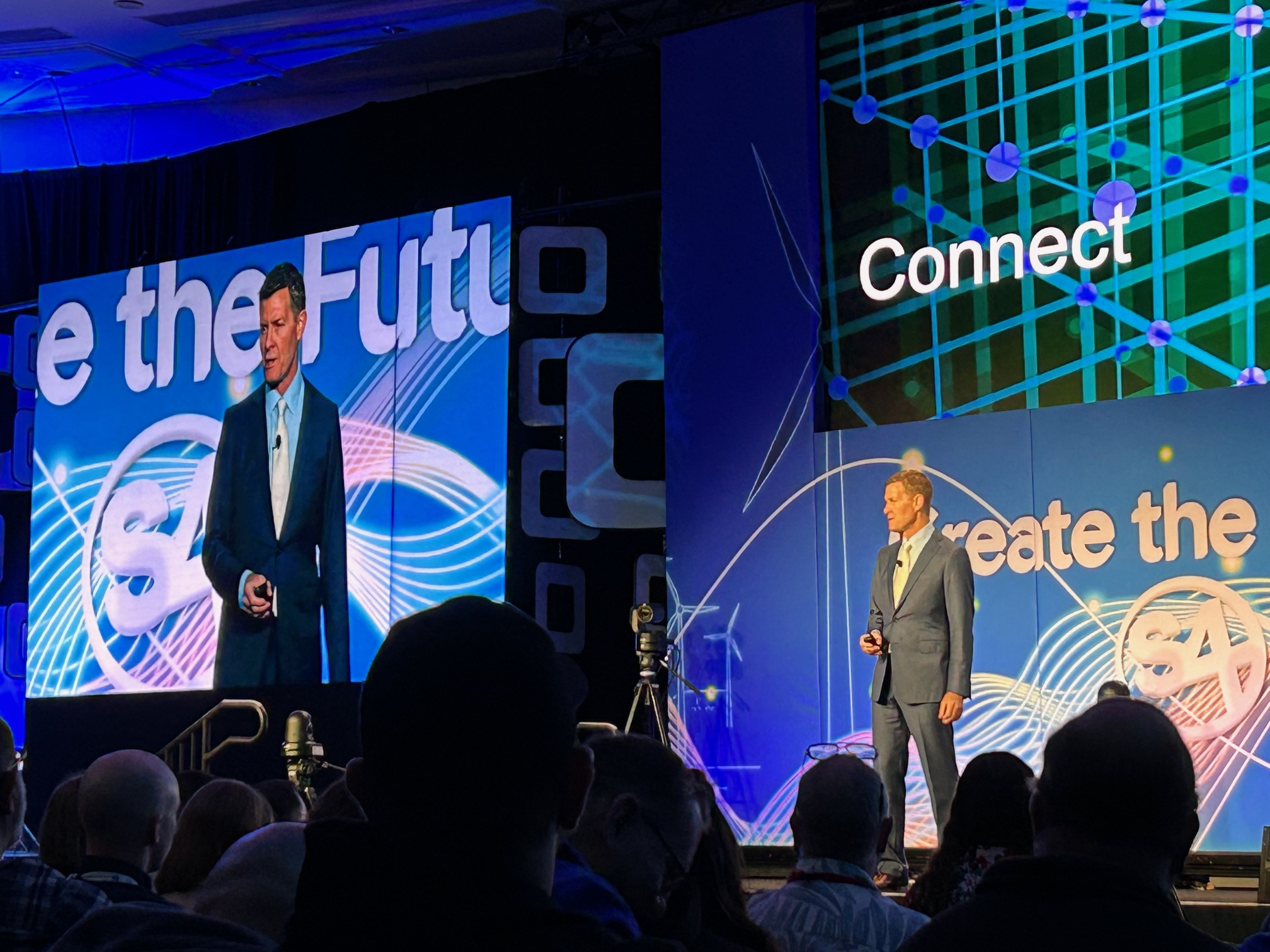
Kicking off S4x26 industrial cybersecurity show in Miami, Dale Peterson opened with a single word that he said defines the year ahead for industrial cybersecurity.
“This year’s word is connected,” Peterson told the audience. “Connections are exciting, unpredictable, scary. They bring new opportunities, and for security people like us, they introduce risk because every new connection is a possible attack path.”
The keynote centered on the reality that operational technology (OT) environments are on the verge of an unprecedented expansion in connectivity, driven largely by AI, open architectures and business demand.
An explosion of OT connections
Peterson warned that organizations are about to experience “an explosion in connections to and from OT systems and OT security systems. The business wins are going to be so great, we can’t say no,” he said.
Instead of blocking change, Peterson argued, security leaders must prepare to influence it.
“If we’re ready and we’re prepared, we can influence the design and deployment of these systems.”
He pointed to manufacturing as an early indicator of what’s coming. At a recent Ignition community conference, Peterson saw firsthand how open architectures and generative AI are dramatically accelerating integration projects.
“Things that used to take years were being done in a month or a week,” he said.
In one example, a project used Claude to analyze production variance by automatically pulling data from multiple systems.
“From that simple prompt, Claude went to the MES, got the schedule, went to Ignition, got the actual production line, found the largest variance, and then went to each of the information sources it needed and found the top five reasons,” he said. “That project took only a week. Projects that were previously rejected because they didn’t beat the ROI threshold are now going to be approved.”
The implication for cybersecurity professionals is that more AI-enabled projects mean more connectivity. More connectivity means more exposure.
“We’re not going to be able to say no,” Peterson said. “We need to be ready to deal with all those new connections.”

The asset inventory gap
Despite rapid digital transformation throughout the manufacturing sector, Peterson said the foundational element often missing is visibility. He described asking vendor after vendor a simple question: “Do you have an OT cyber asset inventory? The answer was universally no,” he said.
Yet, as systems become more interconnected, the need for shared intelligence between manufacturing and security systems grows. Peterson painted a future where security and operational systems query one another, correlating outages with alerts, firmware changes with maintenance activity and availability issues with configuration drift.
“The days of manufacturing and OT security as two separate worlds are ended,” he said. “At least for the market leaders or people who want to build the future.”
Breaking out of the bubble
Peterson’s second big theme focused on intellectual connectivity. OT security professionals, he argued, must better understand engineering, operations, safety and business risk management. Failure to do so leads to a misallocation of OT cybersecurity resources and difficulty securing budget.
“We need to connect the field to study outside of our bubble, outside of our circle of competence,” he said.
But he pushed the idea even further, encouraging the community to explore disciplines far outside traditional cybersecurity.
“We need to start looking at fields of knowledge far afield — radical new ideas — to get us out of our stagnant thinking,” he said.
As an example, Peterson referenced dialectical behavior therapy (DBT) and its concept of distress tolerance. The pressures of incident response and breach scrutiny, he suggested, demand new ways of thinking about human and organizational resilience.
“I’m looking for ways that we can move that knowledge into how we can better deal with stress or outages in our OT security systems,” he said.
The AI content problem
Peterson then turned his attention to people and the unintended consequences of generative AI in professional discourse. In recent months, he said, OT security content online has exploded.
“Long articles with great detail, covering vast areas, super-dense infographics,” he said.
But much of it is AI-generated.
“I struggle to identify the problems,” he admitted. “But I have three.”
First, he said, it is often basic, naïve and lacks nuance. Second, it fails to prioritize. All the recommendations and good practices are just put out as a long list. Third, it risks creating a premature consensus.
“We have very little data to prove out the value of most of our OT security good practices,” Peterson said. “We have a bunch of hypotheses that haven’t been tested.”
As AI-generated material is reabsorbed into training models, diversity of thought may shrink.
“What ends up happening is you get less diversity of views, and data progressively degenerates.”
Connections at 4 feet, not 400
The antidote, Peterson argued, is human connection.
“It’s going to be very important for you to identify your trusted sources, to curate your information, to get quality input to your decisions,” he said.
In-person engagement matters. Citing the concept of proxemics, Peterson emphasized that closeness fosters deeper trust and more meaningful exchange, something virtual platforms struggle to replicate.
“Take full advantage this week of all the people that you have here,” he urged attendees. “Make those connections.”
An inevitable AI-driven future
Peterson closed by returning to his central theme of connection.
“You are going to see this explosion of connections,” he said. “And we need to be ready to secure those systems. It’s coming.”
In the AI-driven, hyper-connected future of industrial operations, connection is inevitable. The only question, Peterson suggested, is whether security will be ready to shape it or be overwhelmed by it.
LEARNING OBJECTIVES
- Understand how AI-driven integration is accelerating connectivity across OT and manufacturing environments.
- Recognize why cybersecurity must be integrated into engineering and system design rather than applied after deployment.
- Appreciate the importance of cross-disciplinary knowledge and trusted professional networks in navigating rapid change in industrial cybersecurity.
CONSIDER THIS
Are we actively shaping how new OT connections are designed and secured — or are we reacting after they’re already in place?