Industrial operations generate massive volumes of high-frequency time-series data, so selecting the right storage strategy is critical to ensuring reliability, performance and long-term scalability. This article compares process historians, time-series databases (TSDBs), and relational databases (RDBs), offering practical guidance to help system integrators and engineers make informed decisions.

- Understand the differences between process historians, time-series databases (TSDBs), and relational databases (RDBs) for storing industrial time-series data.
- Learn about the strengths and limitations of each technology for high-frequency, high-volume operational data.
- Discover practical guidelines for selecting the right storage approach based on performance, reliability, and operational fit.
Time-series data is the foundation of real-time monitoring, process control and decision-making. Every second, sensors, meters and control systems — generate streams of data reflecting the status and performance of critical assets. Capturing, storing and retrieving this data efficiently and reliably is essential for ensuring uptime, optimizing processes and meeting compliance requirements.
However, choosing the right storage strategy for time-series data is not straightforward. System integrators, engineers and operational technologists often face a choice among three primary technologies:
- Process historians: Purpose-built for high-frequency industrial data
- Time-series databases (TSDBs): General-purpose, scalable options
- Relational databases (RDBs): Traditional information technology (IT)-centric storage systems
Understanding the nature of industrial time-series data is the first step toward making an informed choice and selecting a solution that aligns with operational demands.
The nature of industrial time-series data
Industrial time-series data is characterized by high frequency, continuous recording, time-stamped entries, and large volumes. This data captures process variables such as temperature, flow, pressure, and vibration at rapid intervals, supporting operational control and historical analysis.
Traditional IT databases often fall short in this context because such systems were built for transactional integrity — not for the rapid, continuous ingestion of sensor data required in industrial environments. This limitation leads many organizations to consider purpose-built alternatives designed specifically for industrial data workloads.
With this context in mind, let’s examine process historians and why this type of data storage remains a foundational solution for many industrial environments.
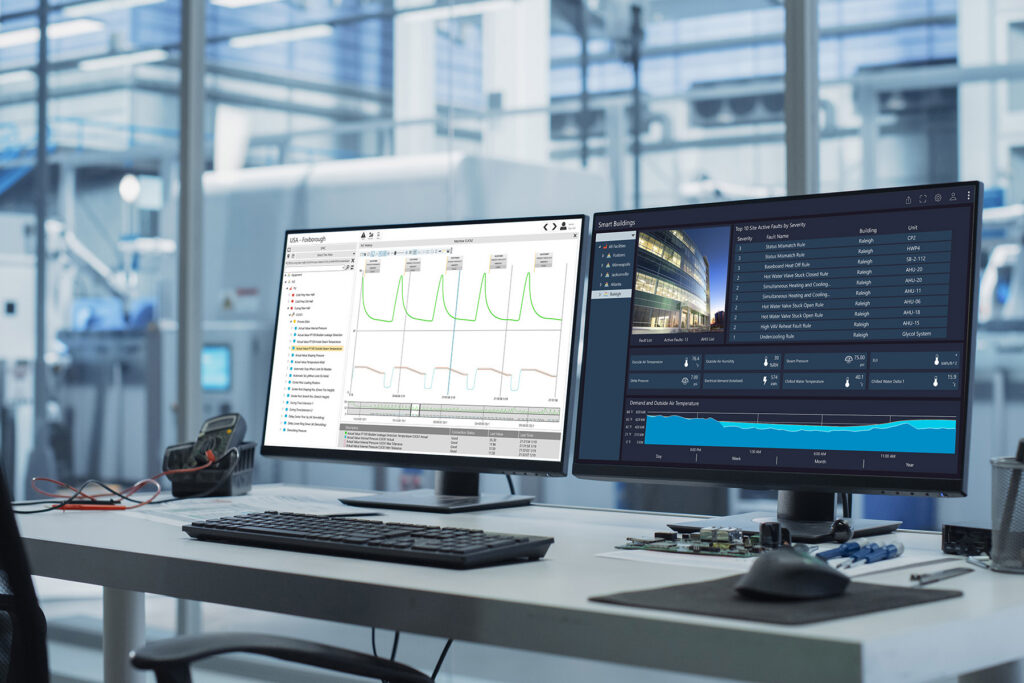
Process historians: Purpose-built for industrial needs
Process historians are designed to handle high-speed data ingestion with minimal latency, ensuring operational systems can capture and analyze data in near real time. These feature advanced compression techniques that optimize storage efficiency without sacrificing data fidelity.
Additional capabilities include:
- Time-based query performance for rapid retrieval of operational insights
- Built-in redundancy, buffering and store-and-forward capabilities to prevent data loss during network disruptions or system outages
Example use cases include real-time process monitoring, compliance archiving, and energy optimization, demonstrating suitability for critical industrial environments where reliability is paramount.
While process historians excel in these areas, general-purpose time-series databases have gained traction for broader analytics applications. Evaluating the strengths and limitations of each storage technology helps guide effective selection decisions.
Time-series databases (TSDBs): Flexible and scalable
Time-series databases emerged alongside IoT and cloud-native applications, offering scalability and versatility across industries. Key strengths include:
- Horizontal scalability for managing large volumes of data
- Versatile querying capabilities supported by open-source ecosystems
However, limitations exist in industrial settings:
- Many TSDBs lack sub-second resolution optimization required for certain process control applications
- Achieving redundancy and buffering comparable to industrial historians often requires additional configuration
Example use cases for TSDBs include enterprise analytics platforms and condition monitoring dashboards where flexible data integration outweighs the need for ultra-high-speed ingestion.
Understanding the advantages and limitations of TSDBs clarifies how relational databases fit within the industrial data storage landscape.
Relational databases (RDBs): Familiar but limited
Relational databases remain common in industrial organizations for transactional applications and structured queries. Strengths include:
- Atomicity, consistency, isolation and durability (ACID) compliance that ensures business transactions are processed reliably — core principles that maintain data integrity by ensuring that transactions are complete, consistent, isolated from one another, and preserved even in the event of system failure.
- Compatibility with standard IT reporting tools and SQL-based analytics
However, limitations become apparent when handling time-series data:
- Row-oriented storage structures are not optimized for high-frequency data
- Indexing and transactional overhead introduce performance bottlenecks during rapid data ingestion
Example use cases for RDBs include transactional reporting and low-frequency data logging, where performance demands remain moderate and IT familiarity offers advantages.
Comparing performance, reliability and fit
While process historians, TSDBs and RDBs can all store time-series data, each technology differs significantly in performance, reliability, and operational fit.
Performance: Process historians are optimized for high-frequency industrial data, ensuring rapid data ingestion with minimal latency. TSDBs can handle high data volumes with horizontal scaling, though they may require additional configuration for optimal performance in industrial environments. In contrast, RDBs are limited in their ability to handle high-speed data ingestion due to their row-oriented storage structure and transactional overhead.
Data integrity and reliability: Process historians provide industrial-grade redundancy, buffering, and store-and-forward capabilities to prevent data loss, making them ideal for mission-critical environments. TSDBs are generally robust but often need additional configuration to match the reliability and redundancy standards of historians. RDBs offer high transactional integrity for business applications but lack the specialized buffering and recovery mechanisms needed for continuous industrial data streams.
Query optimization: Process historians are engineered for time-based operational queries, enabling quick retrieval and analysis of historical process data. TSDBs support versatile general queries, suitable for enterprise analytics. RDBs excel in structured transactional queries but are inefficient for large-scale time-series data due to indexing and full-table scan requirements.
Life cycle management: Process historians automate data aging, aggregation, and archiving, reducing administrative overhead and ensuring compliance with minimal intervention. TSDBs provide life cycle management capabilities but typically require manual configuration and integration. RDBs generally lack built-in life cycle management, necessitating regular manual maintenance and administration to manage data growth effectively.
Understanding these differences is essential for evaluating each technology’s suitability and for applying the guidelines that follow to select the best storage strategy for operational needs.
Guidelines for storage selection
Selecting the right storage technology involves evaluating operational needs against technical capabilities. Consider the following when making your decision:
- Data volume and velocity: Does your application require sub-second ingestion rates and massive data streams?
- Reliability and redundancy: Can your operations tolerate data loss, or is continuous availability critical?
- Query performance needs: Do your teams need rapid, time-based operational queries or primarily transactional reports?
- Compliance and life cycle management: Are automated data aging and archiving required for regulatory standards?
- User familiarity and IT integration: Will your team benefit from familiar SQL-based tools, or do operational engineers need purpose-built interfaces?
- Hybrid approaches: Combining process historians for operational data capture with TSDBs or RDBs for enterprise analytics can maximize performance, flexibility, and reporting capabilities.
Evaluating these considerations holistically ensures your chosen strategy supports operational excellence today while scaling effectively for future demands.
Building a resilient data strategy
Selecting the optimal storage technology for industrial time-series data is critical to operational success. The right choice ensures data integrity, enhances efficiency, and enables advanced analytics and decision-making.
Process historians remain the gold standard for high-speed, mission-critical industrial data applications. TSDBs provide scalable, flexible solutions for broader enterprise analytics, while RDBs maintain value for structured reporting and familiar IT workflows.
Ultimately, aligning technology capabilities with operational priorities, compliance requirements, and growth plans will position your organization to leverage data as a true strategic asset.
Companies seeking a resilient, high-performance data strategy should prioritize solutions that incorporate a purpose-built industrial historian within their automation software, ensuring seamless integration, real-time performance and reliable data integrity across operations.
Thoughtful decisions today can enable the reliable, scalable and intelligent operations your teams will depend on tomorrow.
Tomas Rada is product owner, Mitsubishi Electronic Iconics Digital Solutions, Foxborough, Massachusetts, a CSIA member; CSIA is a WTWH Media content partner. Edited by Sheri Kasprzak, executive editor of Automation & Controls, WTWH Media, [email protected].