By Vivek Bhargava, Product Marketing Manager, Cisco Industrial IoT
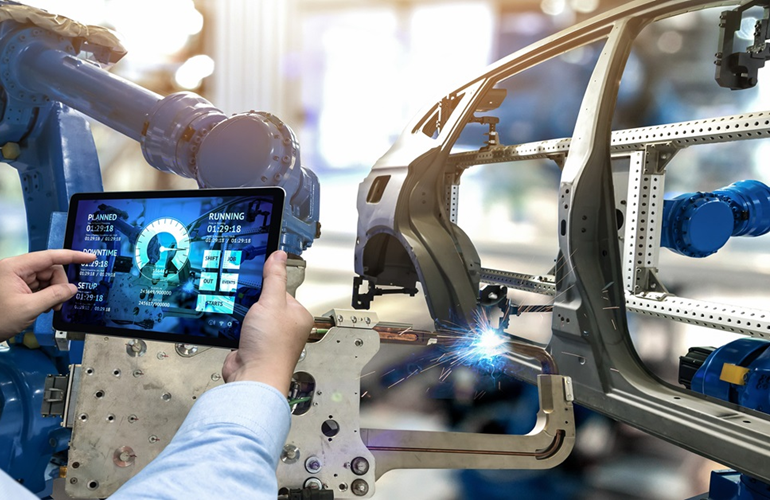
For decades, the Operational Technology (OT) landscape has been defined by stability, reliability, and the physical mastery of machines. However, we are currently standing at the precipice of a fundamental shift. Across every industrial sector, software-defined industrial automation and Artificial Intelligence (AI) are no longer futuristic concepts; they are actively unleashing a new era of productivity and efficiency.
If you are an OT practitioner, you have likely felt the pressure to modernize. The data confirms this urgency: according to Cisco’s 2026 State of Industrial AI Report, a survey of over 1000 industry professionals operating across 19 countries, reveals that 61% of industrial organizations have already moved beyond trials to active, large-scale AI deployment. Perhaps more telling, 97% of industry professionals acknowledge that AI workloads introduce new performance, power, and reliability requirements that exceed traditional industrial network design assumptions.
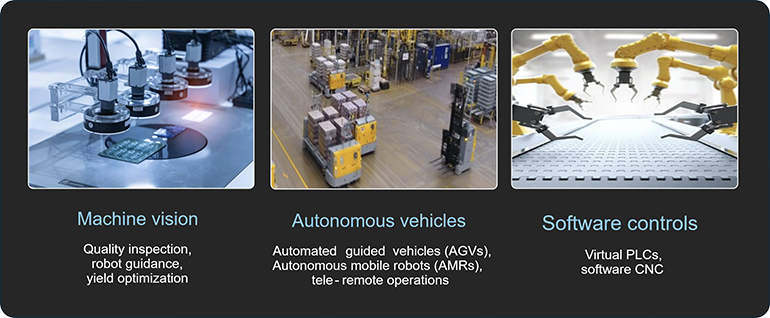
The opportunities before you are, quite simply, limitless. From machine vision algorithms that automate precision inspection and mobile robots guided by real-time data, to software-based controllers, AI is changing the very nature of how we build, sort, and track products. Software is increasingly decoupling from rigid, purpose-built hardware, allowing for more versatile, innovative deployments. We are moving toward a world where control and logic are defined by code, not by the limitations of the underlying physical platform.
The infrastructure reality check
It is tempting to jump straight into the “brains” of the operation—investing heavily in high-end data centers, cloud resources, and sophisticated AI software applications. However, there is a critical danger in this approach. If you focus on the software layer before ensuring your infrastructure is ready, you are building a skyscraper on a foundation of sand.
AI-driven operations are only as successful as the data they consume. If your operational data cannot reach the software applications in the datacenter or the cloud in a timely, secure, and reliable manner, your AI models will fail to provide actionable insights. The network is the nervous system of your industrial enterprise; it connects and automates physical components in the field, enabling real-time communication and control between devices and centralized computing resources. Before you modify your time-tested processes, you must ensure that your network can support the massive, complex demands of an AI-enabled environment.
Core characteristics of an AI-ready network
Traditional industrial networks were designed for minimal operational requirements. AI-ready networks, however, must be far more sophisticated. To support the demanding, high-volume requirements of modern AI, your network must possess several key characteristics:
- Real-time performance: Applications, such as virtualized programmable logic controllers (vPLC), require very short round-trip communication times to meet strict real-time control and safety requirements. Predictable communication is non-negotiable to ensure that time-sensitive data is processed and acted upon reliably.
- Robust security: Decoupling hardware from software requires sensitive data to move across OT, IT, and cloud domains, which increases the attack surface for malicious activity. To maintain security, it is essential to have complete visibility into all connected assets, enforce identity-based access control through network segmentation, and continuously monitor for anomalies. Your network must integrate enterprise-grade security measures to defend against cyber threats that could jeopardize your entire production line.
- Resilience and uptime: Production downtime is costly. The network must be resilient, featuring redundant paths and fast failover protocols to ensure continuous operations. Further, proactive monitoring and fast troubleshooting with the help of specialized AI-powered tools can help OT teams maintain uptime by identifying and helping to resolve potential issues without the need for escalating them to IT and incurring costly downtime.
- High bandwidth and throughput: Workloads, such as AI-powered machine vision need to rapidly and efficiently move large data volumes. The network must provide high bandwidth across the infrastructure to support such data-intensive devices and applications as well as to handle the growing volume of data flowing into and out of industrial access networks.
Why leading manufacturers lean on Cisco
When the stakes are this high, you cannot afford to rely on fragmented or unproven solutions. Achieving effective AI outcomes requires an underlying network that is as intelligent as the applications it carries. Cisco offers a comprehensive, end-to-end industrial networking portfolio specifically engineered to handle these types of rigorous operational demands.
Cisco’s industrial switches and wireless access points are not just hardware; they are the backbone of industrial transformation. In a recent report from ARC Advisory Group, Why Modern Networks are Critical for AI-ready Manufacturing Operations, Chantal Polsonetti, Vice President, writes “Cisco’s ruggedized hardware portfolio, including industrial Ethernet switches, industrial cellular routers, and industrial wireless access points, specifically validated for operational use cases, delivers a resilient, secure, and scalable networking infrastructure. Support for emerging, data-intensive use cases is enabled through high-bandwidth connectivity up to 10Gbps and advanced features like 90W PoE, which can power a new generation of industrial devices. Embedded OT security features such as asset visibility, zero-trust remote access, and segmentation enforcement are built directly into the network equipment, allowing manufacturers to secure operations at scale and enable seamless, policy-driven communication between IT, OT, and cloud resources”.
While others offer components, Cisco offers the complete ecosystem needed to bridge the gap between your physical assets and your digital goals.
Your next steps
The time to prepare your infrastructure is today. To learn more about how you can ready your network for the AI revolution, I encourage you to take advantage of the following resources:

- ARC View paper: Why Modern Networks are Critical for AI-ready Manufacturing Operations – An ARC Advisory Group explains the critical role of the network in enabling AI-ready manufacturing.
- On-demand webinar: Architecting the Network for AI-Driven Manufacturing Operations– Listen to experts from ARC, Keurig Dr. Pepper, and Cisco, for insights on turning your infrastructure into a competitive advantage.
- Get in touch: Get help from a Cisco manufacturing expert in a free, no-obligation consultation.
The factory of the future is being built today. Ensure your network is the engine of that success, not the bottleneck.
Sponsored Content from Cisco Systems, Inc.