From the physical cabling "nervous system" to off-site data centers, here are the key pillars for managing the influx of real-time industrial data.
Data management insights
- Reliable cabling (especially copper/Ethernet) with low latency and protection against EMI/RFI is essential for transmitting real-time data safely and efficiently in smart factories.
- Real-time decision making should happen on-site (edge), while heavier analytics, diagnostics and predictive maintenance are best handled in off-site data centers.
- Operators need a scalable roadmap that balances on-site and off-site data management, incorporates cybersecurity considerations and prepares for increasing data volumes and regulatory requirements.
The signature of successful “factories of the future” is increasingly found in strategic data management. While physical throughput metrics ultimately determine business objectives, it’s how manufacturers are monitoring and managing an influx of data that’s guiding efficient operations. Because technology is becoming increasingly smart and digital, operators need to have the critical infrastructure in place, both on and off-site, to digest data and translate it into actionable insights. While companies are making this transition at different speeds, there are several key pillars that should guide data management regardless of industry or application.
Considerations for choosing cable assemblies
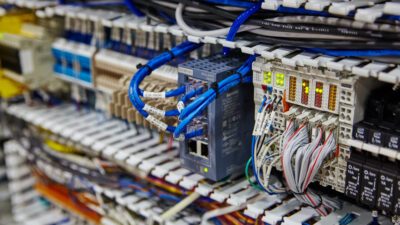
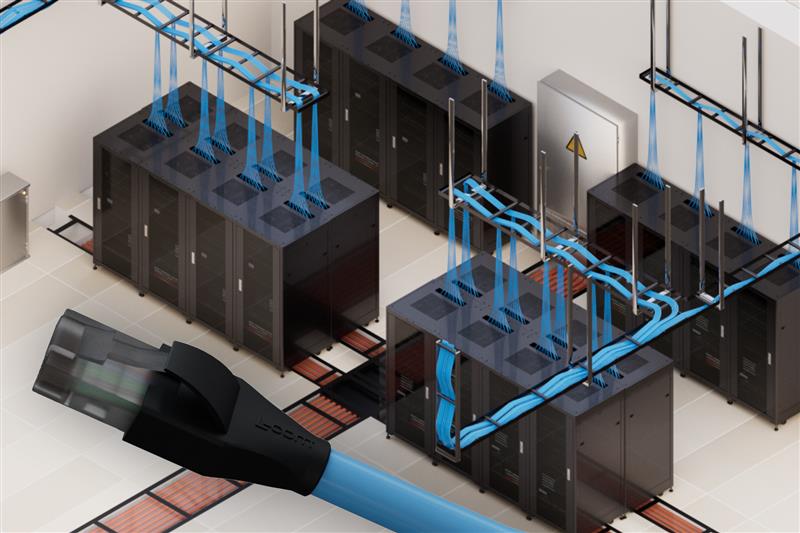
First and foremost, data transmission should be seen through a physical lens. Companies must consider the proper cabling requirements that ensure smart devices successfully send real-time data to a controller or central platform. Cabling is essentially the nervous system of a factory, and it must be prioritized not just from a data transmission standpoint, but also as a physical safety measure. Factory layout, both in brown and greenfield settings, must be considered when routing cabling to ensure not only efficient data transmission, but also a safe work environment to hide cables from human workers and machinery.
As more components and systems become digitalized, cabling needs to be robust enough to handle the massive increase in data. The gold standard has been, and will continue to be, copper cabling and Ethernet, which offer low-latency benefits that are vital to successful processes. Any lag or disruption in data transmission can be costly for operators, especially when it impacts how decisions are made and how technology is operating.
As such, it’s important to have a reliable infrastructure that can handle large amounts of continuous data. Cabling that has sturdy, metal-plated connectors and the ability to resist any electromagnetic or radio frequency interference (EMI/RFI) is important to maintain the integrity of the transmission. As smart solutions are added to a factory, the consideration of interference becomes increasingly important.
Future-proofing factory operations
Cabling serves both current data demands and as a baseline for future operations. Companies need to proactively determine how much on-site data (and cabling) they’re able to manage, including through edge devices, and how they will approach potential data center integration in the future. While not a necessity for every company, enterprise data centers are growing in adoption, especially with operators that leverage a considerable amount of artificial intelligence (AI) or smart technology. Having a nearly inexhaustible resource like a data center that can process large quantities of data gives operators more breathing room to expand and monitor their data-driven processes.
The question of how to integrate these facilities is somewhat subjective. Ultimately, it comes down to operators having a clear understanding of what data needs to be transmitted and available on-site and what can be processed at an off-site facility. Typically, real-time monitoring is conducted at the factory itself — operators need to have the most relevant, immediate data so they can adjust their processes and respond to needs quickly. More in-depth data management — like analytics, diagnostics and predictive/preventative maintenance — are usually best conducted through a data center, with its increased processing power.
Integration for streamlined data management
Data centers also offer the benefits of increased security measures and redundancy in case data processing on-site is compromised or offline. This is a key benefit for many operators who may soon have to consider robust data management security protocols if/when requirements like the Cyber Resiliency Act (CRA) come to the United States. This act establishes cybersecurity regulations for digital technology, including management and reporting standards in the event of an attack. It’s therefore important that if companies are going to leverage data centers, they need to do it in a responsible and secure fashion.
In short, the integration of data centers is just one step in the incremental process of data management that every company is navigating at its own pace. Having the right physical infrastructure in place is a key first step in that journey, as is a clear direction on exactly what data needs to be monitored and processed.
From there, if a company plans to expand operations or is currently operating at a large enough scale, it behooves them to have a sequential roadmap in place that considers a hybrid on-site/off-site setup to best manage its data, including through an enterprise data center. By leveraging these critical resources, operators can make informed, real-time decisions regarding their operations and be best positioned to navigate any fluctuations that markets may bring.
AUTHOR
Dustin Guttadauro is the product line manager for L-Com, an Infinite Electronics brand. Dustin’s experience with the company spans nearly two decades and includes positions in service, support and product management. He studied mechanical engineering at the University of Massachusetts, Lowell, and resides in New Hampshire.
LEARNING OBJECTIVES
- Evaluate the critical role of physical cabling as the nervous system of a factory, including how to select materials like copper and Ethernet to ensure low-latency, real-time data transmission and worker safety.
- Distinguish between the functional applications of on-site data processing versus off-site data centers, specifically regarding which facility is best suited for real-time monitoring versus long-term analytics and predictive maintenance.
- Identify the strategic pillars for future-proofing factory operations, including the integration of edge devices, data center redundancies and the importance of preparing for cybersecurity regulations like the Cyber Resiliency Act.
CONSIDER THIS
Does your factory’s current physical cabling infrastructure have the capacity, shielding and low-latency reliability required to support the next generation of AI and smart technology, or is your “nervous system” already becoming a bottleneck for real-time decision making?