As automation systems evolve and become increasingly complex, IEC 61131-10 represents an important step toward a more flexible and open automation ecosystem, allowing organizations to leverage existing engineering knowledge efforts while adapting to evolving technology requirements.
IEC 61131-10 PLC application portability insights
- Learn how IEC 61131-10 Programmable controllers – Part 10: PLC open XML exchange format enables PLC applications to be exchanged across compatible engineering platforms through a standardized XML-based format.
- Understand the connection between IEC 61131-10 and PLCopen XML, including how these standards improve interoperability and enable greater reuse of PLC application components.
- Explore how open automation standards can simplify platform transitions by reducing redevelopment effort, preserving existing engineering work and providing greater flexibility in selecting control technologies.
For years, transferring an automation project from one PLC platform to another was a complex and time-consuming process. Use of IEC 61131-10 Programmable controllers – Part 10: PLC open XML exchange format can help.
Because each engineering environment stored in proprietary formats, migration often required extensive manual rework. Machine builders frequently found themselves redeveloping entire applications when a customer specified a different control system or when an alternative vendor offered a more suitable solution. As a result, tag structures, program logic and hardware configurations often had to be recreated from scratch, causing platform migration to be both labor-intensive and prone to errors. At the root of this challenge was a lack of a common format for exchanging PLC application data between engineering environments. Moreover, the challenge stemmed from the fact that each automation manufacturer used its own engineering software. Each automation manufacturer used its own software tools and project structures, creating barriers to interoperability and code portability. In 2019, IEC 61131-10 helped address this issue by defining a standardized XML-based format for exchanging PLC applications across different engineering platforms. [XML stands for eXtensible Markup Language, the basis for HTML (Hyper Text Markup Language) used widely on the internet.]
Brief IEC 61131-3 refresher
Before exploring IEC 61131-10, it is critical to understand the foundation upon which it was built, and it helps to know what the IEC 61131-3 Programmable controllers – Part 3: Programming languages standard accomplished. Prior to its adoption, PLC programming varied considerably from one manufacturer to another. IEC 61131-3 established a common framework for PLC development and defining widely recognized programming languages such as:
- Ladder Diagram (LD)
- Structured Text (ST)
- Function Block Diagram (FBD)
- Sequential Function Chart (SFC)
- Instruction List (IL)
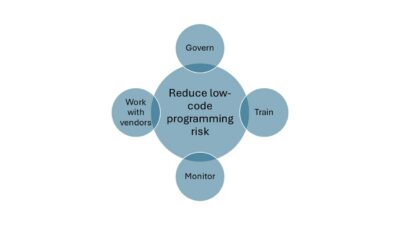
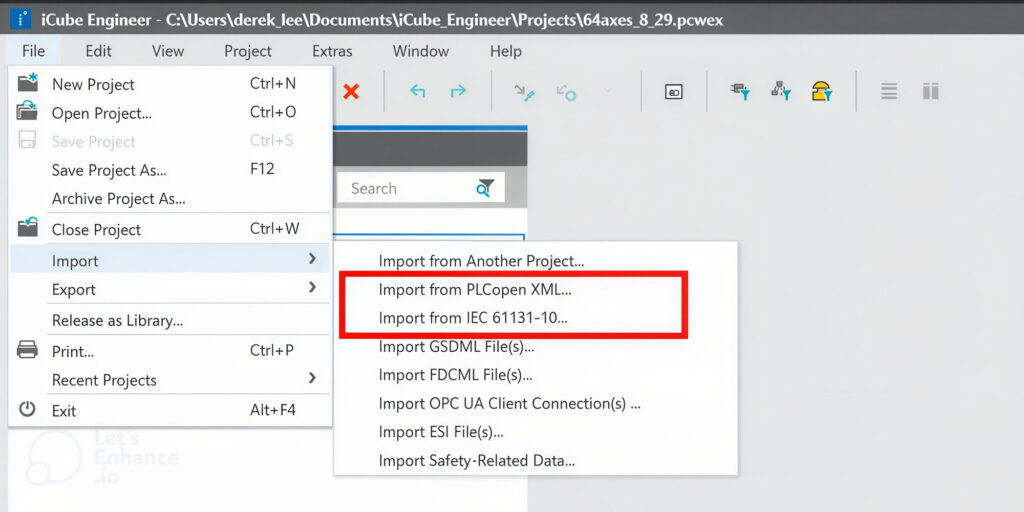
This standard dramatically improved consistency across automation platforms that had not previously existed. However, while IEC 61131-3 standardized how PLC programs are written, it did not define a common format for exchanging automation projects between various engineering environments. As a result, projects often remained tied to a specific vendor’s software environment. Thus, project portability remained a significant challenge despite the widespread adoption of the standard. This gap ultimately led to the development of IEC 61131-10 (Figure 1).
What is IEC 61131-10, and how can it help with PLC programming?
IEC 61131-10 is an international standard that defines an XML-based format for the exchange of PLC applications across various environments. It allows key application components including tasks, variables and data types to be organized within a standardized structure that can be understood by multiple manufacturers. By standardizing the import and export of PLC projects, IEC 61131-10 helps reduce vendor dependency while preserving existing engineering investments when migrating between different control systems.
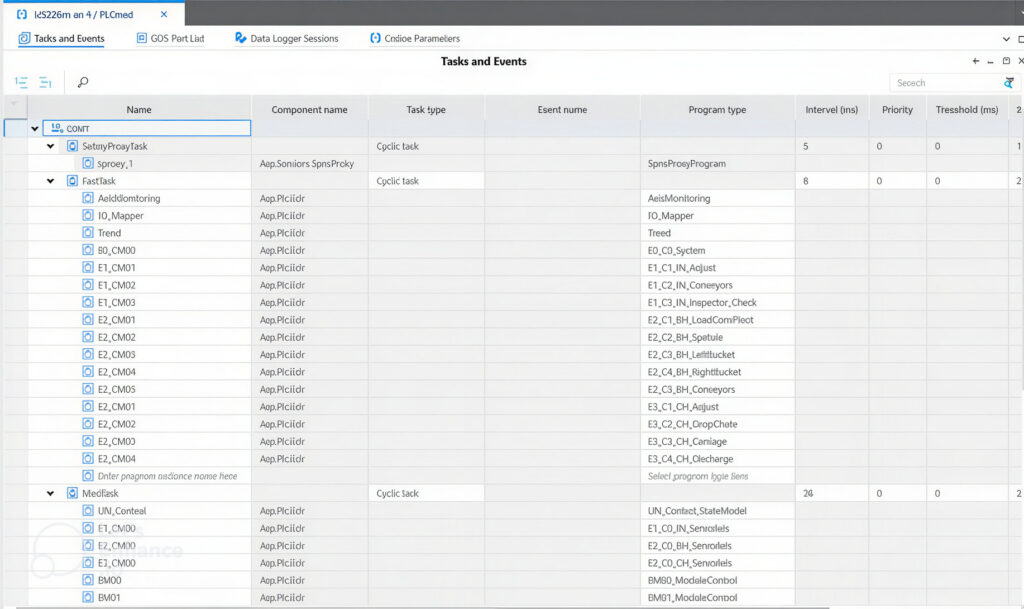
The standard is based on the widely adopted PLCopen XML specification, which was officially released in 2005. While IEC 61131-10 does not guarantee automatic project conversion, it can significantly reduce redevelopment effort by enabling the transfer and reuse of application components to be transferred between compatible systems (Figure 2).
IEC 61131-10 versus PLCopen XML
Because IEC 61131-10 was implemented using PLCopen XML as its foundation, the two technologies are often viewed synonymously. While they share many similarities, their scopes are not identical. PLCopen XML was originally designed to facilitate the exchange of PLC application logic, including program organization units (POUs), variables, data types and graphical program representations. This provides an effective mechanism for transferring reusable application components between congruent developmental platforms. IEC 61131-10 extends upon these concepts by providing a standardized framework for representing a broader range of product information. In addition to application logic, it provides representations for elements such as tasks, configurations, resources and overall project organization. The added element is exchanging more complete application definitions rather than solely individual program components. As a result, PLCopen XML is commonly viewed as a format for exchanging program content, whereas IEC 61131-10 provides a more comprehensive approach to exchanging PLC applications. Both technologies promote application portability and interoperability between automation platforms, but IEC 61131-10 extends that vision by addressing a wider range of project and application information (Figure 3).
PLC application portability and interoperability
One of the key objectives of IEC 61131-10 is to address the challenges associated with the portability of PLC applications between engineering environments. By providing a standardized XML-based format, the standard enables application assets to be exchanged and reused across compatible systems. This helps preserve existing engineering investments and reduces the amount of redevelopment effort during migration projects.
Elements commonly represented within IEC 61131-10 include Program Organization Units (POUs), variables, data types, tasks, configurations and project structure information. By capturing more than the exchange of individual program elements, the standard provides a broader representation of a more complete PLC application framework that defines how a control system is structured and executed.
The level of interoperability achieved is dependent on the functionality supported by both the originating and receiving engineering environments. While software-based elements such as application logic, reusable code and data structures are generally well-equipped for migration, platform-specific features including vendor-specific libraries, hardware configurations, safety functions and specialized motion control implementations may require additional engineering.
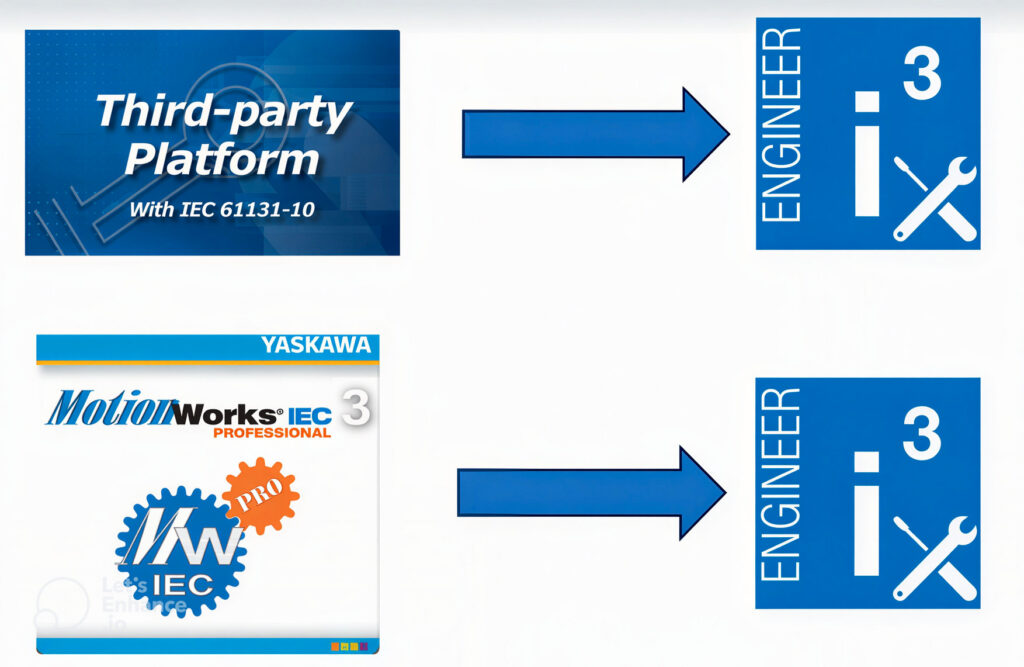
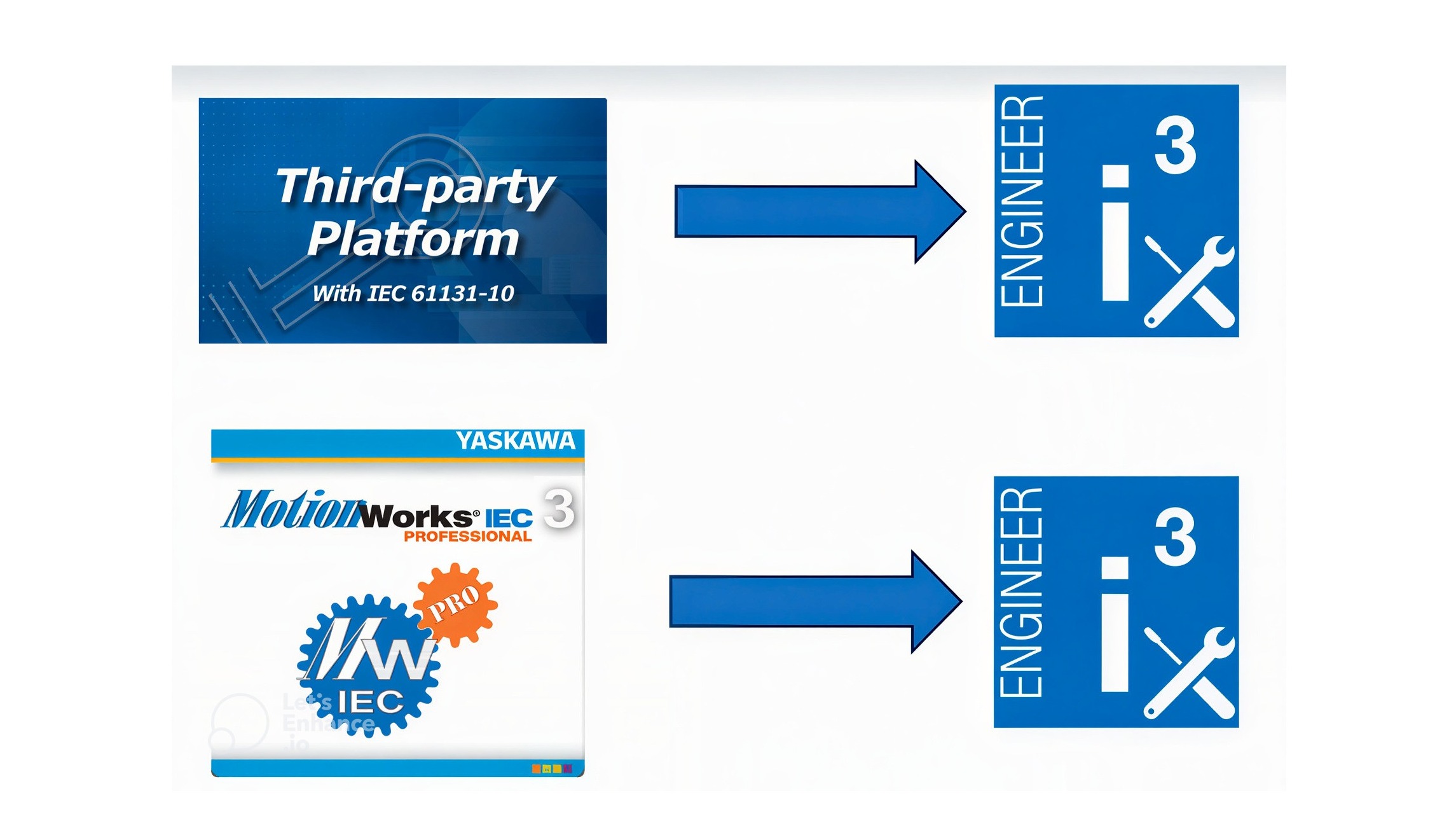
As an example, a machine builder developing an application in a third-party platform may exchange supported application information with an automation supplier’s programming environment through IEC 61131-10 capabilities (Figure 4). This allows engineers to reuse portions of an existing application, including POUs, variables, data types and other supported project information, instead of recreating these elements during a platform transition.
IEC 61131-10 is therefore best understood as an interoperable framework designed to facilitate application reuse and migration. While it does not provide complete automatic conversion between automation platforms, it can significantly reduce redevelopment effort by preserving valuable engineering assets.
Future outlook: The evolution towards open automation
For many years, competitive advantage within the automation industry has often been reinforced through proprietary programming environments and closed application formats. While these approaches provide consistency within individual ecosystems, they also posed challenges when organizations needed to migrate applications, integrate multiple technologies or maintain long-term flexibility.
IEC 61131-10 challenges the assumption that application portability must be limited by proprietary formats. By establishing a standardized framework for exchanging PLC applications, the standard demonstrates how greater code portability can be achieved through industry collaboration and open standards rather than being restricted by technical limitations.
As machine builders and end users increasingly prioritize flexibility, scalability and long-term system maintainability, automation platforms will continue to compete through areas such as hardware performance, engineering capabilities and overall system innovation. The ability to support open and interoperable solutions will become an increasingly important factor in the selection of future automation technologies.
The continued adoption of standards such as IEC 61131-10 represents a transition toward a more open automation ecosystem. One where engineering investments remain valuable, application portability improves and organizations have greater flexibility in selecting the technologies that best meet their application requirements.
Enable a more connected automation future
The progression of IEC standards highlights the automation industry’s ongoing effort toward greater openness, interoperability and flexibility. IEC 61131-3 established a unified approach for PLC programming, establishing a common framework across automation platforms. IEC 61131-10 builds upon that foundation by addressing the long-standing challenge within the industry by enabling the standardized exchange of PLC applications between engineering environments.
Through a common method of representing application information, IEC 61131-10 enables organizations to maintain the value of their existing engineering assets while reducing the time and resources required during platform transitions. While it does not provide complete project conversion between different systems, the standard creates opportunities for reusing application components and simplifying future development efforts.
As automation systems continue to evolve, open standards will become increasingly important in creating adaptable and scalable solutions. IEC 61131-10 represents a movement toward a more interoperable automation ecosystem, one where companies can leverage existing engineering investments while gaining greater freedom to focus on selecting the best technologies for their applications.
Daniel Hollman is a motion product specialist at Yaskawa America Inc. Edited by Mark T. Hoske, editor-in-chief, Control Engineering, Arrowfly, [email protected].
Keywords
PLC programming, IEC 61131-10, XML schema, programming portability
Consider this
Ever redo PLC programming for different hardware? This could help.
You also might like
See another article from Daniel Hollman and Control Engineering: How to use C++, datasets for motion control programming
https://www.controleng.com/how-to-use-c-datasets-for-motion-control-programming
Also see from PLCopen and Control Engineering:
https://www.controleng.com/building-a-solid-foundation-with-plcopen-iec-61131-3