GreyLogix is the winner in the $10 million to $40 million system integration revenue category.
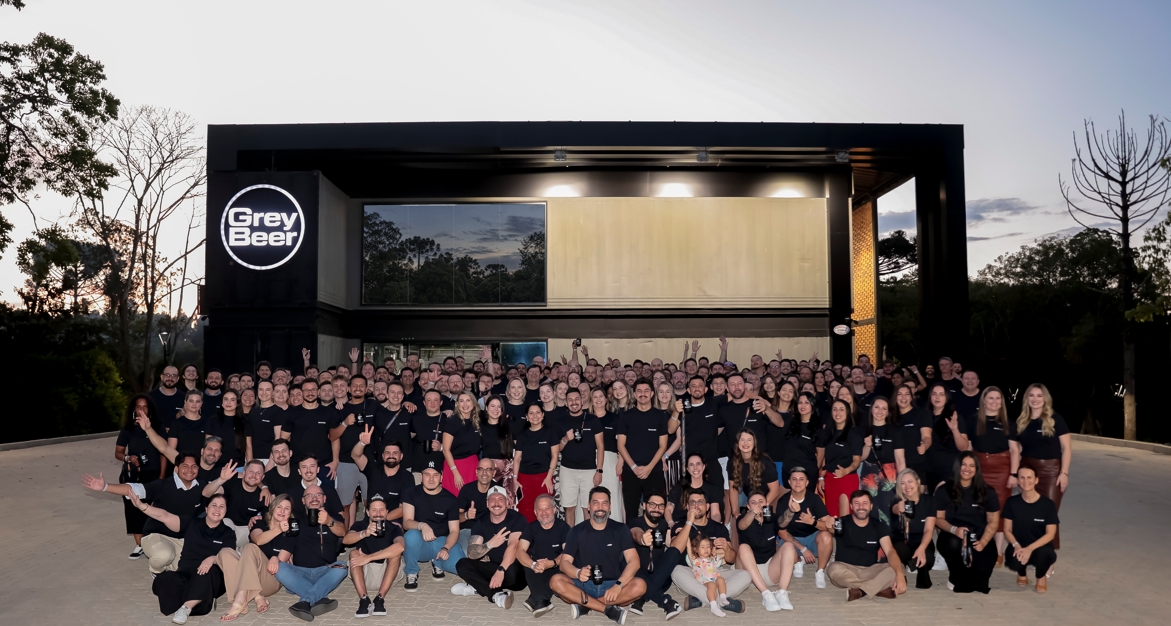
GreyLogix is the 2027 System Integrator of the Year award winner in the $10 million to $40 million system integration revenue category. An automated craft brewery, material processes, electrical and automation system integration are among topics discussed.
In your 2027 System Integrator of the Year application, what were you particularly proud of?
What we are proudest of is that our application describes a company that takes its own medicine before prescribing it. GreyBeer is GreyLogix’s own fully automated craft brewery in Rio Negro, Paraná, Brazil — not a demonstration rig or a test bench, but a real plant in continuous commercial production, running the same architectures, control philosophy and data structures we design for our clients.
GreyBeer was designed and validated as a digital twin before it was physically built, then commissioned with simulation. Mash, lauter, boil, whirlpool, transfers and the fermentation cellar all run under automatic control. That sequence cut project risk and gave our engineers a place to be wrong at full scale without a customer paying for it: every concept we propose has been proven in continuous operation before it reaches a client’s plant.
The team deserves the credit. GreyBeer was not a marketing project; it was engineers choosing to hold their own work to the standard they ask customers to accept. That same team now supports industries in more than 30 countries.

Describe one or more stand-out projects you have worked on recently
One of our most significant recent work is in battery advanced materials (BAM): the automation of silicon-carbon composite anode production. The material is made by infiltrating a silicon-bearing gas into the pores of a porous carbon scaffold at high temperature, leaving amorphous nanoscale silicon locked inside the structure. It carries several times the capacity of graphite and delivers materially higher energy density. Because battery-grade graphite supply is heavily concentrated in Asia, this material is central to building a resilient battery supply chain in North America and Europe, and plants are going up fast.
We work on two thermal lines that process requires, and they are different engineering problems. The pusher slab kiln (PSK) line carries the material on heavy refractory slabs pushed through independently controlled temperature zones under a tightly held atmosphere. What governs it is temperature homogeneity, atmosphere uniformity and residence time, and because it conditions the carbon structure, every deviation there surfaces later in the finished material. The chemical vapor infiltration (CVI) line then deposits silicon inside that structure, handling a highly reactive gas at elevated temperature, where safety interlocking and precise control of the reaction are inseparable from yield. Few integrators have commissioned both, and holding both scopes is worth more than the sum of the two, because the team that tuned the kiln is the team that sees what the infiltration step inherits.
Our first BAM project was in South Korea, and it was difficult for reasons that had little to do with the control system. Engineering was distributed across several countries, technical information conflicted between the technology owner and the automation scope, and the process was still being industrialized while the plant was being commissioned — there is no decades-old library of proven control strategies for a process this new. We developed the automation, interfaces and testing remotely, then commissioned the lines on site while managing the field team remotely. The decision that mattered was standardization with reusable software libraries rather than custom code per line, which turned a first-of-a-kind delivery into something repeatable.
That is why the work scaled rather than stopping at one plant. We are now active in this market in the United States as well, including Moses Lake, Washington, and established a U.S. subsidiary to support it. GreyLogix is one of the first system integrators in the world to automate this technology at commercial scale, and running the same standards on two continents, in two very different engineering cultures, is a test most control libraries never face.
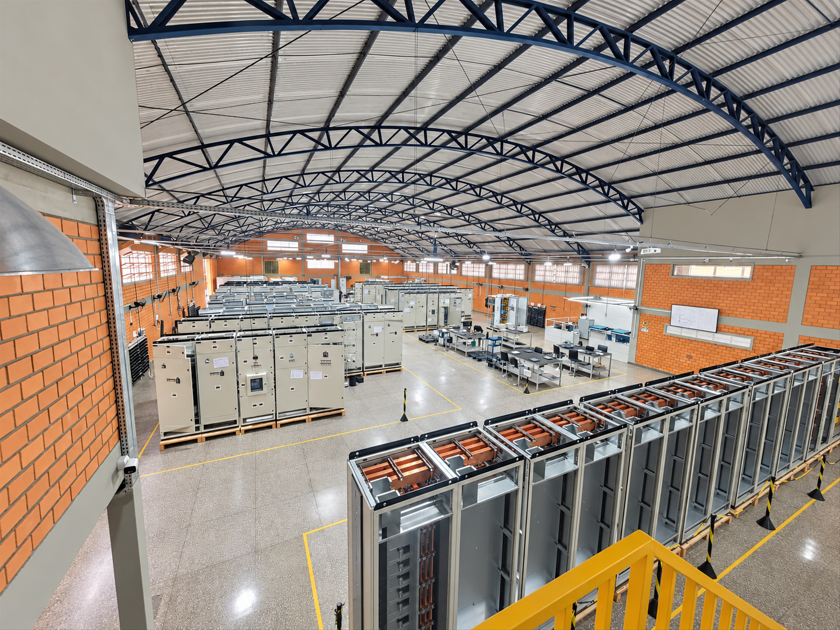
A very different project shows the other half of what we do. For a client in agribusiness, we delivered a turn-key electrical and automation package for two new production lines: medium-voltage switchgear, transformers, bus ducts and low-voltage panels including main distribution boards, capacitor banks and motor control centers. We produced the detailed design, coordinated third-party manufacturing and commissioned more than 80 panel columns in the field. What made it work was single-point accountability. We answered for our own equipment and for third-party supply alike, and our site supervisors could resolve unforeseen conditions on the spot rather than escalating and waiting.
Our five primary target industries are battery and advanced materials, renewable and bioenergy, food and beverage, pulp and paper, and utilities.
What methodologies and philosophies do you use for projects, and how are they evolving?
We run the company on the Entrepreneurial Operating System (EOS), the model described in the book Traction. It gives us a common language for accountability and priorities and keeps strategy connected to what people do each quarter.
On the engineering side, our foundation is standardization. We hold ISO 9001, UL and CSIA certifications and work following formal procedures for engineering, commissioning and support, with centralized platforms for document control and version tracking. What matters most technically is our use of standardized, reusable software libraries for programmable logic controller (PLC) and supervisory development. Reuse makes quality repeatable instead of dependent on which engineer was assigned, and it is what lets us scale a first-of-a-kind process across plants.
Simulation-first validation is the practice we are pushing hardest. Our own brewery was built as a digital twin before it existed physically, and we are moving that discipline into client work by validating the control strategy against a model, then commissioning it against reality. It reduces time on site, the most constrained resource in a plant under construction.
The direction of travel is toward tighter project governance and integrated planning, and from there into a data layer that puts operational intelligence on top of the automation we already deliver. We are sequencing that deliberately, governance first, because analytics built on unreliable execution data produces confident nonsense.
How have customer expectations for projects changed?
The clearest change is that customers are finally putting real weight behind cybersecurity. For years it was a line item that survived until the first budget review. Now it is a qualifying question, asked early, and asked of the integrator rather than only of the IT department.
This is directly connected to artificial intelligence (AI). Almost every client wants to adopt AI, and almost every client has realized that connecting plant-floor systems to analytics platforms expands the attack surface as much as creates opportunities. What they do not want is a vendor selling them a model. They want a trusted integrator that can bring AI into operations without opening the plant up. Those two requirements arrive together and land on the same desk.
We have invested accordingly. GreyLogix holds international cybersecurity expert certification, completed through Siemens in Mexico, so the capability sits inside our engineering teams rather than being subcontracted when a client asks. That matters because security decisions are made during design, where they belong and where they are cheapest.
How important is developing long-term customer relationships, and why?
Long-term relationships are structural to this business, not a nice-to-have. A client gives an integrator access to intellectual property, to process know-how that may be the basis of their competitive position, to the safety and security of the plant, and to the systems that determine productivity, performance and quality. That is an unusual amount of exposure to hand to an outside company, and that kind of trust compounds. The longer we work inside an operation, the better we understand its process, constraints and people. Projects get faster, scopes get cleaner and decisions get made earlier.
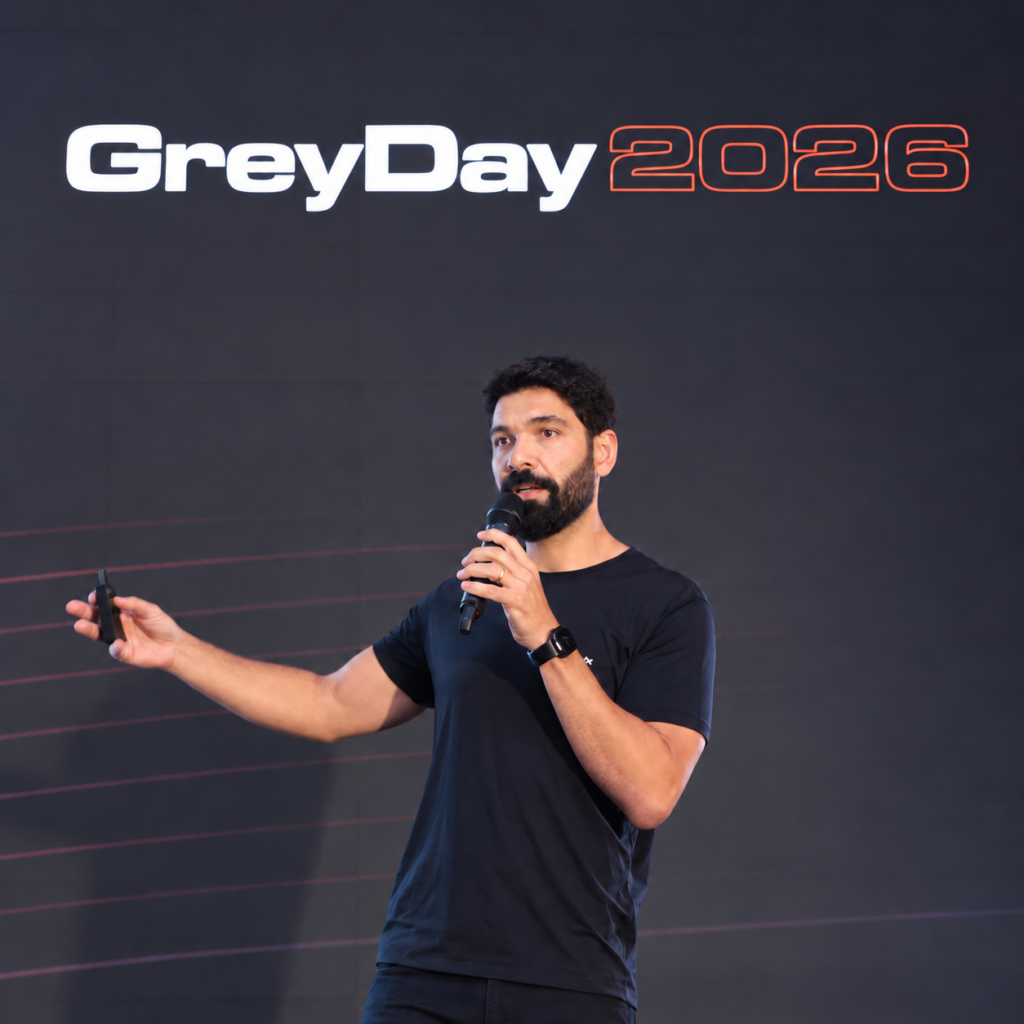
One practice built around that belief is GreyDay, our annual conference. The 2026 edition brought customers, specialists and industry leaders together in Curitiba, Brazil, for an afternoon on artificial intelligence, cybersecurity and the convergence of information and operational technology — subjects our clients must decide on before the dust has settled. It is deliberately not a product showcase: alongside the talks we run expert stations where people bring real problems from their own plants, and much of the value is in the conversations among attendees rather than on stage. For us it is the cheapest way to learn what our customers are worried about. For customers it is a year of technology scanning compressed into one day.
Our business is not transactional by nature; it only looks transactional when it is being done badly.
Have current events such as the skills gap, industrial AI and digital transformation affected projects significantly?
They affect us a great deal, in two directions at once. The first is execution. Engineering talent is scarce and demand is not waiting, so integrators must use every technology available to raise their own productivity. The work is changing with less repetitive code and documentation, more design judgment and architecture. An integrator that does not industrialize its own engineering cannot staff the projects the market is asking for.
The second is expectation, and it is the bigger shift. Industry is moving faster than most manufacturers can internally evaluate, and clients want their integrator to translate what makes sense for their plant. Not every technology that is real is relevant, and separating the two is now part of the job: We are being asked to filter, not just to implement. Both pressures point the same way — integrators must keep evolving to support an industry in constant evolution.
What do you do to guide younger engineers, and what ongoing education do you provide?
Integrators have access to the best technical universities in the world, and the first of them is our own project portfolio. Nothing teaches like practical work alongside experienced peers, on a real plant, where the consequences are real. We staff projects so that less experienced engineers sit next to senior ones rather than being isolated on simple scopes.
The second is the corporate universities of the automation vendors we work with, including Siemens, Rockwell Automation, Schneider Electric and ABB. These programs are rigorous, continuously updated and better resourced than anything one integrator could build alone.
Beyond technical education, our emphasis is shifting. As AI takes over more of the routine work, what distinguishes an engineer is people skills, proactivity, the ability to deliver a solution rather than a deliverable, and the ability to work across cultures and time zones. We invest in that with the same seriousness we have always applied to technical training.
Please share one long-term goal for the company
Our long-term goal is GreyLogix as a platform, that is, to use the knowledge we have accumulated to build a larger network rather than only a larger company and to generate impact several times greater than we can on our own.
We believe strongly in partnership as a structure, including with other system integrators. The industry has historically treated integrators as competitors for the same scope; the more interesting opportunity is combining capability across companies so clients get a depth of expertise no single integrator holds. Building the platform that makes that practical is the work of our next decade.
Metrics: Growth in people, review; USA subsidiary
Metric: Context
- 5x growth in people over 10 years. Now more than 250 professionals — the constraint that governs how much work an integrator can actually take on.
- 10x growth in revenue over 10 years. Revenue grew faster than headcount, reflecting a shift toward larger and more complex turn-key scopes.
- More than 3,000 projects delivered in over 30 countries. That footprint is what allowed us to take on first-of-a-kind process work across time zones and engineering cultures.
- USA subsidiary established. It puts engineering alongside the North American market rather than supporting it from a distance.
Renato Leal is CEO and founder, GreyLogix, a CSIA Certified member company. Edited by Mark T. Hoske, editor-in-chief, Control Engineering, Arrowfly, [email protected].
Keywords
System Integrator of the Year 2027, System integration
Consider this
Are your processes appropriately integrated, updated, optimized and secure?
You also might like
https://si.arrowfly.com/integrators/greylogix