As production schedules tighten and automation systems become increasingly complex, manufacturers are looking for new ways to increase return on investment. Virtual commissioning and digital twins help shift engineering efforts to create the greatest value — before production begins and throughout the equipment’s operational life.
Automation virtual commissioning insights
- Explain how virtual commissioning shifts software validation earlier in the project life cycle to reduce startup risk, minimize production downtime and improve commissioning outcomes.
- Differentiate between virtual commissioning and digital twins, including the unique role each plays before and after startup to maximize return on automation investments.
- Identify when virtual commissioning delivers the greatest business value and apply best practices for planning, building and using simulation models on automation projects.
Imagine discovering during startup that a robot cannot reach a required pick location, a conveyor sequence does not synchronize with upstream equipment, or safety logic behaves differently than expected once multiple systems begin communicating.
None of these issues is impossible to solve, but when they are discovered during a tightly scheduled production outage window, every hour spent troubleshooting delays startup, extends downtime and increases project costs.
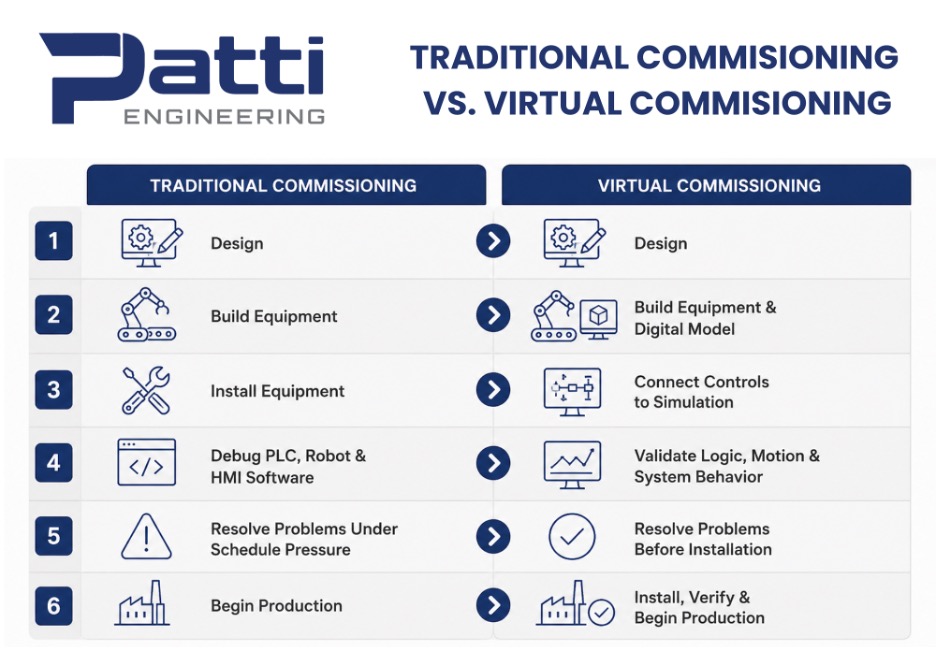
More manufacturers shift that debug effort earlier in the project through virtual commissioning. Instead of using the outage window to discover problems, they arrive onsite having already solved many of them.
What is virtual commissioning?
Virtual commissioning is the process of testing and validating an automation system within a virtual environment before physical equipment is installed or placed into operation. Using digital models of machines, robots, conveyors, controls and other production assets, engineering teams can simulate how an automation system will behave under real operating conditions.
Although every project differs, virtual commissioning generally follows a similar workflow. The process begins by creating a digital representation of the automation system. Mechanical models, equipment layouts, robot geometry and production processes are assembled into a simulation environment capable of representing real operating conditions. Automation logic is then connected to the simulation. Programmable logic controller (PLC) programs, robot code, motion control and safety logic can be exercised before physical hardware is available.
Once these elements are connected, engineers can simulate actual production scenarios. Robot motion can be evaluated for collisions or reach limitations. Equipment sequencing can be validated. Safety interactions can be confirmed. Production flow and cycle times can be analyzed before installation.
Typical issues identified during virtual commissioning include:
- Robot reach limitations
- Motion collisions
- Sequencing errors
- PLC logic issues
- Throughput bottlenecks
- Equipment timing conflicts
- Operator access concerns
- HMI or operator-interface issues.
Why traditional automation commissioning creates risk
Historically, automation commissioning has followed a familiar sequence: design the system, build the equipment, install it on the plant floor and then begin testing. While this approach has successfully delivered countless projects, it also concentrates much of the technical risk at the end of the schedule, when time is often the most limited and production interruptions are the costliest.
This is especially pronounced during controls modernization projects, as opposed to greenfield builds, where manufacturers are often replacing aging control systems while the production line remains in service, leaving only a weekend shutdown or a handful of scheduled outage windows to complete the installation. Under those conditions, every hour spent debugging software directly competes with production.
By building a virtual simulation before physical equipment is installed, engineering teams can validate system behavior, uncover programming issues and refine machine interactions long before the clock starts ticking on downtime.
Virtual commissioning versus digital twins
Although the terms virtual commissioning and digital twin are often used interchangeably, they serve different purposes. While virtual commissioning focuses on reducing startup risk, a digital twin helps manufacturers continue improving the system after it is in production. In many projects, the simulation developed for virtual commissioning becomes the foundation for this digital twin.
Because the digital twin reflects how the equipment operates, engineering teams can evaluate throughput improvements, identify production bottlenecks, analyze process changes and test what-if scenarios before making changes on the plant floor.
For example, a manufacturer may want to know whether a line can support higher throughput or whether upstream and downstream equipment can keep pace with a process change. A mature digital twin could help answer these questions before any physical changes were made.
Digital twins also support predictive maintenance, operator training, troubleshooting and future modernization efforts, making them valuable throughout the equipment’s life cycle.
All of this supports a more proactive view of automation life cycle management. Equipment should not necessarily run best on the day it is installed. With the right data, analysis and continuous improvement strategy, day one can become the baseline, not the ceiling.
Differences between virtual commissioning, digital twin
| Virtual commissioning | Digital twin |
| Used before startup | Used after startup |
| Validates controls software before installation | Represents the operating production system |
| Reduces startup risk and commissioning time | Improves operations throughout the equipment life cycle |
| Focuses on readiness for production | Focuses on optimization, maintenance and continuous improvement |
What’s driving the shift to virtual commissioning?
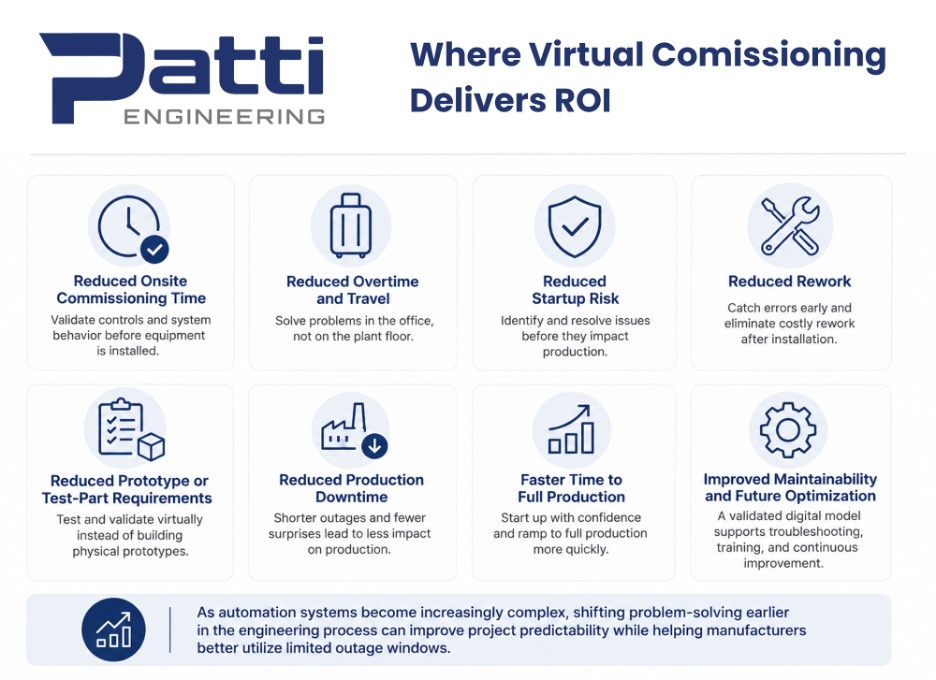
Virtual commissioning and digital twins have existed for years, but the business case for using them has never been stronger. Today’s manufacturers face a combination of technical and operational challenges that make traditional commissioning approaches increasingly difficult to justify.
Automation systems are more complex than ever
Modern manufacturing systems bear little resemblance to the standalone machines of the past. Today’s production lines often combine robots, PLCs, machine vision, motion control, safety systems, human-machine interfaces (HMIs), industrial networks, manufacturing execution system (MES) connections and equipment from multiple vendors into one integrated process.
While this increased connectivity enables higher levels of automation, it also creates more opportunities for unexpected interactions. A seemingly minor software change can affect equipment timing, robot motion, safety sequences or downstream operations in ways that may not become apparent until startup.
Downtime windows continue to shrink
At the same time, manufacturers have fewer opportunities to commission or modernize equipment without affecting production.
Controls upgrades, robot replacements and production line modifications are often scheduled during weekend shutdowns, holiday outages or other tightly controlled maintenance windows. In many facilities, extending an outage by even a single shift can have significant operational and financial consequences.
Engineering expertise is more valuable than ever
Manufacturers are also facing a growing shortage of experienced engineering talent. As veteran engineers retire, many organizations are challenged to replace decades of institutional knowledge while managing increasingly sophisticated automation systems.
Expert engineering time has become one of the industry’s most valuable resources.The greatest value those engineers provide isn’t troubleshooting under production pressure, it’s solving complex problems, evaluating alternatives and improving system performance.
Virtual commissioning gives engineering teams the time and environment to do exactly that; let simulation handle as much of the debugging as possible and leave your expert engineers to the critical and creative thinking portions of the project. This offers manufacturers a better return on investment (ROI) on their engineering expertise while reducing the pressure and uncertainty of startup.
Case study: Simulation in action
One recent Patti Engineering modernization project reinforced how virtual commissioning can fundamentally change the risk profile of an automation project and boost return on investment.
Project background
At first glance, the project seemed almost impossible to execute.
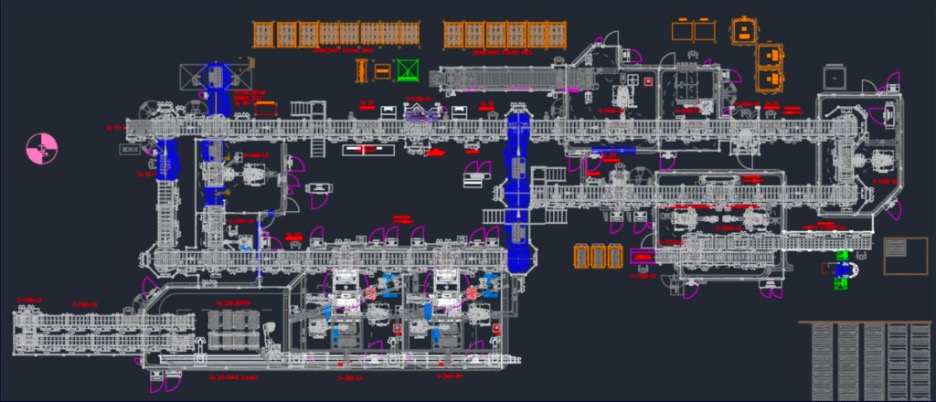
The manufacturer needed to modernize the controls on an engine assembly line that had been in operation since 2007. While the mechanical equipment remained in good condition, the controls platform had become obsolete and no longer provided the flexibility or capacity required for future production.
Technically, replacing the controls wasn’t the difficult part; the real challenge was keeping the plant running.
The assembly line sat at the very front of the manufacturing process, meaning any extended shutdown would ripple through the entire facility. Building enough work-in-process inventory ahead of the outage wasn’t practical because upstream machining operations and suppliers were already operating near capacity. A traditional controls replacement requiring weeks of downtime simply wasn’t a viable option.
Without a different implementation strategy, the project likely would not have moved forward.
Upgrade strategy
Rather than completing the modernization during a single extended outage, the project was divided into multiple phases. Individual operations were upgraded during a series of three- and four-day weekend installation windows spread throughout the year.
This approach reduced the amount of work required during each outage while also limiting the scope of any potential rollback should unexpected issues arise. Because the control software was rewritten rather than directly migrated, validating the new logic before each installation became a critical part of the project.
Building the digital twin
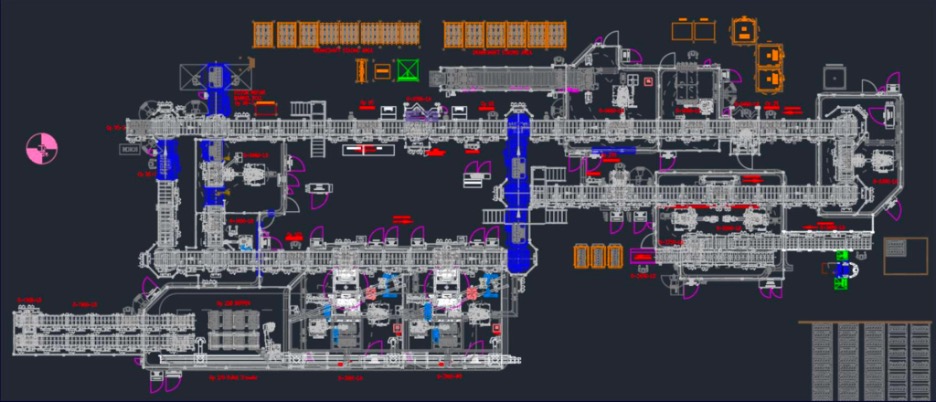
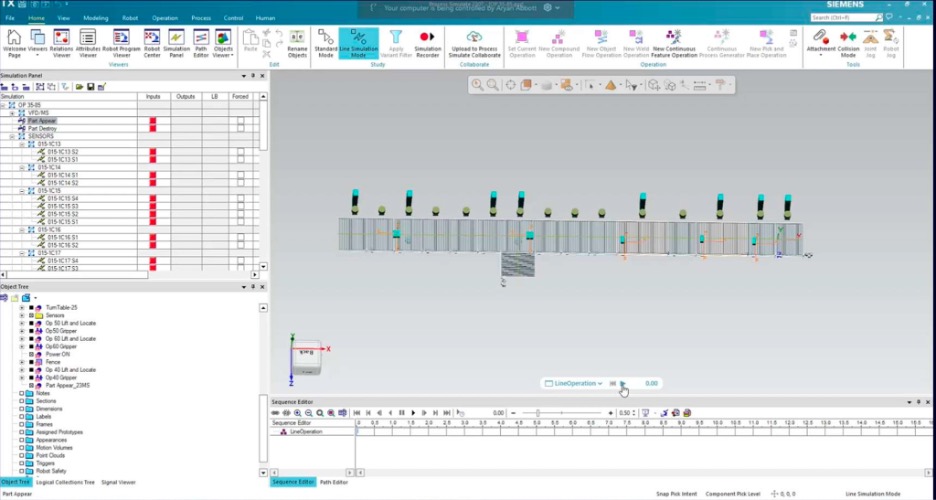
To support offline testing, a digital twin of the assembly line was developed. The model included:
- Imported computer-aided design (CAD) models of the production equipment, supplemented with generic library components where full detail wasn’t required
- Machine kinematics, sensors, actuators and material flow
- Custom scripts to model complex device behavior
- Input/output mappings connected to a PLC simulation environment for realistic control testing.
Traditional PLC simulators are effective for validating individual routines by manually forcing inputs and outputs. However, they provide limited insight into how an entire production system behaves once robots, conveyors, HMIs, safety systems and multiple PLCs begin interacting. For this project, that level of testing wasn’t sufficient. The engineering team needed to validate the complete system before every installation weekend.
The goal was not to create a perfect digital replica of every mechanical component. Instead, the model included only the level of detail necessary to accurately validate control logic and commissioning workflows.
Virtual commissioning workflow
Once the digital twin was connected to the PLC simulation environment, the commissioning process closely mirrored what would occur on the plant floor:
- Verify input/output mapping
- Validate machine operation in automatic, manual and recovery modes
- Test robot, HMI and PLC interactions
- Introduce simulated fault conditions and edge cases
- Resolve software issues before installation windows began
By identifying software issues in a virtual environment, engineers shifted much of the debugging effort away from the production line and into the engineering office.
Engineering results: Decreased installation debugging
Virtual commissioning did not eliminate commissioning activities on-site, but it substantially reduced the amount of software debugging required during each installation window. This allowed commissioning teams to concentrate on hardware replacement, wiring verification and final system validation.
The phased approach avoided rollback scenarios while reducing the number of installation windows that would otherwise have been required. More importantly, it enabled a modernization project that would have been difficult to execute using traditional commissioning methods because of production constraints.
Lessons learned: What’s needed to maximize automation ROI
Several engineering principles were solidified from this project:
- Build only the digital twin fidelity required to validate the intended behavior.
- Complete as much software validation as possible before production downtime begins.
- Use phased upgrades to reduce commissioning risk on critical production assets.
- Treat virtual commissioning as a method for relocating debugging effort, not eliminating it.
Best practices for maximizing value
Virtual commissioning delivers the greatest value when it is treated as an engineering strategy rather than another software tool. The goal is not to create the most detailed simulation possible, but to build a model that answers the engineering questions that matter most to the project.
A few principles consistently lead to successful virtual commissioning efforts:
Know when a simulation is worth the investment
Like any engineering investment, the value of virtual commissioning depends on the risks it is helping you reduce. If a machine is relatively simple and startup carries little operational or financial consequence, building a detailed simulation may not provide enough return to justify the additional engineering effort.
The equation changes quickly, however, as project complexity increases. Virtual commissioning often delivers the greatest value when projects involve:
- Limited production outage windows
- Controls modernization on active production lines
- Multiple integrated systems that must operate together
- Robotics, complex motion or sophisticated sequencing
- High costs associated with startup delays or unplanned downtime
- Expensive prototype parts or production materials required for physical testing
In these situations, the cost of discovering problems during startup can far exceed the cost of identifying and resolving them earlier through simulation.
Start with the business problem rather than technologies
Before building a digital model, identify the primary risk the project needs to reduce. If the biggest concern is minimizing downtime, the simulation should focus on validating controls logic and startup readiness. If the greatest risk is robot motion, emphasize collision detection and reach studies. If throughput is the objective, build the model to evaluate production flow and bottlenecks.
Build the model to the level of detail you need
One of the biggest misconceptions about virtual commissioning is that every component must be modeled perfectly. The model only needs to be accurate enough to validate the decisions you’re trying to make.
On the featured modernization project, for example, some equipment was represented using generic models because the team’s objective was validating the controls software, not recreating every conveyor in exact detail. More detailed models were used only where the physical behavior affected the outcome.
The goal is not to build the most detailed digital twin possible—it is to build a model that is detailed enough to solve the engineering problem at hand.
Test real operating conditions
Don’t limit the simulation to ideal production scenarios. Validate startup sequences, different operating modes, safety functions, fault conditions and other edge cases that are difficult or expensive to recreate on the plant floor.
Sam Hoff is the founder, president and chief executive officer of Patti Engineering, a CSIA-Certified member. Edited by Sheri Kasprzak, executive editor, Control Engineering, Plant Engineering, [email protected].
Keywords
Control system modernization, digital twin, virtual commissioning
Consider this
Are you optimizing your automation installation or not?
You also might like
Global System Integrator Database
https://si.arrowfly.com/integrators/patti-engineering-inc-corporate-office