People can use automation, industrial artificial intelligence and analytics to enhance improve the world with better safety, higher quality and optimization for sustainability goals, said to experts at YNOW2026, by Yokogawa Corporation of America.
Advanced process control insights advance humanity
- Process control and instrumentation can enhance safety, quality and harmonization of people and technologies.
- Quality, harmonization of people and progress, advanced artificial intelligence (AI) are among ways control optimization and energy solutions enable humanity.
- Advanced artificial intelligence (AI) in control optimization and energy solutions can data into reliable information for a safer, more efficient and sustainable world, as explained at YNOW2026 by Yokogawa Corporation of America.
Safety, quality and harmonization of people and technologies were among topics during keynote presentations at YNOW2026 by Yokogawa Corporation of America.
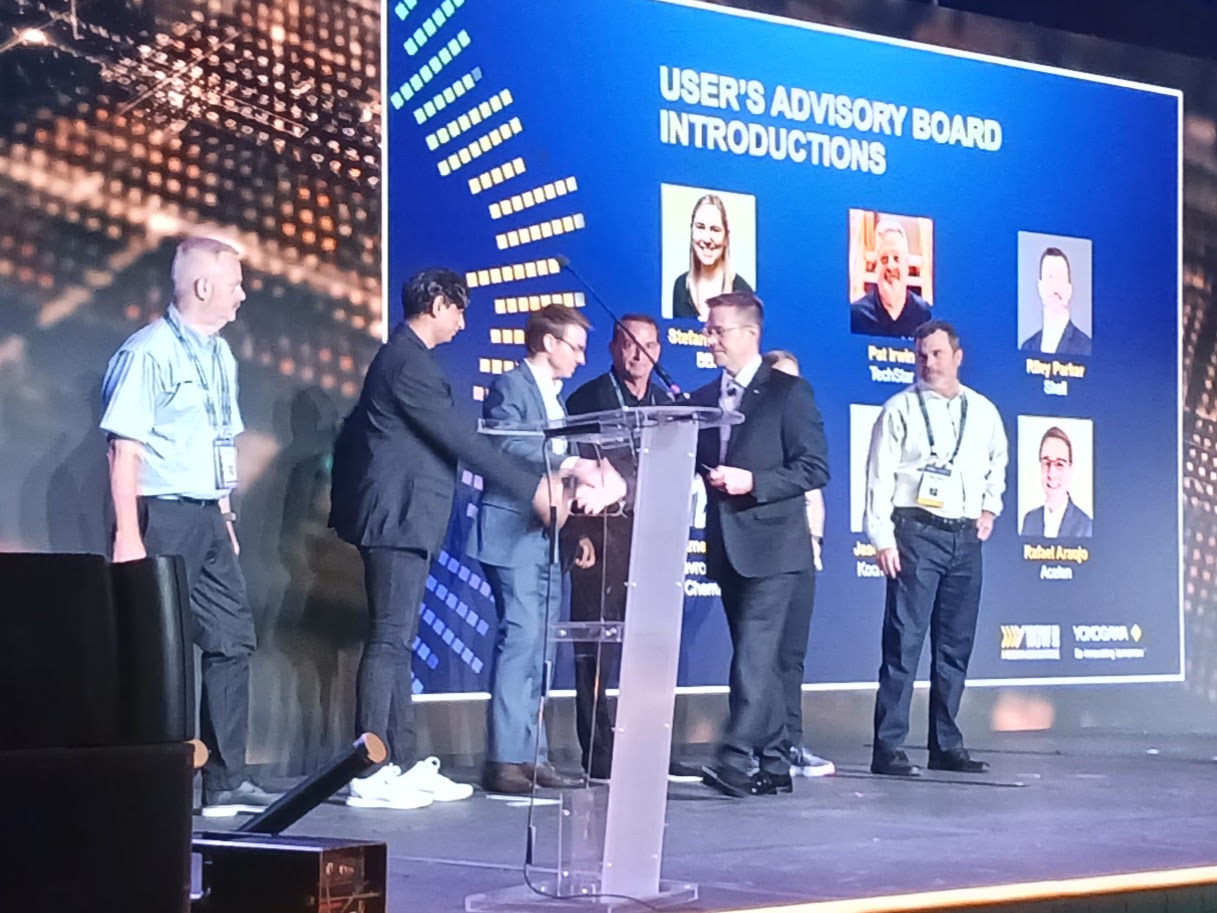
Nicholas Meyer, director of marketing Yokogawa Corporation of America said the conference featured more than 60 speakers and 14 workshops for educational credit, along with exhibits from Yokogawa and partners. He thanked the conference’s user advisory board (Figure 1) members for helping to make Yokogawa’s 111th birthday educationally appropriate. Board members are Stephanie Funk, director of automation, BBP; Pat Irwin, director of sales, TechStar; Riley Parker, staff automation engineer, discipline lead, Shell; Kamal Gavdi, senior control systems engineer, Chevron Phillips Chemical; Jason Dockins, control system specialist, Koch Fertilizer; and Rafael Araujo, value chain optimization and competitiveness, Acelen.
Technology innovation, human creativity
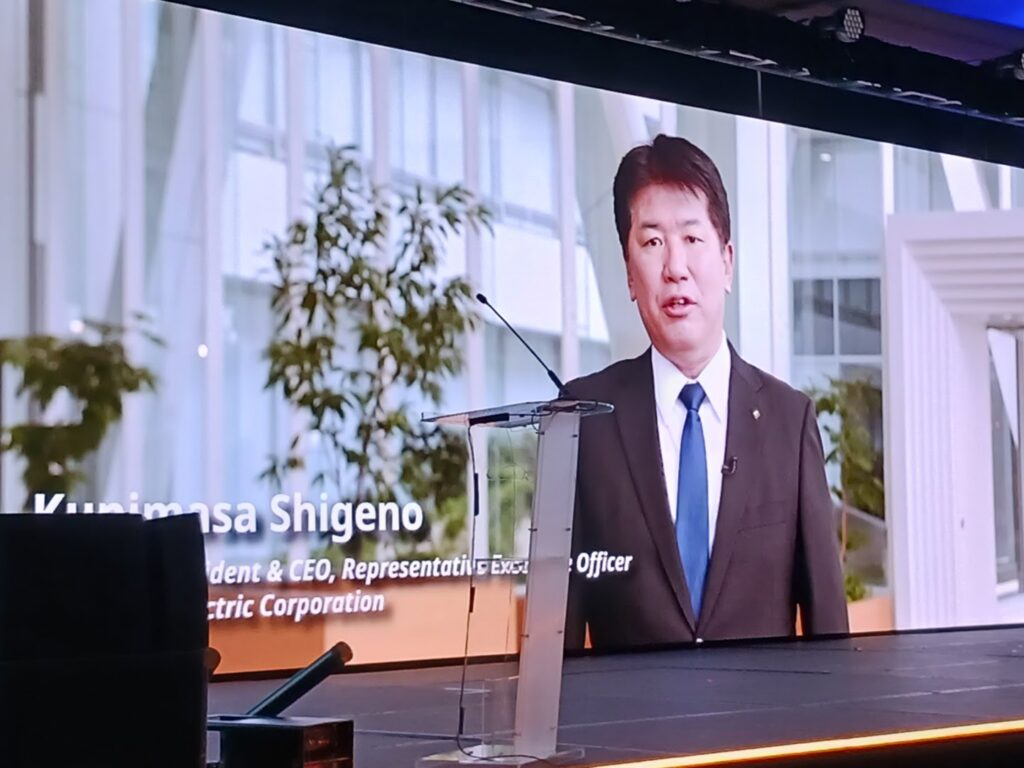
A video message from Yokogawa Electric Corp. president and CEO, Kunimasa Shigeno (Figure 2), thanked attendees on behalf of more than 17,000 employees, for trusting company ideas and vision aligned with human creativity and technology innovation looking at tomorrow. He discussed embedded quality, harmonization of people and progress, advanced artificial intelligence (AI) in control optimization and energy solutions, that turn data into reliable information for a safer, more efficient and sustainable world. The company remains committed to net-zero emission goals.
Kevin McMillen, president and ceo of Yokogawa Corporation of America and corporate officer, Yokogawa, said the company helps users improve safety, productivity, workforce skills gap, efficiency and sustainability. Tools include AI, machine learning (ML), digital transformation, advanced analytics, autonomous operations, connected workers, cloud technologies and others. Technologies must deliver meaningful business outcomes, not just more data. Data alone doesn’t create value, McMillen said, and technologies alone do not solve business problems. Bringing all information together and in tune is how complexity becomes clarity. Actions create results across many industries including refineries, chemical plants, pharmaceuticals, bio- technology plants and other industries. Collaboration creates success. Intelligent systems work with humans like an orchestra; magic happens when everyone uses the same score.
While AI is creating tremendous excitement, it needs context for clarity. Human expertise and trust are needed as AI is paired with human knowledge, McMillen said, to make better tools for better decisions. Safety, the company’s highest priority, is improved with tools that help users recognize problems earlier.
Greater productivity results from automation, empowering people to spend less time searching for information and more time solving problems, he said.
Freddie Ravel, keynote maestro inspirational speaker, emphasized the “In tune with tomorrow” theme with musically inspired examples. Among advice:
- Active listening is superpower to success.
- Avoid technology driven interruptions that sap productivity; some check their phones up to 150 time per day.
- Communication is a form of collaboration.
Machines may be able to write lines of code, but humans read between the lines.
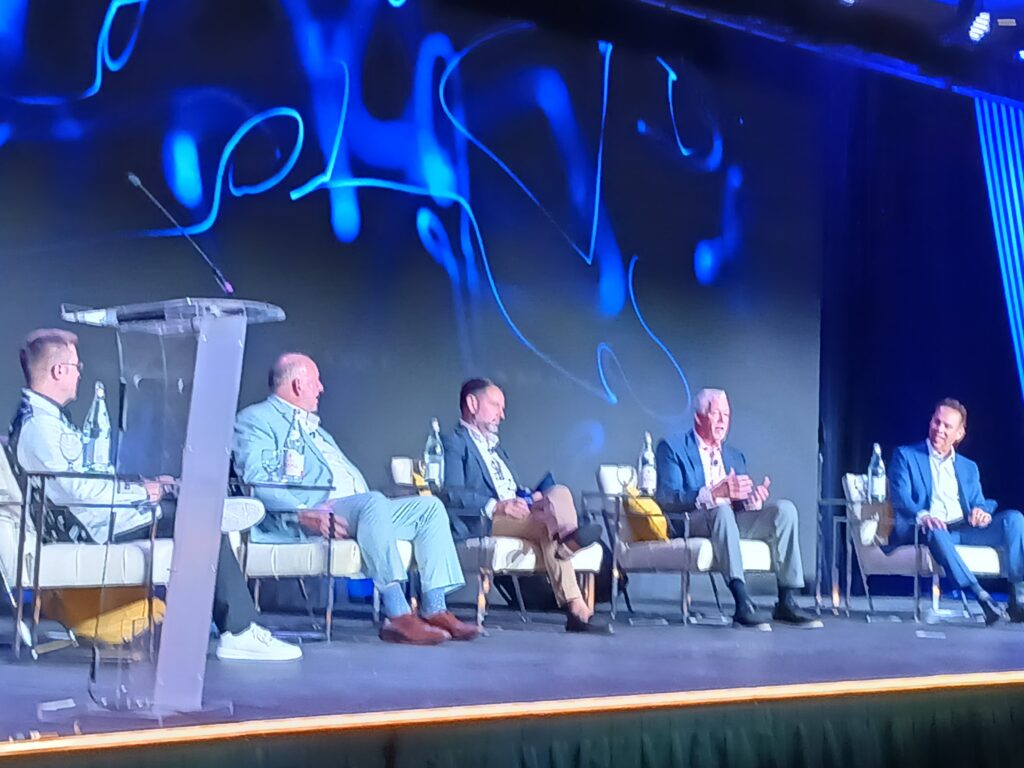
Panel: Technology development, productivity, humanity
A panel discussion on related themes (Figure 3) included Meyer; McMillen; Josh Fleig, chief innovation officer, Louisiana Economic Development; James Griffin, associate vice chancellor, senior vice president – LyondellBasell Center for Petrochemical, Energy and Technology, San Jacinto College in Houston, Texas; and Ravel. Responses are edited, not verbatim.
What’s progress mean?
Meyer asked, “What does orchestrating progress mean for each of you?”
Griffin: Greenfield installations are rare, as the college works to understand goals and missions of 130 plants and 80 companies with many ideas and approaches. What does industry need and measure to continue to make progress, and how do we measure that? A pilot plant helps industry partners with measurements and metrics.
Fleig: Historically tax credits are used to build or expand manufacturing, help with workforce development, and coordinated changes are underway to decrease bureaucracy and increase coordination among agencies that can help.
McMillen: Technology demonstrations in plants help make progress, along with being more proactive about planning ahead: 5-, 10- and 20-year planning.
Ravel: A lot of people on planet don’t have purpose. The idea of co-innovating is a good thing. Co-elevating goes beyond collaboration, helping people live with purpose.
Aligning people with projects
Meyer: What’s the biggest obstacle in aligning people?
Fleig: Any new or construction expansion usually meets resistance from some direction. Data centers are often opposed because those around the data center are not part of the wealth creation. Getting all people involved helps. Creation of a future SpaceX starbase in Louisiana, planned as the world’s largest, will bring positive impacts to the state, but some are upset they weren’t involved in the decision. Community engagement can be a challenge with developments.
McMillen: Corporate efforts include many initiatives and reorganizations. Early adopters can meet some resistance. Stakeholders need to understand what they can get out of adoption, rather than just how a new initiative can make life more difficult.
Griffin: When 130 petrochemical plants have to align in an effort, there are coach and referee roles to play with partners, competitors and suppliers. Celebrate early wins. Have good milestones. Not all efforts may be collaborative. Don’t let perfect get in the way of good. Grow from there.
Ravel: I love that. Sometimes everyone has to put things on the table to get something to happen.
Meyer: Issues happen with operations versus IT or business versus academia. Sometimes we have to seek ways to innovate without uniformity.
McMillen: How do we get separate visions of stakeholders to work? Holding checkpoint meetings, reviewing progress and resetting as needed. Identifying disagreements can open doors to create alignment for the rest of the organization.
Ravel: Imagine expectations. Sometimes no one expects what happens. Outcomes can be better if people are open to something else.
AI to help human qualities
Meyer: What human qualities will be more valuable in collaboration with AI?
Griffin: Who would have thought years ago that we could each have computer with AI in our hands? Be curious. Information exists beyond labs and classrooms. We have 35 laboratories. Students use AI frequently and are turning the learning curve to vertical.
Fleig: AI collaboration may create more time for humans to pursue what they want to do, such as music, other arts and sports … more higher-value things. Let’s move humans up the food chain beyond dull, dangerous and dirty.
McMillen: Engineers are using AI to improve their work, saving days and weeks. It can help with preparation. In the past, I might have listened to music on the way to a meeting with ExxonMobil, but now I am likely to do research by having a conversation with truck on the way to work.
Ravel: Humans are tribal and want to live in communities, with family. AI can increase the value of art and family time.
Engineering workforce development
Meyer: What can leaders do to foster next-generation education and workforce development?
McMillen: Empower people with tools to make things happen. I believe people want to improve and make progress.
Ravel: Use the conference to create value. New ideas will emerge.
Griffin: At community colleges, people from industry work with students, who have some humility when they start. The scale of plants gave me humility after graduation. Listen to young people and answer questions. Be involved.
Industrial-grade partnerships
Meyer: To finish, let’s have a lightning round of answers. What’s a key ingredient of a successful partnership?
McMillen: Transparency and trust.
Fleig: Having trust.
Griffin: Respect and commitment.
Ravel: Harmony.
YNOW2026 conference and exhibition is Sept. 1 through 3 in New Orleans.
Mark T. Hoske is editor-in-chief, Control Engineering, Arrowfly, [email protected].
Keywords
Process control systems, process instrumentation
Consider this
How are the latest process control and instrumentation technologies adding efficiency to your facility?
You also might like
Yokogawa Corporation of America introduced the EJX S Series Next Generation Pressure Transmitter at YNOW2026.
See more from Control Engineering on process instrumentation and sensors.