In AC drive development, the quality of the product instructions is tied to an engineering discipline that impacts safety, commissioning and the end-user experience. Technical communicators need to work with hardware and firmware engineering teams to close the gap between engineering designs and real-world operations.
Insights on automation documentation
- Documentation is a core development function and should begin before the product exists, rather than developed as an afterthought
- Early documentation questions can expose design flaws
- Engineering participation directly improves both docs and product quality
It’s probably not uncommon for engineers to only think about product documentation at the worst possible times: at the least forgiving moments when the production line needs certification, or when the bills of material are ready and it’s time to start manufacturing units. In these moments, the product instructions must be correct, compliant, usable, and ready to put in the box with the product. If the manuals are unclear, incomplete, or difficult to navigate, they are judged harshly and quickly labeled as a necessary evil created at the tail end of development. That perception is understandable, but it is also incomplete.
In the AC drives industry, effective technical communication is not an afterthought. It is a key function in the product development lifecycle that operates alongside hardware and firmware design, translating engineering specifications into end-user instructions that directly affect safety, troubleshooting efficiency, customer satisfaction, and long-term production uptime.
Technical communications, automation product instructions
Useful technical communication and product instructions extend beyond a necessary box-checking task to preserve compliance. Automation documentation is a cross-functional discipline in AC drive development that can influence engineering outcomes.
Unlike design tools, programming environments or testing equipment, product documentation is rarely part of an engineer’s daily workflow. Engineers usually interact with the documentation under a time constraint when something must be installed, configured, or fixed. In the AC drives industry these touch points include mechanical and electrical installation, programming, and troubleshooting faults during commissioning and startup. When documentation fails in its job to provide immediate clarity, it’s inevitable that there will be a level of frustration.
This dynamic shapes how users (including customers) remember documentation and their experience with it. People don’t judge the effectiveness of product instructions based on when those instructions work quietly in the background, but based on when they slow or stop progress under pressure. The commissioning of the product is where the impact of the decisions in the documentation process becomes visible.
Documentation changes with product development
It’s a common misconception that technical communicators wait until the hardware and firmware designs are finalized and stable before starting to create the product instructions. From an outsider’s perspective, product instructions appear to be simply a record of the finished product. But, in reality, AC drive development does not typically follow a linear path, and tight production and release deadlines mean that the instructions that are packaged with the product need to be ready when everything else is ready.
By the time an AC drive is installed in the field, countless decisions have already been made about how end users will interact with it. The product instructions describe those decisions and determine how visible, understandable, and actionable they are. As a result, technical communications departments in the AC drives industry are frequently involved while the product still only exists as a collection of specifications, and far before it becomes a finished, tangible product.
Much of the work in creating product instructions for AC drives begins before the product is “real,” before there are even beta production units to test or to look at. Instead of using hands-on physical units, technical communicators work from product plans, firmware specifications and descriptions, electrical schematics and wiring diagrams and certification requirements. Engineers generally write these specifications and requirements for internal audiences. These specifications are precise, but not necessarily usable in the field, and certainly not intended to be customer-facing documentation. Turning the specifications and other raw data into instructions requires interpretation from technical communicators.
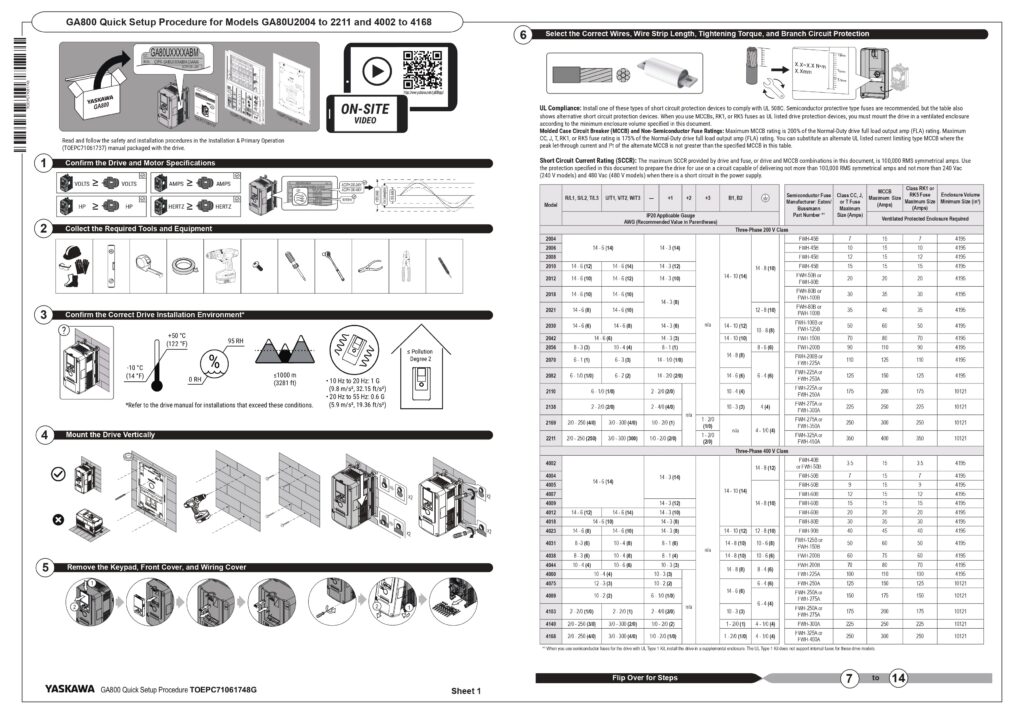
Technical document communicators represent user interests
At this point in the product development, technical communicators ask questions that can uncover assumptions or flaws in the design. For example, whether a parameter is optional, conditional or mandatory for an application. Whether there is an expected configuration sequence for the user to follow. How the user is supposed to confirm the correct setup, and what happens when the user misses a step. These questions are not academic and shouldn’t be treated as such. They are necessary and directly influence how the AC drive behaves during commissioning and how easily the user can diagnose and fix problems after installation.
AC drives are products that are defined by their software. The firmware code written to the AC drive defines the control methods, parameter values, communications behavior, diagnostics, and faults. Technical communicators working with software engineers focus on behavior instead of implementation. The goal of the product instructions is to explain how the AC drive responds to user actions, not to describe how the code is structured. This often involves adding clarity to dependencies between settings, explaining what conditions trigger alarms versus faults, and identifying the expected corrective actions.
A wider view than product designers, filling gaps
A firmware specification might state that a parameter “enables torque control under defined conditions.” The documentation must go the extra mile to answer additional questions, such as what prerequisite settings must be configured and how to confirm correct operation. When it is difficult to clearly answer these questions, that often indicates friction in the user experience itself. Technical communicators have the unique opportunity to look at all parts of the product at the same time, combining the output of several disparate engineering groups into one cohesive document, which can uncover inconsistencies or gaps in the information based on a wholistic approach of viewing the data, and the development of the product instructions becomes an informal usability check, with the technical communicator acting as the end user and identifying issues before they reach the field.
Take, for example, a scenario during the commissioning of a general-purpose AC drive. In this scenario, a control method feature is enabled through one parameter. The specification correctly describes the control algorithm and the conditions under which it operates. However, this feature also depends on several prerequisite settings, such as entering the motor data, making sure that the feedback configuration is compatible with the hardware, and a certain type of communications card is correctly installed during startup. In early documentation drafts, torque control was described in isolation, with prerequisites listed elsewhere in the manual. During review, the technical communications team flagged that a user following the section that describes the feature section step-by-step would likely miss at least one of the prerequisite dependencies.
Automation prerequisites, sequencing, verification
It is here where technical communicators can positively impact the product, the user experience and engineering. Working with firmware engineering, a joint decision can be made to revise the documentation to explicitly list the prerequisites at the start of the procedure, cross-reference the required parameters and add a verification step to confirm that the torque control was active. This didn’t change the product design nor the firmware, but it did measurably improve the commissioning time and eliminate any support calls related a “nonfunctional” feature on the product after release. This is a small example, but it illustrates how documentation decisions can directly affect field outcomes.
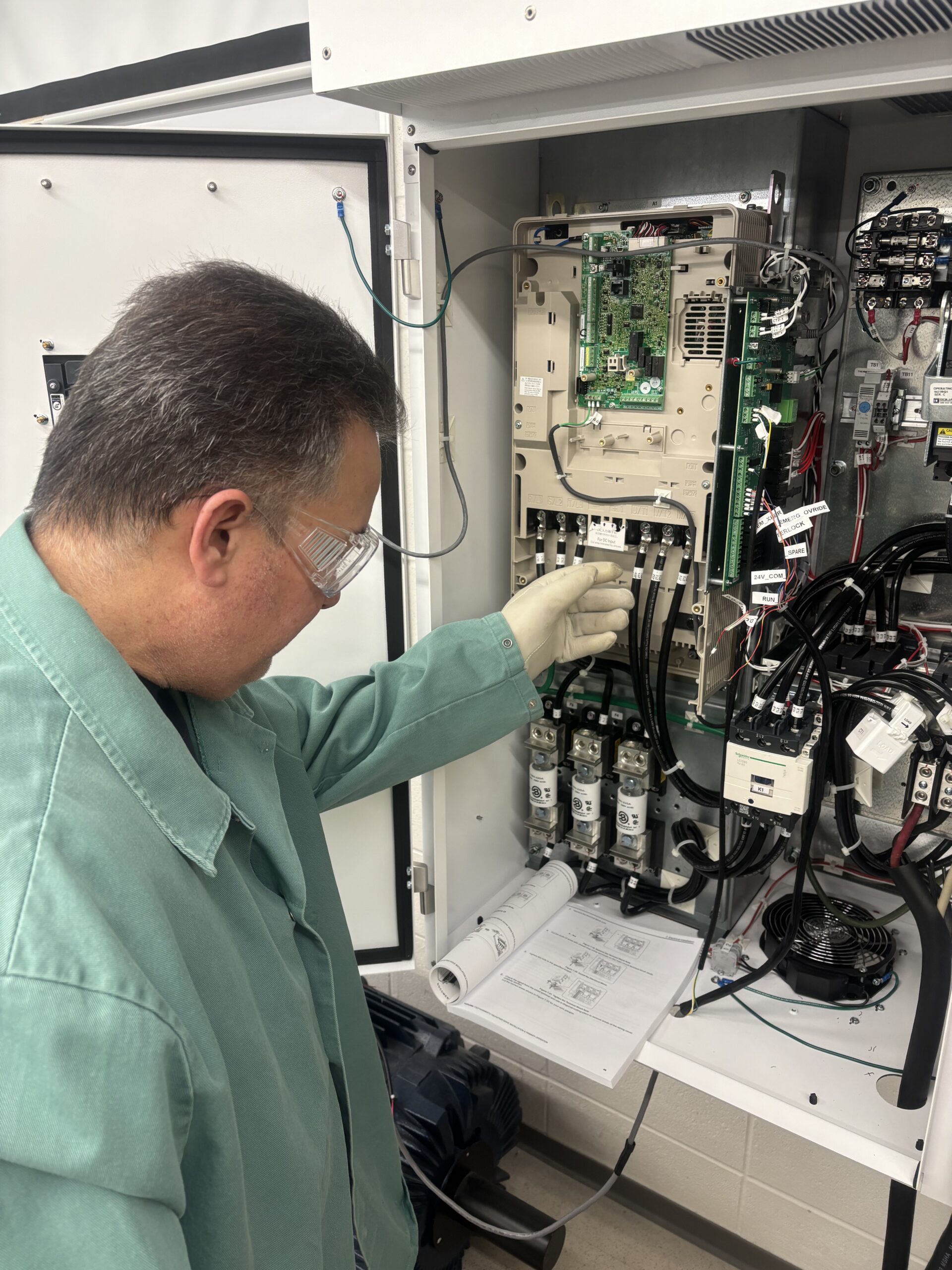
On the hardware side, technical communicators work closely with electrical and mechanical engineers to make sure that installation instructions reflect real-world practices. This includes identifying wiring terminals and their locations, providing guidance for grounding and shielding, and defining the environmental and thermal requirements and limitations.
Safety considerations in automation documentation
Hardware documentation is particularly sensitive because it is used by technicians working directly with energized equipment. The hardware instructions must be accurate, unambiguous, and readable under time pressure. A wiring schematic can be technically correct and still increase risk if it is visually dense, poorly organized, or even too small. Technical communicators reconcile schematics, safety analyses and compliance requirements into a single set of instructions and references that installers can follow without the burden of additional interpretation.
Compliance with ever-changing regulations represents one of the more challenging areas of AC drive documentation. Safety messages in AC drive product instructions must align with certified designs and use precise language required by standards organizations. And, at the same time, these messages must remain usable, readable, and understandable during commissioning, when time pressure is highest.
Overly abstract language or too many cross-references to other documents or areas can cause users to skim or bypass critical steps. Technical communicators collaborate closely with all engineering groups to make sure that the product instructions are precise with respect to the regulations, while also making the instructions actionable. The quality of this balance directly affects installation safety and long-term risk.
Automation documentation: translations, operational goals, explicit instructions
Perhaps the most important contribution technical communicators make is translation. Not necessarily translation from Spanish to English, but translation from engineering-speak to end-user-speak. Engineering groups tend to use internal languages that are optimized for design and implementation, which makes sense. But end users approach the product with the operational goals of hanging it on the wall or as part of a larger system, getting the motor spinning, and resolving any issues quickly. Technical communicators help to bridge the gap between engineering-speak to end-user-speak by reframing the internal terminologies into operational language, organizing reference information into tasks, clarifying the cause-and-effect relationships, and making the implicit assumptions contained in the specifications explicit.
But technical communication is not just simplifying away complexity; AC drives are inherently complex. The goal of the technical communicator is to make that complexity more navigable without hiding risk.
The quality of the documentation is most visible during installation and commissioning. When there are clearly readable and understandable startup sequences, it reduces mistakes at the front end, and well-structured parameter descriptions help users understand what to set and why. When the documentation can anticipate common mistakes and incorrect configurations, and then clarify them and outline the correct perquisites, it reduces troubleshooting during startup. For system integrators and OEMs, this can directly translate into faster commissioning times and more predictable project timelines.
Performance improves with clear documentation, reviews
After startup, the product documentation continues to influence performance. Clear fault descriptions and countermeasures shorten downtime and reduce the need to reverse-engineer behavior during live production. From an operational perspective, documentation becomes part of the system itself.
It’s reasonable for engineers to feel that impacting the quality of the product documentation is outside of their direct control. While there may technically be some small truth to that, upstream contributions from engineering can have outsized effects on the end user instructions. By thoroughly answering questions from the technical communicators and participating in usability and technical reviews, engineers greatly improve the documentation and the product. When the engineering groups work closely with the technical communicators during development, it helps to decrease potential downstream friction and burdens.
In AC drive development, product documentation is the final interface between the intent of the design and real-world operation. It is where hardware, software and safety decisions meet the plant floor. When the documentation works, it is invisible, like an umpire at a baseball game. Commissioning proceeds smoothly, faults are resolved efficiently, and production continues uninterrupted. When the documentation fails, the consequences appear immediately and often at the expense of uptime.
Reframing technical communication as a core part of product development aligns the documentation quality with engineering quality. In the AC drives industry, the two are inseparable.
Ryan Schaal is technical communications supervisor, Yaskawa America Inc., Waukegan, Illinois. Edited by Mark T. Hoske, editor-in-chief, Control Engineering, WTWH Media, [email protected].
Keywords
Automation documentation, AC drive documentation, VFD ease of use
Consider this
How can AC drive documentation improve design, installation and operation of automation?
You also might like
Also from Yaskawa America in Control Engineering, see:
Servo drive safety integrated functions: How to maximize fail-safe behavior