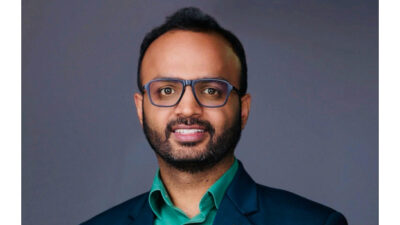

DMC Vice President John Sullivan says technical organizations must make room for emerging leaders to solve problems, build trust and improve the business—not simply keep it running.
As manufacturing organizations confront retirements, leadership transitions and a continued need for technical talent, developing the next generation of leaders has become a strategic imperative. But that development requires more than technical training, certifications or putting junior employees into management roles.
For John Sullivan, vice president at DMC and chair of the Control System Integrators Association (CSIA) Emerging Leaders Committee, the central challenge is giving people the autonomy, ownership and support to improve the business — not just deliver work within it.
Speaking on the Ctrl+Alt+Mfg podcast during the CSIA Conference in Baltimore, Sullivan described a leadership transition familiar to many engineers and system integrators. Early in their careers, technical professionals earn credibility by solving difficult problems, responding to emergencies and putting out fires. As they advance, however, their value increasingly comes from enabling others to do those same things.
“I’m really good at fighting fires,” Sullivan said. “That’s kind of the thing that I’ve been known for in my organization. When projects are not going well, when things are not going well, I was the engineer that kind of stepped in.”
That capability can be essential in a systems integration business, where project setbacks, customer deadlines and technical failures demand quick action. Yet it can also become a barrier to leadership development if experienced problem solvers continually take over rather than coaching others through the problem.
Sullivan recalled a formative moment several years ago when a colleague encountered a major issue. Sullivan responded in his usual fashion, jumping in and resolving the immediate challenges. Afterward, the colleague asked a question that changed how Sullivan approached leadership: “But now how do I do that next time so I don’t have to call you?”
“It was just that one question,” Sullivan said. “I am good at firefighting. I enjoy firefighting. But, realistically, that was a spot where now every time I go to put out a fire, I make sure someone else is coming along with me.”
The goal is not necessarily to eliminate firefighting. Rather, it is to turn those high-pressure moments into learning opportunities. Leaders can explain how they diagnose problems, make decisions and prioritize risks while giving others the experience needed to handle similar situations independently.
Working in the business or working on it?
Sullivan’s CSIA Conference presentation focused on the distinction between working in a business and working on it. He framed the issue through the Eisenhower matrix, which separates tasks according to their urgency and importance.
Urgent and important work often includes contract negotiations, troubled projects and other immediate concerns necessary to keep operations moving. These responsibilities can easily consume the attention of leaders and high-performing technical employees.
But the “not urgent but important” category is where long-term business improvement occurs, Sullivan said. It includes strategic work such as improving processes, addressing recurring inefficiencies and creating systems that prevent the same problem from returning.
“If there’s a problem in your process, sometimes you can just power through that, your nose to the grindstone,” Sullivan said. “But at some point in time, you have to step back and figure out, how do we solve this problem instead of just keep firefighting every time it pops up?”
That shift is especially difficult in engineering and integration organizations, where billable work and project delivery are foundational to the business. Leaders must balance immediate revenue-generating demands with investments in process, people and organizational capability.
The opportunity for emerging leaders often lies in the tasks that are urgent but do not require the most senior person to complete them. Those tasks may still matter greatly to the organization, but they can provide an opportunity for someone else to lead, make decisions and develop judgment.
Autonomy is more than a soft skill
Leadership development is often characterized as a need for stronger communication, management and other soft skills. While those skills matter, Sullivan emphasized autonomy and ownership as the more fundamental ingredients.
Many emerging leaders begin their careers focused on execution: completing engineering tasks, solving customer problems and contributing directly to projects. At some point, they need permission and encouragement to think beyond the immediate assignment.
“Most of the people who are trying to level up, they started at the organization, and their job was to do all the work in the business,” Sullivan said. “Over time, they need the autonomy and the realization that they can, in fact, make their company better and not just keep doing things they’ve been doing.”
Sullivan experienced that transition early in his career. Six months after graduating from school, he was working for a small system integrator. Engineers traveling to customer sites carried improvised bags of serial cables, Ethernet cables and connectors. Sullivan saw a recurring problem and asked whether he could develop a better approach.
The company gave him a modest budget and the freedom to address it. The investment was relatively small, but the broader message was significant.
“I now had the opportunity and autonomy,” Sullivan said. “It maybe took me a couple hours of work and a couple hundred dollars, but I had made the business better.”
That experience helped create what Sullivan called a transformative mindset. Employees should see themselves as people who are allowed to and encouraged to make their organization a better place.
That message must be reinforced through action. Employees need room to identify issues, propose improvements and own initiatives that extend beyond their immediate project assignments.
Trusting people to reach the goal their way
Autonomy also requires leaders to let people solve problems differently than they would themselves. That is one of the hardest aspects of delegation, particularly for technical leaders who have built their careers on expertise and high standards.
“If I have a problem, I generally have a way I would approach that,” Sullivan said. “If I hand that problem to someone else and they don’t approach it the same way, I have to be ready to [accept] — as long as we reach the end goal that we’re targeting — the way they solve that problem is uniquely theirs.”
That does not mean abandoning accountability. Leaders should align on the desired outcome, clarify expectations and remain available when help is needed. But they should avoid dictating every step of the process.
“You have to align on the direction,” Sullivan said. “This is where we want to be at the end goal, but I trust you to get us there. I trust you to bring me in if you need help, but I’m not going to walk you through every step of getting from point A to point B.”
As integration companies grow, that kind of trust can become harder to maintain. Employees may begin to see improvement as something handled by senior leadership rather than as a shared responsibility. Sullivan warned that companies can unintentionally create an “us versus them” dynamic when employees believe their role is only to offer feedback while someone else makes the change.
A broader emerging-leader community
Sullivan became involved with CSIA’s Emerging Leaders Committee while seeking development opportunities for himself. The committee had lost momentum during the COVID-19 period, and Sullivan stepped into a leadership role to help rebuild it.
The group is intended to serve both people who are preparing for greater responsibility and established leaders who want to better enable others. Sullivan said there is no narrow age, title or experience requirement for participation.
“There’s no one who’s too senior or too junior to be part of the emerging leaders group,” he said.
The committee offers conference presentations, networking events and several special interest group meetings between conferences. Those sessions are designed to be participatory rather than passive webinars. After a brief presentation, attendees break into smaller groups to discuss and apply the ideas to real organizational challenges.
That format reflects Sullivan’s larger point that leadership development cannot be limited to listening. It requires practice, engagement and opportunities to make meaningful decisions.
For manufacturers and system integrators facing succession challenges, the task is clear. Organizations must continue to deliver today’s work while deliberately creating time and space for people to improve tomorrow’s business.
The Ctrl+Alt+Mfg Podcast
Make sure to check out other episodes of the Ctrl+Alt+Mfg podcast, where hosts Gary Cohen and Stephanie Neil discuss a range of digital transformation insights. The last five episodes are listed below:
Ep. 17: Rethinking Industrial Data, with Gary Tillery of Skkynet
Ep. 18: Audacious Goals for Infrastructure Security, with Danielle Jablanski of STV
Ep. 19: The Future of System Integration, with Daren Dieleman of Interstates
Ep. 21: The Business Behind Automation, with Jeremy Anderson of Process and Data Automation