About 9 of 10 drug candidates that enter clinical trials are not approved, wasting time and investment. Advanced organoids and organ-on-chip systems offer more realistic models of human tissues, metabolism and disease. Learn what automated manufacturing is teaching drug discovery.

Drug discovery automation insights
- About 9 of 10 drug discovery candidates that make it to phase 1 clinical trials do not make it to FDA approval.
- Testing methods and automation analytics are improving to save time and investments.
- Advanced organoids and organ-on-chip systems better models of human tissues, metabolism and disease.
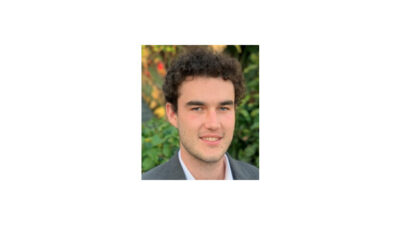
Improvements in drug discovery include process controls, imaging, sensing, robotics and artificial intelligence (AI) are transforming tissue models into measurable, reproducible and eventually autonomous systems as explained by Jonny Sexton, PhD, University of Michigan medical school associate professor and co-founder and CEO of Torch Bio Inc. (Figure 1), at a day-two keynote presentation at YNOW 2026 from Yokogawa Corporation of America. It’s not just better technology. It’s treating drug discovery as a manufacturing process to improve results and potentially save lives.
Pharmaceutical development research aims to use automation and analytics to help simplify workflows and provide meaningful insights needed with better collaboration. Sexton explained how measurement, imaging and analytical technologies from Yokogawa helps connect instruments, data and researchers, so drug development experts can spend less time managing technologies and more time advancing science.
Nine of 10 failure rate is dismal, can be improved
Sexton’s presentation, “Beyond 10% yield: Rebuilding drug discovery as a controlled process,” lamented that approximately 9 of 10 drug candidates that enter clinical trials never become approved medicines, often after years of research and significant financial investments. While traditional laboratory models cannot fully replicate human biology, advanced organoids and organ-on-chip systems offer more realistic models of human tissues, metabolism and disease.
Because current cutting-edge automated systems now can detect severe toxicity levels in three fatal human drug discovery trials dating back to 1993, Sexton maintains it’s no longer “a biological problem; it’s a measurement and process control problem.”
Sexton said that looking at drug development as a manufacturing process would show:
- Input of approximately 10,000 compounds
- End-to-end cycle time of 10 to 15 years
- Cost per approved asset of $1.3 billion to $2.8 billion (estimates vary)
- Phase 1-to-approval yield: <10%
- Failure distribution: Concentrated late, the most expensive stage.
1993 Fialuridine study caused 5 deaths
In 1993, the U.S. National Institute of Health phase 1 clinical trial study of Fialuridine for treating chronic hepatitis B, in 13 weeks, created severe toxicity in humans; 5 people died. (The study never made it to phase 2, which tests dosing levels or phase 3 to see if it creates enough benefit for FDA approval.) The drug showed no toxicity for mice, rats, dogs and non-human primates, but caused liver failure in humans.
How to lower drug discovery risk, fail earlier
Failing earlier, without risking human lives, would be preferred. Getting drug discovery through clinical trials can cost $1.3 billion to $2.8 billion per asset. Less than 10% of phase 1 trials make it to FDA approval. Others fail in later stages.
“Process control engineers would shut down this kind of operation before lunch if it produced 9 out of 10 failures,” Sexton said.
Two major reasons for failure are that the drug doesn’t work, or the drug is toxic to the liver. (Livers are particularly susceptible to drugs.) Both are biological model problems.
The failure is not random, Sexton said; it is measured too late. There is a need to find out earlier if a drug is safe enough to keep investing, the same question asked at each of the three phases of a clinical trial. Safety is not measured in human biology until a drug is tested on humans. Late-stage failure isn’t only biological uncertainty, Sexton maintains, it is a measurement system failure.
Drug discovery measurement systems, traditional failures
What are standard measurement systems? Traditionally, Sexton said, drug tests are performed on:
- 2D cell culture (drawbacks: immortalized cells, isolate human hepatocytes, flat plastic with stiff substrates, no drug perfusion, no tissue architecture and little drug metabolism)
- Animal models (often insufficient because of different drug metabolisms, different drug distribution, different mitochondrial reactions and different dosing)
- Human patient (full multicellular live architecture, HLA type, CYP polymorphisms, measured only after the patient is dosed).
Conventional models don’t predict human outcomes [Editor’s note: possibly including death]; every downstream decision inherits this error, Sexton said.
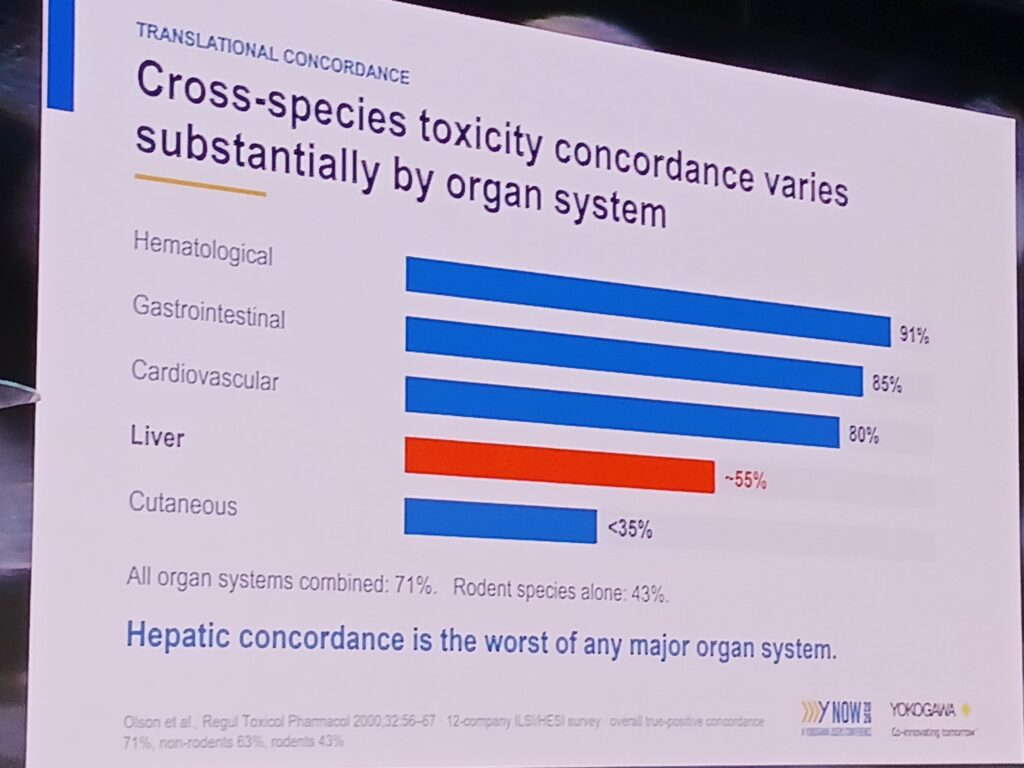
Adding evidence, Sexton showed a graph showing success rate (concordance) of cross-species toxicity variance by organ system (Figure 2). Most notably, the human liver shows 55% concordance, the worst of major organs, at just slightly better than a coin flip, not reassuring for patients hoping for a cure or backers spending billions of dollars.
FDA Modernization Act of 2022, 2025 roadmap
2022 FDA Modernization Act (commonly called FDA 2.0) efforts said drugs do not need animal studies. The 2025 FDA roadmap guidance included Novel Alternative Methods (NAMs), such as engineered human tissues and microfluidic systems, Sexton said. In 2026, federal investments include dedicated organoid production centers, and in validation, standards and reference data.
These are needed, Sexton suggested, because humans are complex and differ in reactions to drugs. What may be toxic to some may not be toxic, or as toxic, to others.
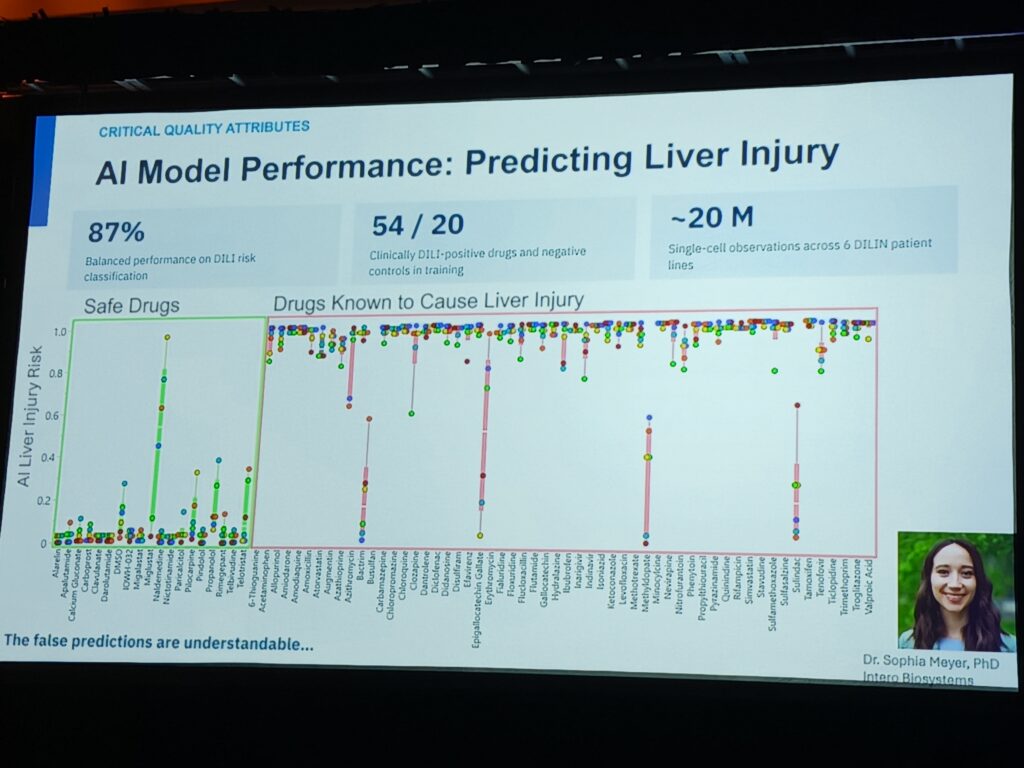
Until recently, the processes used in testing have been missing the latest advances in process instrumentation and a controlled process, Sexton said. Human liver tissues can be grown from a patient’s own cells providing much more accurate testing environment. Automated phenotyping converts pixels into process data. AI model performance is working on improving predictions of liver injury during drug discovery. Models use data from safe drugs and those known to cause liver injury (Figure 3).
More liver injuries, one death
In a 2020 trial, Sexton said, Inarigivir Soproxil was dosed to seven humans with chronic hepatis B in phase 1 testing; seven liver injuries resulted, and one person died of multi-organ failure.
Repeated testing risks like these, Sexton suggested, show clear benefits for development of organ tissue on a chip where drugs under testing can be delivered in continuous flow.
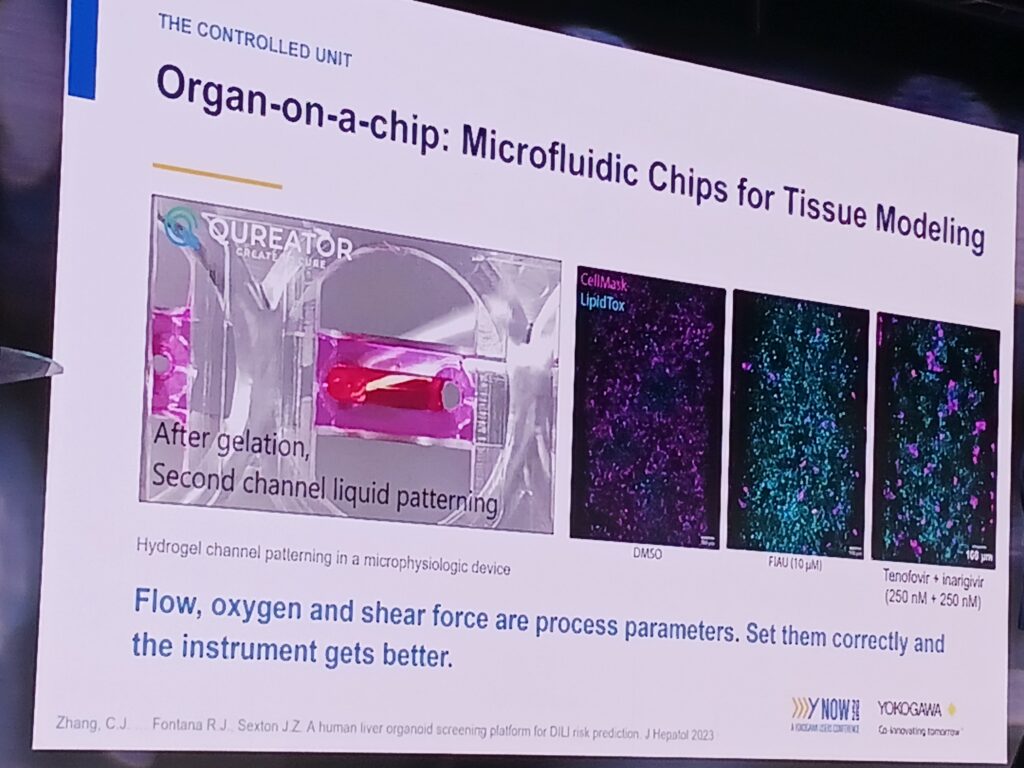
Organ on a chip for tissue modeling
The organ-on-a chip concept creates microfluidic chips for tissue modeling (Figure 4). Flow, oxygen and shear force are the process control parameters. Set them correctly, and the instrument gets better. A human liver organoid screening platform could provide a drug testing platform closer to in-patient tests without harming patients with tests.
In Pfizer and Eli Lilly tests of oral weight-loss drugs; the liver signal from the tests decided who won. Present GLP-1 drugs often cost $1000/month and requires injection. Oral weight loss drugs in this class would be preferred: more attractive and more profitable. After testing, two Pfizer drugs were discontinued in June 2023 and April 2025. An Eli Lilly candidate won in April 2026 showing an 11.2% body weight reduction. No preclinical model flagged any of the results, Sexton said.
Standard liver organoid testing reliability is a challenge, Sexton said, because it remains mostly manual, subject to operator variance, undefined and variable raw materials, open-loop media exchange, and time (not state) records, all requiring extreme expertise. A better model does not raise yield until its production process is under control, he warned.
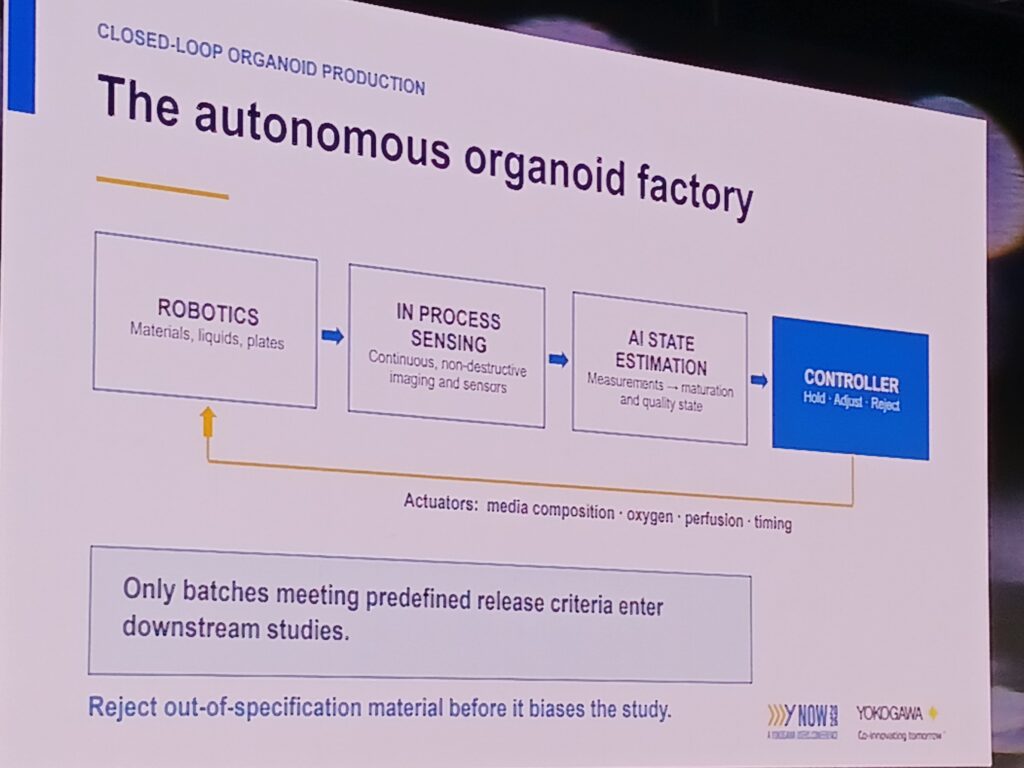
An autonomous organoid pilot line had four deliverables: Define the critical quality attributes, instruments, qualify a reference batch and close the loop so a controller holds, adjusts or rejects a batch, not the study. Yokogawa measurement technology and control stack helped us get to the finish line, Sexton said.
Automation, modeling increase drug discovery success
Sexton showed a video showing how robotics and machine vision take measurements beyond the variance and tedium of humans. A small robot picks and places a sample. The robot captures images of a well of organoids. The robot is programmed to aspirate and deliver the sample, detecting, picking and dispensing one organoid per well. Machine vision visually verifies that the process happened (Figure 5).
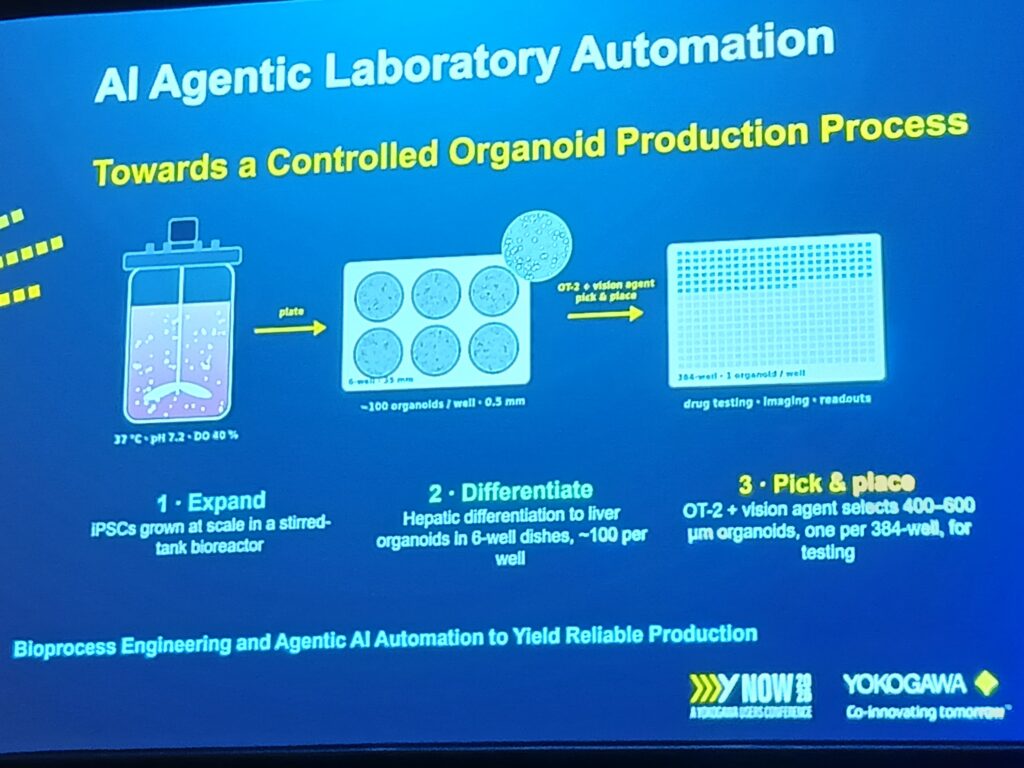
Consistency is provided well past what a careful human could do over months or years.
“The automated pilot, first tested in my basement, was moved to the lab,” Sexton said, using robotics, in-process sensing, AI state estimation and controller (Figure 6). Only batches meeting predefined release criteria enter downstream studies. The system rejects out of specification material before it biases the study, Sexton said.
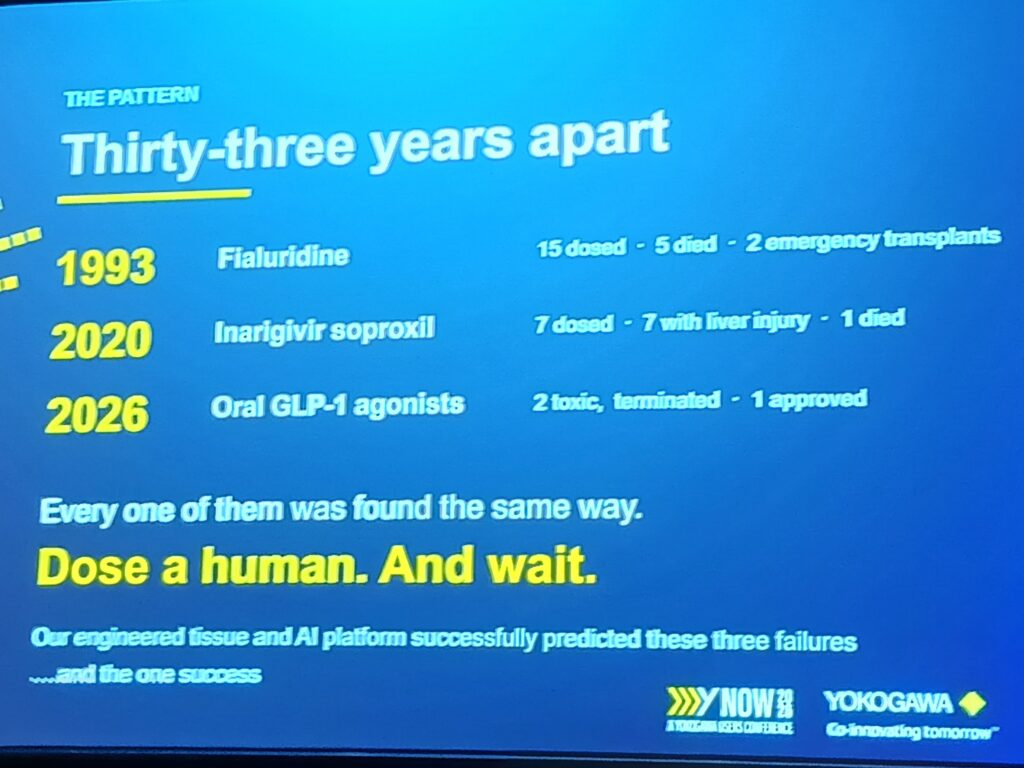
Dosing humans with drugs with unknown properties in unsubstantiated amounts and waiting for results isn’t a good pattern. Sexton said, that automation and define processes in “the organoid platform successfully detected all three failures (Figure 7) cited without human test cases or deaths. This could be used to flip from 9 of 10 failures to 9 of 10 successes.”
YNOW2026 conference and exhibition www.yokogawa.com/YNOW2026 is Sept. 1 through 3 in New Orleans.
Mark T. Hoske is editor-in-chief, Control Engineering, Arrowfly, [email protected].
Keywords
Process control systems, process instrumentation, automated drug testing
Consider this
Are the latest process control and instrumentation technologies adding efficiency to your facility?
You also might like
Automation and AI can harmonize people, technology progress
Pressure transmitter turns pressure data into operational confidence
More instrumentation from Control Engineering