How a leading manufacturer implemented a fully automated, multi-fuel end-of-line test system that reduced cycle times to three minutes, enhanced safety, and integrated 11 generator families into one streamlined production line.

End-of-line genset insights
- A manufacturer needed an automated end-of-line test system to reduce genset testing time to three minutes while handling multiple fuel types and product families.
- The solution included fully automated test enclosures, standardized pallets and an integrated conveyor system to ensure efficiency, flexibility and safety.
- The outcome was a turnkey system that streamlined operations, supported diverse configurations and met strict performance and safety requirements.
In today’s high-volume manufacturing environment, efficiency, safety and flexibility are critical at the end of the production line. For generator set (genset) manufacturers, the ability to test multiple product families and fuel types within tight cycle times can determine whether production targets are met. Fully automated end-of-line testing system can be designed to streamline operations, ensure compliance with stringent safety standards and deliver reliable performance across diverse genset configurations.
The challenge of the application
A leading manufacturer sought to automate and relocate their end-of-line production test systems for generator sets (gensets) running on various fuel types, including propane, natural gas, diesel and gasoline. The goal was to reduce the production test systems total test time to three minutes, aligning with their production rates. They required a fully automated test and transport system to enhance overall efficiency. The system needed to accommodate multiple genset families while ensuring seamless integration into their existing production line.
The solution involved automating the entire testing process and managing different product configurations in a single setup. It had to meet strict safety requirements, handle diverse fuel types and ensure the process was fully automated from product entry to exit. Additionally, the system needed to include a robust transportation mechanism to efficiently move products through the testing process for their generator test stand. This was a critical component of the desired end-of-line systems.
Solution: End-of-line automation
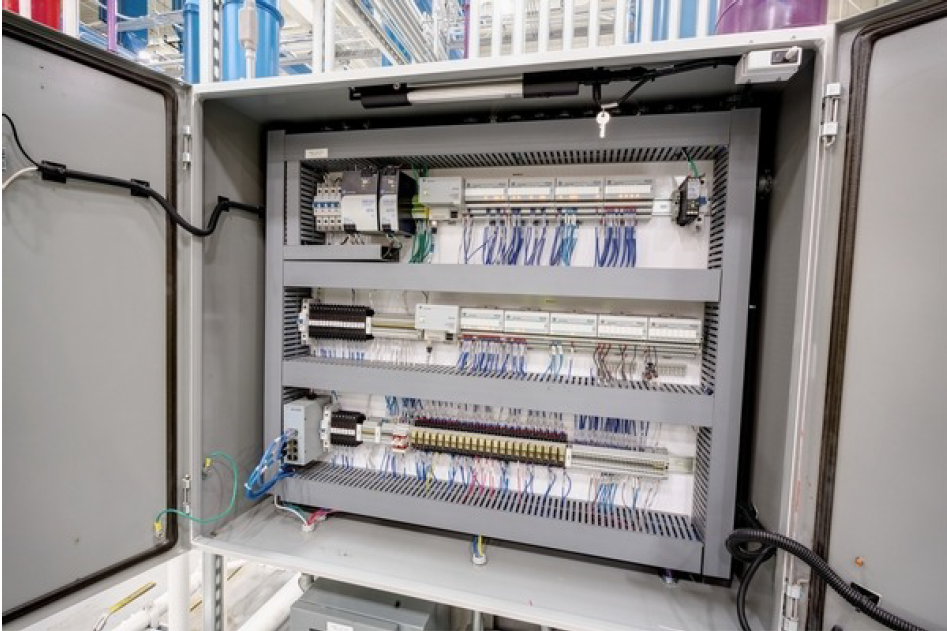
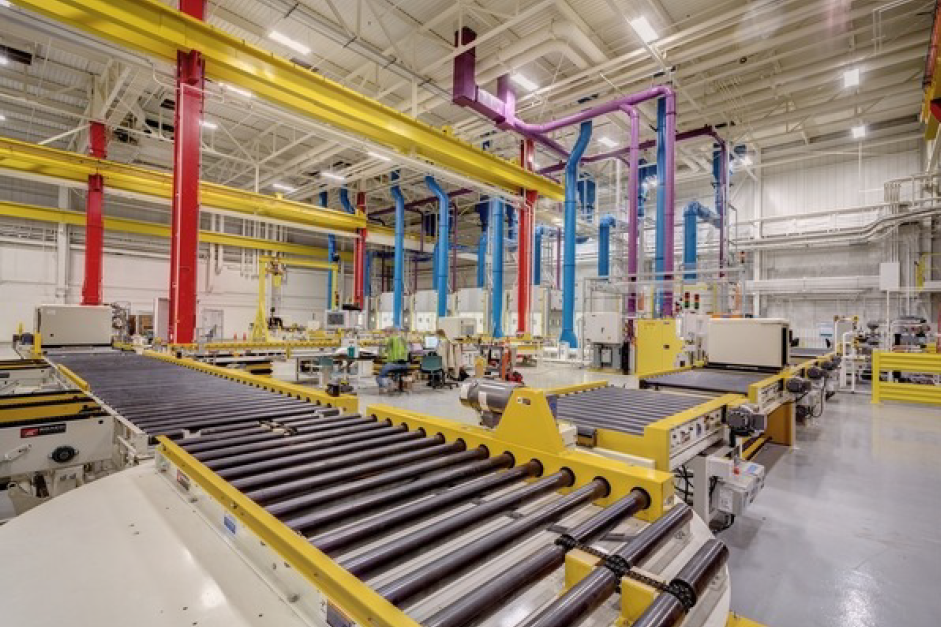
A team from ACS designed and implemented fully automated end-of-line systems for production testing that met the client’s stringent time and safety requirements. The production test systems included seven independent test enclosures equipped with integrated controls and data acquisition systems. Each enclosure was built with fire-rated and blast-rated specifications, ensuring safety while also supporting multiple fuel types, including flammable options like propane and natural gas. The automated conveyor system streamlined product delivery and managed a random product mix from multiple lines, offering fine control for each product type within each generator test stand.
Key to the system’s flexibility was the use of standardized test pallets designed to handle all genset families. These pallets featured quick connections for fluid, control and power systems, allowing the client to easily switch between various genset configurations. The pallet design also included swappable components to further expand its versatility within the generator test stand framework. This modularity was a key aspect of the new end-of-line systems.
The fully automated system included match-plate connections for fluid and electrical interfaces, ensuring seamless transitions during testing. The test process itself was configured to allow for product-specific adjustments and tuning, all while adhering to the client’s timeline of three minutes per test cycle. The system also included a safety instrumented system (SIS) to monitor critical safety factors throughout the process.
The project was further complicated by the need to accommodate 11 different product families, with generators ranging from 5kW to 35kW, all with varied layouts and configurations. To address these challenges, it was necessary to integrate multiple test specifications and protocols into a single automated system while managing the space constraints within the facility.
The outcome: Automation performance, features
The client ultimately received a turnkey solution that met their performance goals. The automated system significantly increased production efficiency while accommodating the wide variety of genset configurations and fuel types. A flexible, high-performance test system design helped streamline client operations, achieve production targets and uphold safety and quality goals. Key features included:
- Seven independent test enclosures with integrated control and data acquisition systems
- Fire-rated and blast-rated enclosures, supporting multiple fuel types
- Standardized test pallets with swappable components for fluid, control and power systems
- An automated conveyor system managing multiple product lines and genset configurations
- Safety instrumented system (SIS) for critical monitoring and compliance
- Fully automated test sequence, product tuning and fluid/electrical connections
Services for automated testing
- Design and build of fully automated end-of-line systems for production testing
- Integration of controls and data acquisition systems
- Facility design and space management for efficient layout
Learning objectives
- Understand how automated end-of-line testing systems can reduce cycle times and improve production efficiency for gensets.
- Learn design strategies — such as standardized pallets, modular enclosures and automated conveyors — that enable flexibility across multiple fuel types and product families.
- Recognize the critical role of safety systems and robust integration in ensuring reliable, compliant and scalable production testing.
Consider this
How can modular, fully automated test solutions with standardized interfaces and built-in safety systems be adapted to future-proof production lines against changing product mixes and fuel types?
You also might like
Also from Control Engineering, read:
How to deploy high tech robotics for practical manufacturing value
https://www.controleng.com/how-to-deploy-high-tech-robotics-for-practical-manufacturing-value/