Integrating manufacturing execution systems and controls improves decisions across machines, processes and operators. Beyond connectivity, here’s how to optimize operations with MES and control systems.
MES-control integration insights
- Six ways MES-control integration improves manufacturing operations include establishing a common data model and incorporating process relationships.
- Define control logic ownership and prioritize contextualized data.
- Design for continuous evolution and rethink operator interfaces.
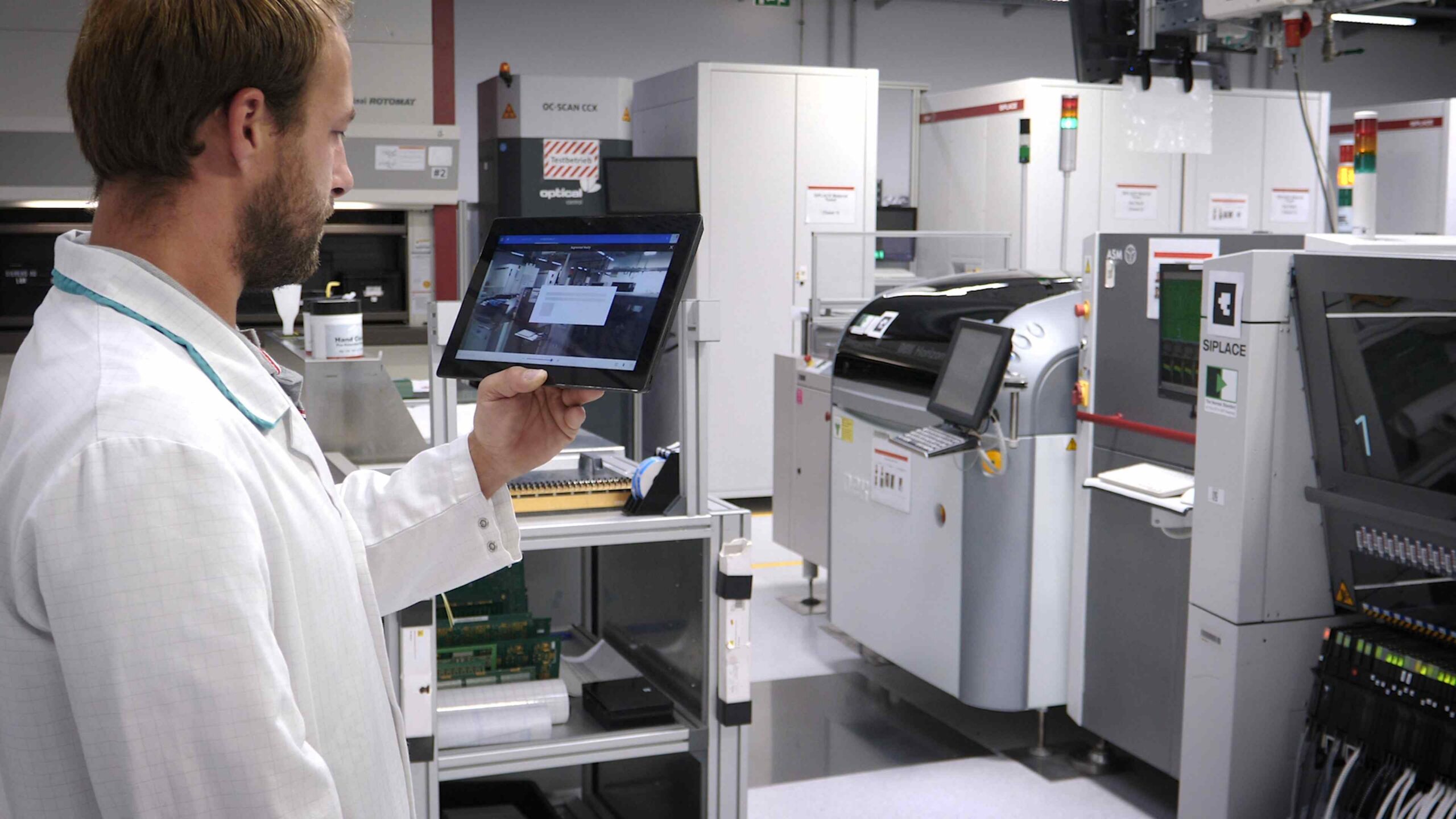
Effective integration of manufacturing execution systems (MES), plant-level control systems such as programmable logic controllers (PLCs), supervisory control and data acquisition (SCADA) or distributed control systems (DCS), is more than just a connectivity problem. While the protocols and interfaces that facilitate data exchange among plant devices are essential, in modern manufacturing environments, it is no longer sufficient to control and automate the machine process. As production becomes more complex, with higher product variability, hybrid processes, and tighter operational requirements, integration must extend its reach for coordinated decision-making across machines, processes and operators (Figure 1). The lack of shared structure, context, and clearly defined control responsibilities across the shop floor raises more serious integration challenges than do missed connections.
Six ways MES-control integration improves manufacturing operations
Here are six often overlooked practices that move MES-control integration beyond basic connectivity and towards more effective operation and scalable control.
1. Establish a common data model before integration
Implementing meaningful plant control requires all systems to operate with a shared understanding of the shop floor. MES, machines, and control systems must represent equipment, processes, and events consistently.
Standards, such as ISA95 Enterprise-Control System Integration, help structure this by organizing the factory into levels such as enterprise, site, area, work centers, units and process cells. This provides a common hierarchical view of operations. However, adopting such structures alone is not enough. Each plant system must map its data into that structure in the same way. Without that alignment, integration becomes an exercise in translation. Instead of generating value, those involved will spend most of their time building interfaces and translation layers to try and enforce semantics across a shop floor. These mismatches compound and create complexity, making it difficult to scale control logic across machines or sites. This also means that it’s impossible to compare apples to apples. Creativity helps when comparing different plants or even different areas within the same plant.
In a multi-line production environment where different machines expose similar signals in different formats, for example, comparing performance or applying the same control logic across lines becomes difficult without a common model. Establishing a shared data model ensures that all systems are effectively speaking the same language, creating a stable foundation for integration and control.
2. Go beyond hierarchy and incorporate process relationships
A hierarchical structure is necessary, but it does not fully reflect how manufacturing operates. It is the relationships among products, materials, processes and equipment that define real production environments and workflows. This is where a system that is aware of everything happening on the shop floor starts to provide dividends.
For example, a production order defines a product and its routing. That flow involves a sequence of operations across multiple machines, each applying transformations using defined recipes and consuming raw materials. A material moves from one resource to another, and its state changes as it progresses through the process.
If integration captures only the hierarchy, control remains localized at the machine level. Each machine can execute its tasks correctly, but without awareness of upstream or downstream dependencies. This limits coordination and responsiveness across the shop floor.
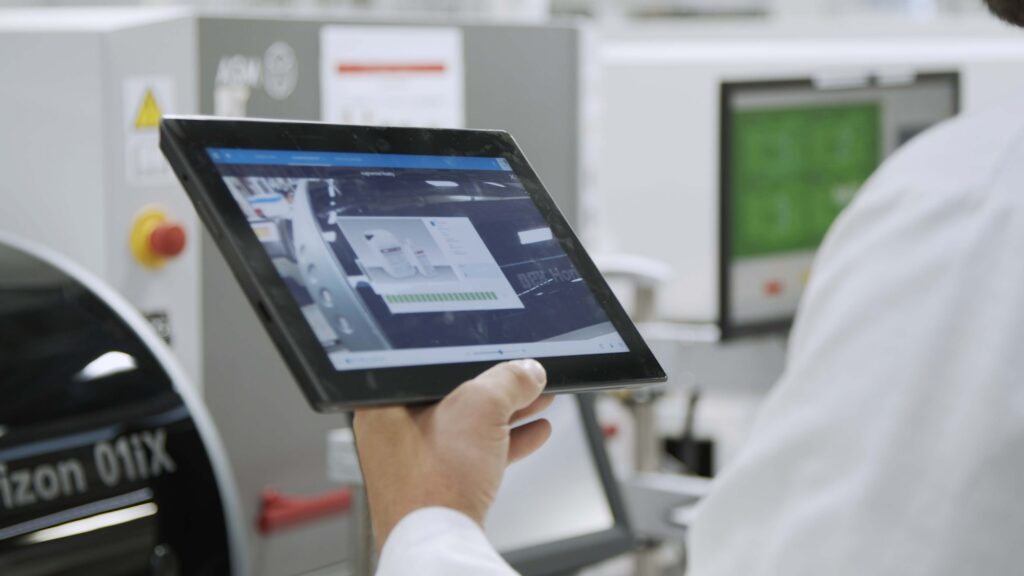
In contrast, by modelling these relationships, systems can make decisions based on production context. A machine can adapt its behavior depending on the product being processed or the state of the material it receives. This concept is especially important in high-mix, low-volume environments where configurations frequently change and cannot be hardcoded at the machine level. However, even in high-volume settings, we can gain significant benefits by integrating production and testing processes. One of the common examples we see is the use of data driven feedback mechanisms. For example, collecting contextualized information and correlating with testing information. Advanced testing machines already have in-built machine learning algorithms for failure prediction, but these focus on the material that they are testing. With a system that knows your shopfloor, you can stop having localized fault prediction and have a broader context. This enables much earlier failure predictions and helps surface defect causes that are otherwise difficult to correlate. With these insights it’s possible to automatically or semi-automatically adjust machine recipes, bills of material (BOMs) and routings, acting before faults happen or minimizing their impacts.
By mapping these deeply complex relationships among production orders, materials and process steps, MES software enables control that reflects the actual flow of manufacturing rather than isolated machine signals (Figure 2).
3. Define clear ownership of control logic
A common integration challenge is unclear ownership of control decisions. Traditionally, PLCs manage low-level control such as actuators, sensors and timing logic. Traditional SCADA systems provide visualization and limited supervisory control. MES systems, in contrast, operate at the shop floor level, orchestrating production across multiple machines and processes.
These boundaries are becoming less rigid as production scenarios grow more complex. Control decisions increasingly depend on production context rather than purely on machine logic.
Recipe-based manufacturing is a good example. A machine may support multiple parameter sets, such as temperature, pressure or cycle time. The PLC executes these parameters, but the decision about which configuration to use depends on the product being produced. Since the MES manages production orders and product definitions, it becomes the system that selects and enforces the correct recipe.
This pattern extends to more complex scenarios. In a fully integrated shop floor, the MES may coordinate the movement of materials using automated transport systems such as autonomous mobile robots. It can gate access to materials, ensure the correct containers are delivered to the correct machines, validate that the appropriate recipe is applied, and track material consumption and process parameters throughout production. In such cases, control is no longer confined to individual machines but spans the entire process.
Without clearly defined ownership, conflicts can arise between systems. Machines may default to local configurations while higher-level systems attempt to impose different instructions. Operators may intervene manually, leading to inconsistent behavior.
A practical approach is to separate responsibilities based on abstraction. PLCs handle deterministic, low-level execution. SCADA systems provide visibility and basic control interfaces. MES systems manage context-driven decisions and coordinate activities across the shop floor. Clear boundaries ensure that control logic is applied consistently and effectively. MES systems also excel at keeping track of ongoing processes. Versioning and approval workflows are a core element of the MES, helping to monitor current operations and facilitate controlled rollouts of new implementations. This is a crucial part of maintaining process control, not only in the present but also for a future of continuous change.
4. Prioritize contextualized data over raw data collection
The biggest pitfall of Industry 4.0 was that many manufacturing environments invested heavily in collecting raw machine data. However, large volumes of data are not useful unless they are properly contextualized. Raw data typically consists of signals, timestamps, or parameter values, but without additional information, it is difficult to interpret what that data represents in terms of production.
For instance, a machine may record thousands of parameter values during a run. Without knowing which product was in process, which lot was involved, or which process step was active, analyzing that data meaningfully is difficult.
There aren’t enough data analysts in the world or powerful enough AI that can backtrace and correlate petabytes of uncontextualized, unformatted data.
MES systems provide the context needed to make this data useful. They associate machine events with production orders, materials and process steps. This allows interpretation of data in relation to actual operations on the shop floor. They do this natively, producing data already treated with the relevant information.
Consider a hybrid process environment common in industries such as life sciences. An operator may perform part of a process manually, while other steps involve measurement devices such as scales or inspection instruments. Data is generated from both manual inputs and automated systems. Without integration, these data points remain disconnected. With MES-driven contextualization, manual and automated data are captured within the same process flow, enabling complete traceability and analysis.
This principle also applies to high-volume data collection scenarios. Machines may generate large data sets during processing, but without linking that data to the production context, it becomes difficult to extract value. Integration should therefore focus not only on collecting data, but on ensuring that it is structured and enriched from the moment it is captured.
5. Design integration for continuous evolution
Manufacturing environments are not just complex, they are highly dynamic. New products are introduced, processes are refined and performance improvements are continuously pursued. Integration must therefore be designed to evolve over time.
Most projects start with a limited scope, such as machine state monitoring or basic data collection. Over time, requirements expand to more advanced capabilities such as parameter control, process coordination and deeper integration with production workflows.
If the integration architecture is too rigid, adapting to these changes becomes difficult. Systems may require extensive rework, increase costs and disrupt operations.
A more effective strategy treats integration iteratively. Introduce changes incrementally, test them in controlled conditions and expand gradually. For example, apply new control logic to one machine or line, validate it under real production conditions, and then roll it out more broadly once proven.
This incremental approach is particularly important in heterogeneous environments that include modern and legacy equipment. Using middleware layers to interface with different machine protocols and translate them into a common structure for the MES avoids the need to build multiple custom integrations at the edge. Over time, these systems become difficult to maintain, pose security risks and limit scalability. It is essential to have a centralized system to track and control machine integrations. It’s very easy to lose track of what you have running on the edge, and this ends up becoming a big security risk and a blocker for innovation.
Industry standards such as OPC UA (OPC Foundation) are widely used to enable communication across systems. However, different industries have their own standards, such as SECS-GEM on semiconductors, IPC-CFX (IPC-2591) on electronics, MT-Connect for CNC and Euromap 77 in injection moulding. A robust integration strategy must therefore support multiple standards and provide a unified approach rather than relying on isolated, custom-built solutions.
Designing for evolution helps ensure that integration can grow from simple monitoring to advanced orchestration without requiring fundamental redesign.
6. Rethinking operator interfaces in MES-control integration
Integration decisions influence how operators interact with the system. Traditionally, operator interfaces have been driven by SCADA systems, focusing on machine-level signals and statuses. While effective for monitoring, these interfaces provide limited insight into the broader production context. These interfaces relied heavily on data, depending on operators or engineers to provide insights on what information was important and how various systems were interconnected. With an MES, much of this information is collected automatically in the background. This capability allows users to establish business rules for interacting with the data and to customize views specific to their use cases. As a result, these systems help streamline the daily interfaces for operators, reducing the likelihood of errors.
MES integration enriches interfaces by combining machine data with production information such as current orders, process steps, and material status. This allows operators to make more informed decisions without needing to gather information from multiple systems.
At the same time, different roles require different levels of detail. Operators need clear, concise information to perform tasks efficiently, while engineers and managers may require deeper analytical views. A well-designed system ensures that all users access the same underlying data while presenting it in a way that is relevant to their role.
Improve, automate after understanding how the factory operates
A manufacturer that does not understand how its factory operates cannot improve, scale or automate it effectively. The same principle applies to production systems. Connectivity is necessary, but it does not address the deeper requirements of coordinated and scalable control. Effective integration depends on aligning systems through a shared data model, incorporating process relationships, defining control ownership, and ensuring that data is contextualized. It requires architectures that can evolve over time. Start with harmonizing the data model. Before the next integration project, audit whether your MES, PLCs and SCADA share a common representation of the equipment hierarchy. If they don’t, everything else in this list is downstream of that problem.
Integrations don’t fail because systems can’t connect, they fail because they can’t agree on what things mean.
João Roque is principal software engineer, Critical Manufacturing. Edited by Mark T. Hoske, editor-in-chief, Control Engineering, Arrowfly, [email protected].
Keywords
MES and controls integration
Consider this
Are your manufacturing execution systems appropriately integrated and optimized with plant-floor machines?
You also might like
João Roque also wrote this article for Control Engineering on low-code development.
https://www.controleng.com/low-code-app-development-how-to-reap-rewards-avoid-pitfalls